Getting Started with DeFi: Complete Beginner's Roadmap 2025
Your complete step-by-step guide to starting in DeFi. Learn the fundamentals, set up your wallet, make your first trades, and avoid costly mistakes as a DeFi beginner.
Getting Started with DeFi: Complete Beginner's Roadmap 2025
Decentralized Finance (DeFi) can seem overwhelming when you're just starting out. Smart contracts, liquidity pools, gas fees, impermanent loss—the terminology alone can be intimidating.
But here's the truth: You don't need to understand everything to get started. You just need a clear roadmap.
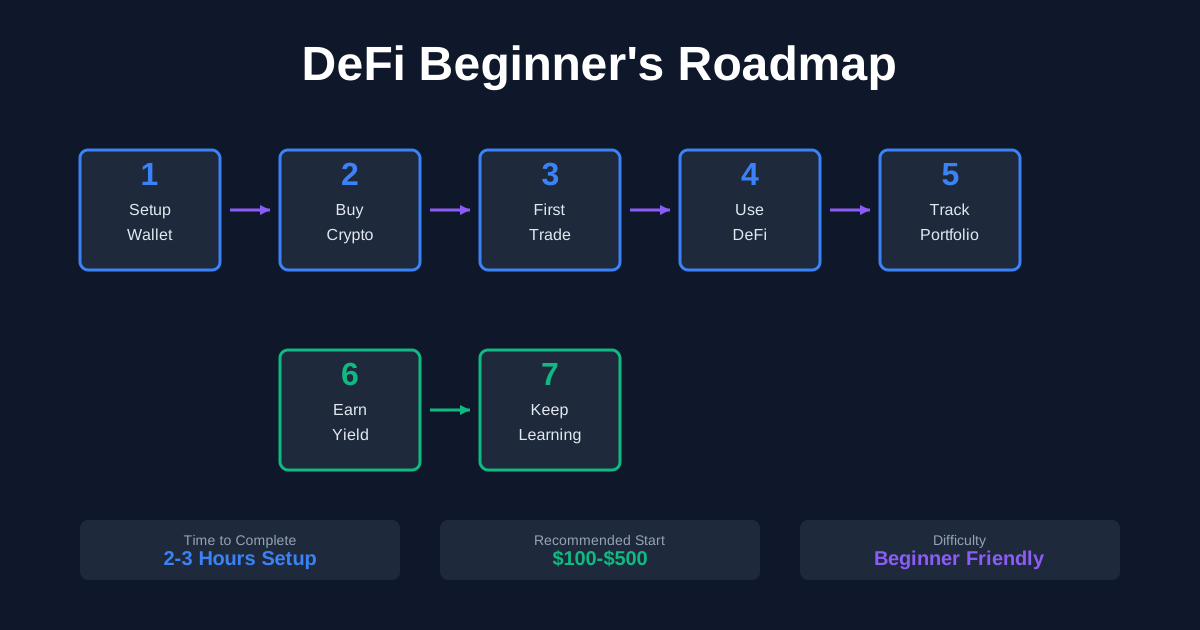
This guide will take you from complete beginner to confidently making your first DeFi transactions in 7 clear steps. No jargon overload, no unnecessary complexity—just practical, actionable steps to start your DeFi journey safely.
What You'll Learn
By the end of this guide, you'll know:
✅ What DeFi actually is (in plain English)
✅ How to set up your first crypto wallet
✅ Where to buy crypto safely
✅ How to use your first DeFi protocol
✅ Common mistakes to avoid
✅ How to track and manage your DeFi portfolio
✅ What to learn next after the basics
Time to complete: 2-3 hours for setup, ongoing for learning
Starting capital needed: $100-500 recommended (start small!)
Technical skill required: Basic computer/smartphone skills
Step 0: Understanding DeFi (5-Minute Primer)
What is DeFi?
Traditional Finance:
- Banks hold your money
- You need permission to access financial services
- Transactions take days to clear
- High fees for international transfers
- Limited access (need bank account, credit check, etc.)
Decentralized Finance (DeFi):
- You hold your money (in your wallet)
- No permission needed—anyone with internet can participate
- Transactions complete in seconds/minutes
- Much lower fees (usually)
- Open 24/7, no intermediaries
Real-World Example
Traditional: Send $1,000 to another country
- Bank wire fee: $25-45
- Exchange rate markup: $20-30
- Processing time: 3-5 days
- Total cost: $45-75, 3-5 days
DeFi: Send $1,000 USDC on Arbitrum
- Network fee: $0.50-2
- No exchange rate markup (it's already USD)
- Processing time: 30 seconds
- Total cost: $0.50-2, instant
What Can You Do in DeFi?
Core Activities:
- Trade crypto tokens (like Coinbase, but you control your funds)
- Lend crypto to earn interest (like a savings account, but higher rates)
- Borrow crypto using your crypto as collateral (like a loan)
- Provide liquidity to earn fees (become the "market maker")
- Stake tokens to earn rewards (like dividends)
You'll start with #1 (Trading), then expand to others.
Step 1: Set Up Your Crypto Wallet (30 Minutes)
Your wallet is your DeFi passport. It holds your crypto and connects you to DeFi protocols.
Choosing Your First Wallet
Best for Beginners:
1. MetaMask (Most Popular)
- ✅ Browser extension + mobile app
- ✅ Supports all major chains
- ✅ Best documentation and support
- ✅ Works with 99% of DeFi apps
- ⚠️ Target for phishing attacks (be careful!)
2. Coinbase Wallet (Alternative)
- ✅ Easy for Coinbase users
- ✅ User-friendly interface
- ✅ Good security features
- ⚠️ Slightly fewer DeFi integrations
3. Rabby Wallet (For Advanced Users Later)
- ✅ Multi-chain focused
- ✅ Better security features
- ⚠️ Steeper learning curve
Recommendation: Start with MetaMask. It's the industry standard.
Installing MetaMask (Step-by-Step)
Option 1: Browser Extension (Recommended)
-
Go to: metamask.io
- ⚠️ CRITICAL: Only download from official site
- Check URL is exactly "metamask.io"
- Scam sites look similar!
-
Download extension:
- Chrome: Go to Chrome Web Store
- Firefox: Go to Firefox Add-ons
- Brave: Use Chrome Web Store link
- Click "Add to Browser"
-
Create new wallet:
- Click "Create a new wallet"
- Create strong password (12+ characters)
- Write this down somewhere safe
-
Backup your Secret Recovery Phrase:
- You'll see 12 words
- WRITE THESE DOWN ON PAPER
- Store in safe place
- Never share with anyone
- Never type into any website
-
Confirm your phrase:
- MetaMask will test you
- Select words in correct order
- This proves you wrote it down
Option 2: Mobile App
Download from:
- iOS: Official App Store
- Android: Google Play Store
Follow same steps as browser version.
Security Rules (MEMORIZE THESE)
🔴 NEVER share your Secret Recovery Phrase
🔴 NEVER type it into any website
🔴 NEVER take a screenshot of it
🔴 MetaMask support will NEVER ask for it
✅ DO write it on paper
✅ DO store it securely (safe, bank deposit box)
✅ DO keep it private—even from family
If someone gets your phrase, they own your crypto. No recovery possible.
Step 2: Understanding Wallet Addresses and Networks (15 Minutes)
Your Wallet Address
After setup, you'll see an address like:
0x742d35Cc6634C0532925a3b844Bc9e7595f0bEb
Think of it like:
- Email address (but for crypto)
- Bank account number (but public)
- Mailing address (but for money)
You can share this publicly to receive payments.
Blockchain Networks
Your wallet works on multiple blockchains. Think of them like different countries:
Major Networks:
Ethereum (ETH)
- Most established DeFi ecosystem
- Highest security
- Gas fees: $5-50 per transaction
- Use for: Large amounts ($1,000+)
Arbitrum (L2)
- Built on top of Ethereum
- Same security as Ethereum
- Gas fees: $0.50-2
- Use for: Most DeFi activities
Polygon (MATIC)
- Independent chain
- Very fast, very cheap
- Gas fees: $0.01-0.10
- Use for: Small trades, testing
Base (L2)
- Coinbase's L2 chain
- Growing ecosystem
- Gas fees: $0.30-1
- Use for: Growing DeFi apps
Optimism (L2)
- Another Ethereum L2
- Good DeFi support
- Gas fees: $0.40-1.50
- Use for: Alternative to Arbitrum
Adding Networks to MetaMask
MetaMask starts with Ethereum only. Add more networks:
Method 1: Automatic (Easiest)
- Visit any DeFi app on that network
- It will prompt you to add the network
- Click "Approve"
Method 2: Manual
- Click MetaMask extension
- Click network dropdown (shows "Ethereum Mainnet")
- Click "Add network"
- Click "Add network manually"
- Enter network details (Google: "[Network name] MetaMask settings")
Recommended to Add:
- Arbitrum
- Polygon
- Base
- Optimism
Step 3: Buying Your First Crypto (30 Minutes)
You can't use DeFi without crypto. Here's how to get some.
Option 1: Buy Direct in MetaMask (Easiest)
Pros: Simple, fast
Cons: Higher fees (~3-5%)
How:
- Open MetaMask
- Click "Buy"
- Choose provider (Moonpay, Transak, etc.)
- Enter amount
- Complete KYC (ID verification)
- Pay with card/bank
Good for: Getting started quickly
Option 2: Buy on Centralized Exchange (Cheaper)
Pros: Lower fees, more options
Cons: Extra step (withdraw to wallet)
Recommended Exchanges:
Coinbase (Best for US beginners)
- Very user-friendly
- High liquidity
- Fees: 0.5-2%
- Strong security
Kraken (Alternative)
- Lower fees
- More advanced
- Good for larger amounts
How:
- Create account on exchange
- Complete KYC verification
- Deposit USD/EUR via bank
- Buy crypto (start with USDC or ETH)
- Withdraw to your MetaMask wallet
Important: Always withdraw to your MetaMask. "Not your keys, not your crypto."
What Crypto Should You Buy First?
For Beginners, Buy:
1. USDC ($500-1,000)
- Stablecoin ($1 = 1 USDC)
- No price volatility
- Use for trading and DeFi
- Most liquid pair on all chains
2. ETH ($200-500)
- Needed for gas fees
- Most versatile token
- Can trade for anything
Recommended Starting Portfolio:
- 70% USDC ($700)
- 30% ETH ($300)
- Total: $1,000
Why USDC first?
- You won't lose money to price swings while learning
- All DeFi protocols accept it
- Easy to calculate value ($1 = $1)
Bridging to Layer 2 (Important!)
If you buy on Ethereum mainnet, bridge to Arbitrum or Base to save on fees.
How to Bridge:
Use Official Bridges:
- bridge.arbitrum.io (Arbitrum)
- bridge.base.org (Base)
- wallet.polygon.technology (Polygon)
Steps:
- Connect MetaMask to bridge
- Select "From: Ethereum" → "To: Arbitrum"
- Choose token (USDC or ETH)
- Enter amount
- Approve transaction
- Wait 10-15 minutes
Costs:
- Ethereum → Arbitrum: $15-30 gas
- Worth it for amounts $500+
Or: Buy directly on L2 using on-ramp services (Moonpay supports Arbitrum)
Step 4: Your First DeFi Trade (30 Minutes)
Now the fun part: actually using DeFi.
Choosing Your First DEX (Decentralized Exchange)
Recommended First DEX:
Uniswap (Industry Standard)
- Available on: Ethereum, Arbitrum, Polygon, Base, Optimism
- Most liquidity
- Safest, most audited
- Best for beginners
Alternatives:
- PancakeSwap (BSC)
- Curve Finance (stablecoins)
- Trader Joe (Avalanche)
We'll use Uniswap for this tutorial.
Making Your First Swap (Step-by-Step)
Scenario: Swap 100 USDC for ETH on Arbitrum
Step 1: Go to Uniswap
- Visit app.uniswap.org
- ⚠️ Check URL is correct (scam sites exist!)
- Bookmark the correct site
Step 2: Connect Wallet
- Click "Connect Wallet"
- Select "MetaMask"
- Approve connection in popup
- Select Arbitrum network
Step 3: Select Tokens
- "From" token: Select USDC
- "To" token: Select ETH (or search for it)
- Enter amount: 100 USDC
Step 4: Review Trade You'll see:
You pay: 100 USDC
You receive: ~0.046 ETH ($99.50)

Price impact: 0.05%
Network fee: $0.87
Minimum received: 0.0455 ETH (1% slippage)
Understanding the Details:
Price Impact: How much your trade moves the market
- <0.1% = Good (large pools)
- 0.1-1% = Acceptable
-
1% = Expensive (small pools)
Network Fee: Gas cost for transaction
- Ethereum: $5-50
- Arbitrum: $0.50-2
- Polygon: $0.01-0.10
Slippage: Maximum price change you'll accept
- Default: 0.5% (fine for most trades)
- Increase for volatile tokens (up to 2-3%)
Step 5: Execute Trade
- Click "Swap"
- Review one more time
- Click "Confirm Swap"
- Approve in MetaMask popup
- Wait 10-60 seconds
- Transaction complete!
Step 6: Verify
- Check MetaMask: You should see ETH balance increased
- Check transaction on Arbiscan.io
- Click MetaMask transaction → "View on block explorer"
Common Issues and Solutions
Problem: "Insufficient funds for gas" Solution: You need ETH for gas. Buy $20-50 of ETH first.
Problem: "Transaction failed" Solution: Increase slippage tolerance or try again (network congestion).
Problem: "Price updated - accept new price?" Solution: Price changed while you were confirming. Accept if still reasonable.
Problem: Transaction pending forever Solution: Increase gas price in MetaMask settings or cancel and retry.
Step 5: Using Your First DeFi Protocol Beyond Trading (1 Hour)
Once comfortable with swaps, try other DeFi activities.
Activity 1: Lending (Earn Interest on Your Crypto)
Best Platform for Beginners: Aave
What it is: Deposit USDC, earn ~3-8% APY
How to Use Aave:
- Go to: app.aave.com
- Connect wallet (select Arbitrum network)
- Choose "Supply" tab
- Select USDC
- Enter amount: e.g., 500 USDC
- Click "Supply"
- Approve in MetaMask
- Start earning (interest accrues every block)
You'll receive: aUSDC tokens representing your deposit
To withdraw: Go to Aave → Withdraw → Enter amount → Confirm
Current Rates (December 2025):
- USDC: ~4-7% APY
- DAI: ~4-6% APY
- USDT: ~5-8% APY
Risk: Smart contract risk (very low for Aave—audited and battle-tested)
Activity 2: Staking (Earn Rewards)
What it is: Lock tokens to earn rewards
Example: Stake ETH on Lido
- Go to: stake.lido.fi
- Connect wallet
- Enter ETH amount
- Click "Submit"
- Receive stETH (liquid staked ETH)
- Earn ~3.5-4% APY in ETH rewards
Benefits:
- Your stETH can be used in other DeFi protocols
- Earn staking rewards while maintaining liquidity
Activity 3: Providing Liquidity (Advanced)
Skip this initially—do it after understanding impermanent loss.
Use our Impermanent Loss Calculator to understand risks first.
Step 6: Tracking Your DeFi Portfolio (15 Minutes)
As you use multiple protocols, tracking becomes important.
Best Portfolio Trackers (Free)
1. DeBank (Best Overall)
- URL: debank.com
- Enter your wallet address
- Automatically tracks all DeFi positions
- Shows total portfolio value
- Tracks yields and rewards
2. Zapper (Alternative)
- URL: zapper.xyz
- Beautiful UI
- Shows all positions across chains
- Transaction history
3. Zerion (Mobile-Friendly)
- Great mobile app
- Tracks wallet + DeFi positions
- Can trade directly in app
How to Use:
- Visit tracker website
- Connect wallet OR paste wallet address
- View all your positions
- Track performance over time
- See yields and rewards
Also Use Our Tools:
- Token Price Calculator - Compare prices across chains
- Impermanent Loss Calculator - Calculate LP risks
- ENS Checker - Get your .eth name
Step 7: Learning and Growing (Ongoing)
First 30 Days: Focus On
Week 1:
- Set up wallet ✅
- Buy crypto ✅
- Make 5-10 small swaps
- Learn by doing
Week 2:
- Try Aave (lending)
- Monitor interest earned
- Read about DeFi protocols
- Join DeFi communities
Week 3:
- Explore different DEXs
- Compare gas fees on different chains
- Track your portfolio
- Calculate your returns
Week 4:
- Learn about liquidity pools
- Understand impermanent loss
- Consider first LP position (small!)
- Review your learnings
Best DeFi Learning Resources
Free Courses:
- Finematics (YouTube) - Best explainer videos
- Bankless (Podcast + Newsletter) - DeFi news and education
- DeFi Dad (Twitter + YouTube) - Beginner-friendly tutorials
Reading:
- DeFi Pulse Blog
- The Defiant
- Our blog: Web3 Calculator Guides
Communities:
- r/DeFi (Reddit)
- DeFi Discord servers
- Twitter #DeFi
Key Concepts to Learn Next
- Impermanent Loss - Critical for liquidity providing
- Smart Contract Risk - How to assess protocol safety
- Gas Optimization - Timing transactions to save money
- Yield Strategies - Maximizing returns safely
- Multi-Chain DeFi - Operating across different blockchains
Common Beginner Mistakes (And How to Avoid Them)
Mistake 1: Not Backing Up Secret Phrase
The Mistake: "I'll write it down later" → Never writes it down → Loses access to $10,000
The Fix: Write down your Secret Recovery Phrase IMMEDIATELY after creating wallet. Store in safe place.
Mistake 2: Using Ethereum Mainnet for Small Trades
The Mistake: Pays $25 gas fee to trade $50 worth of tokens. Gas cost = 50% of trade!
The Fix: Use Layer 2s (Arbitrum, Base, Polygon) for amounts under $1,000. Save 95%+ on fees.
Mistake 3: Not Understanding Slippage and Price Impact
The Mistake: Trades $1,000 for token, receives only $950 worth due to high slippage.
The Fix:
- Check price impact before trading
- If >1%, split trade into smaller parts
- Use limit orders on DEXs that support them
Mistake 4: Approving Unlimited Token Amounts
The Mistake: Approves unlimited USDC to random contract → Gets drained later by exploit.
The Fix:
- Only approve exact amount needed
- Use Revoke.cash to check and revoke old approvals
- Review approvals monthly
Mistake 5: Ignoring Gas Prices
The Mistake: Makes trade during high congestion, pays 5x normal gas.
The Fix:
- Check Etherscan Gas Tracker
- Trade during off-peak hours (weekends, late night US time)
- Use L2s to avoid gas price volatility
Mistake 6: FOMO into High APY Pools
The Mistake: Sees "10,000% APY!" → Deposits entire portfolio → Pool is scam → Loses everything
The Fix:
- High APY = High risk (always)
- Stick to established protocols (Uniswap, Aave, Curve)
- If APY > 50%, be VERY skeptical
- Research thoroughly before depositing
Mistake 7: Not Tracking Costs and Returns
The Mistake: Thinks they're profitable, but actually losing money when gas included.
The Fix:
- Track every transaction
- Calculate ROI including gas fees
- Use portfolio trackers
- Review monthly
Mistake 8: Keeping All Funds in DeFi
The Mistake: Smart contract gets exploited → Loses everything
The Fix:
- Only keep "working capital" in DeFi
- Store long-term holdings in hardware wallet
- Don't risk more than you can afford to lose
- Diversify across protocols
DeFi Safety Checklist
Before using ANY DeFi protocol, verify:
Protocol Safety
✅ Has it been audited?
- Check for audit reports
- Multiple audits better than one
- Look for known audit firms (OpenZeppelin, Trail of Bits, etc.)
✅ How long has it existed?
- New protocol = higher risk
- 1+ year with no exploits = good sign
- Check protocol age on DeFi Llama
✅ How much TVL (Total Value Locked)?
- Higher TVL = more trust from market
- $100M+ TVL = established protocol
- <$10M TVL = higher risk
✅ Is it a fork or original?
- Forks copy existing code
- Original protocols = more audits usually
- Check if fork has been audited separately
Your Safety Practices
✅ Start small
- First time using protocol? Use $10-100
- Test withdrawals work before depositing more
- Scale up gradually
✅ Diversify
- Don't put everything in one protocol
- Spread across multiple chains
- Split between protocols (Aave, Compound, Uniswap)
✅ Use hardware wallet for large amounts
- MetaMask fine for $1-10K
- $10K+: Consider Ledger hardware wallet
- Cold storage for long-term holdings
✅ Keep private keys offline
- Never store on computer/cloud
- Paper backup in safe
- Consider metal backup for large holdings
Your 30-Day DeFi Challenge
Ready to get started? Follow this daily plan:
Week 1: Setup and First Trades
Day 1: Install MetaMask, backup phrase
Day 2: Buy first crypto ($100-500)
Day 3: Bridge to Arbitrum or Base
Day 4: Make first swap on Uniswap ($50)
Day 5: Make 3 more small swaps (practice)
Day 6: Set up portfolio tracker
Day 7: Review week, calculate costs
Week 2: Lending and Yields
Day 8: Research Aave
Day 9: Deposit $200 USDC into Aave
Day 10: Monitor interest earned
Day 11: Try Compound Finance
Day 12: Compare yields across protocols
Day 13: Learn about liquidation risks
Day 14: Review positions, calculate APY
Week 3: Multi-Chain Exploration
Day 15: Bridge to Polygon
Day 16: Try trading on Polygon (cheap gas!)
Day 17: Bridge to Base
Day 18: Compare gas costs across chains
Day 19: Find best swap route for $500 trade
Day 20: Document cost savings
Day 21: Review and optimize chain strategy
Week 4: Advanced Learning
Day 22: Read about impermanent loss
Day 23: Use our IL Calculator
Day 24: Research liquidity pool opportunities
Day 25: Consider first LP position (small!)
Day 26: Learn about yield farming
Day 27: Research advanced strategies
Day 28-30: Review entire month, plan next steps
Cost Breakdown: What to Expect
Let's be transparent about costs:
Initial Setup Costs
Wallet Setup: $0 (free)
Buying Crypto: ~3% fee on $1,000 = $30
Bridge to L2: $15-30 gas (one-time)
Total Initial Cost: ~$45-60
Ongoing Transaction Costs
Ethereum Mainnet:
- Simple swap: $10-50
- Approve token: $5-20
- Aave deposit: $15-60
- Monthly (10 transactions): $150-500
Arbitrum/Base (Recommended):
- Simple swap: $0.50-2
- Approve token: $0.30-1
- Aave deposit: $1-3
- Monthly (10 transactions): $5-20
Polygon (Cheapest):
- Simple swap: $0.01-0.10
- Approve token: $0.01-0.05
- Aave deposit: $0.05-0.20
- Monthly (10 transactions): $0.50-2
ROI Timeline
Example: Start with $1,000
Month 1:
- Setup costs: -$50
- Trading practice: -$20 (learning costs)
- Aave interest: +$3
- Net: -$67 (learning phase)
Month 2-3:
- Trading costs: -$10/month
- Aave interest: +$5/month
- Learned strategies: +$20/month
- Net: +$15/month
Month 4+:
- Efficient operations: -$5/month costs
- Multiple yield sources: +$30/month
- Occasional arbitrage: +$50/month variable
- Net: +$75/month average
Break even: Month 2-3
Profitable: Month 4+
Next Steps After This Guide
You're Ready For:
✅ Trading on DEXs confidently
✅ Lending crypto to earn yield
✅ Understanding transaction costs
✅ Managing multi-chain portfolio
✅ Tracking your DeFi positions
Continue Your Journey:
Read Next:
- How to Connect MetaMask to Uniswap
- Setting Up Your First Liquidity Position
- Understanding Gas Fees on Ethereum
Use Our Tools:
Join Communities:
- Follow DeFi Twitter accounts
- Join r/DeFi subreddit
- Participate in protocol Discord servers
Final Thoughts: Start Small, Learn Fast
The most important advice for DeFi beginners:
1. Start with amounts you can afford to lose
Consider your first $100-500 "tuition" for DeFi education. You might make mistakes—that's okay.
2. Learn by doing, not just reading
You can read 100 articles, but nothing beats actually making transactions and seeing how it works.
3. Be patient with yourself
DeFi has a learning curve. Don't expect to understand everything immediately. Take it one step at a time.
4. Security first, returns second
Better to earn 5% safely than chase 100% and lose everything. Protect your secret phrase like your life depends on it.
5. The DeFi community is helpful
Don't be afraid to ask questions. Most DeFi users remember being beginners and are happy to help.
Your first transaction is the hardest. After that, it gets easier with each step.
Ready to start your DeFi journey? Set up your wallet today and make that first swap. Future you will thank you for taking action now.
Welcome to DeFi. Let's build your financial future together.
Quick Reference Card
Save this for easy reference:
Essential Bookmarks:
□ Uniswap: app.uniswap.org
□ Aave: app.aave.com
□ DeBank: debank.com
□ Arbiscan: arbiscan.io
□ Web3 Calculator: web3calc.com

Emergency Resources:
□ Revoke approvals: revoke.cash
□ Gas tracker: etherscan.io/gastracker
□ Bridge checker: defillama.com/bridges

Security Reminders:
□ Never share Secret Recovery Phrase
□ Double-check URLs before connecting wallet
□ Start small, scale gradually
□ Use L2s for small amounts
□ Track all transactions
Now go start your DeFi journey! 🚀
Share this article:
Related Articles
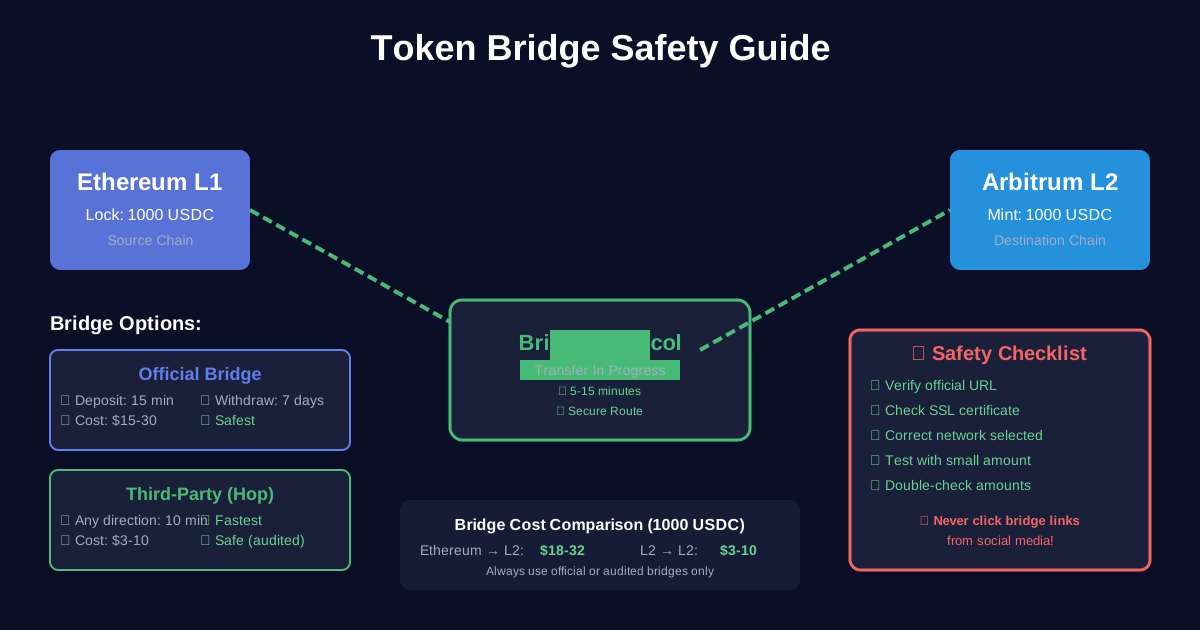
How to Bridge Tokens Between Chains: Complete Safety Guide 2025
Learn to safely bridge crypto between Ethereum, Arbitrum, Base, and other chains. Complete guide covering official bridges, cross-chain protocols, and avoiding scams.
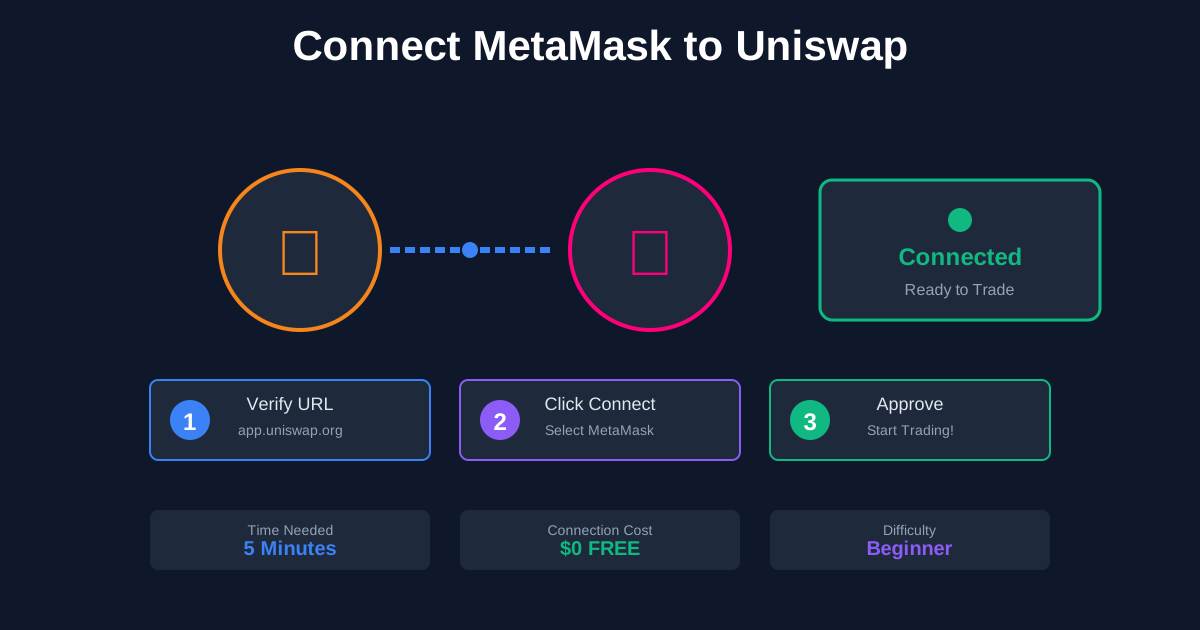
How to Connect MetaMask to Uniswap: Complete Step-by-Step Guide 2025
Learn how to safely connect your MetaMask wallet to Uniswap in 5 minutes. Complete tutorial with screenshots, troubleshooting, and security tips for DeFi beginners.
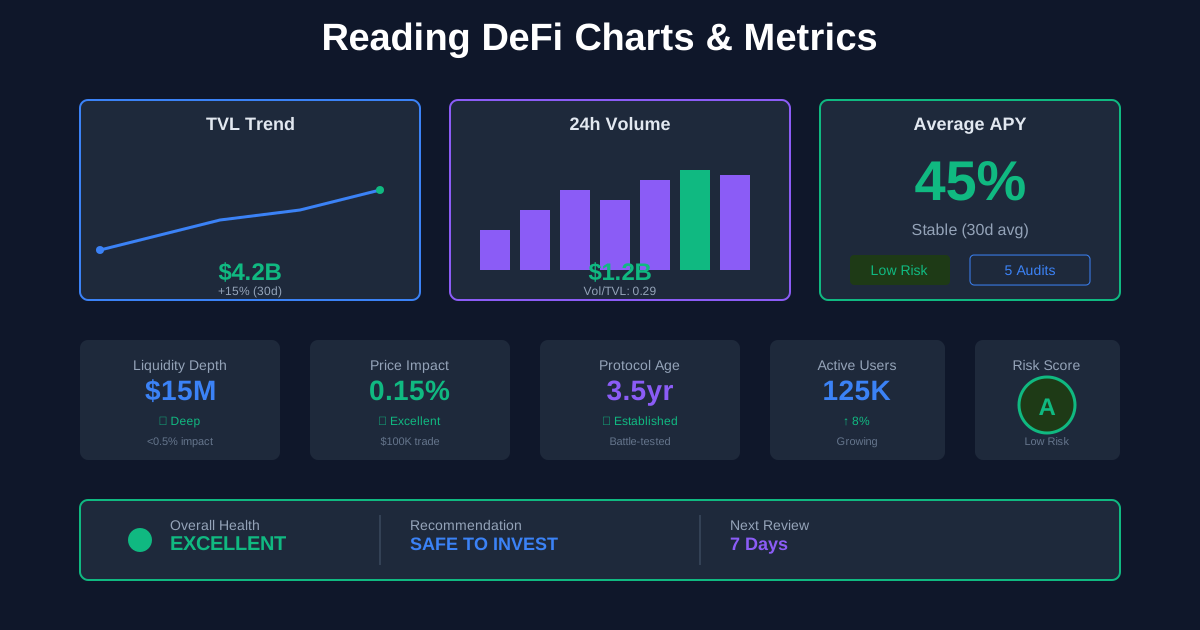
How to Read DeFi Charts and Metrics: Complete Analytics Guide 2025
Master DeFi analytics with this complete guide to reading charts and metrics. Learn to interpret TVL, APY, volume, liquidity depth, and make data-driven investment decisions.