How to Read DeFi Charts and Metrics: Complete Analytics Guide 2025
Master DeFi analytics with this complete guide to reading charts and metrics. Learn to interpret TVL, APY, volume, liquidity depth, and make data-driven investment decisions.
How to Read DeFi Charts and Metrics: Complete Analytics Guide 2025
DeFi analytics can be overwhelming. TVL, APY, volume, liquidity depth, price impact—what do these numbers actually mean?
If you've ever looked at a DeFi dashboard and felt confused by all the charts and metrics, you're not alone. Understanding DeFi data is crucial for making profitable decisions.
This guide will teach you how to read every important DeFi metric, interpret charts like a pro, and use data to find the best opportunities while avoiding costly mistakes.
By the end, you'll be analyzing protocols with confidence.
What You'll Learn
✅ Essential DeFi metrics and what they mean
✅ How to read TVL, volume, and liquidity charts
✅ Understanding APY vs APR (and why it matters)
✅ Interpreting price charts and depth charts
✅ Red flags in DeFi metrics
✅ Best analytics tools and dashboards
✅ How to research protocols before investing
Time needed: 1-2 hours to learn, ongoing to master
Difficulty: Beginner to Intermediate
Prerequisites: Basic DeFi knowledge
Part 1: Core DeFi Metrics Explained
1. TVL (Total Value Locked)
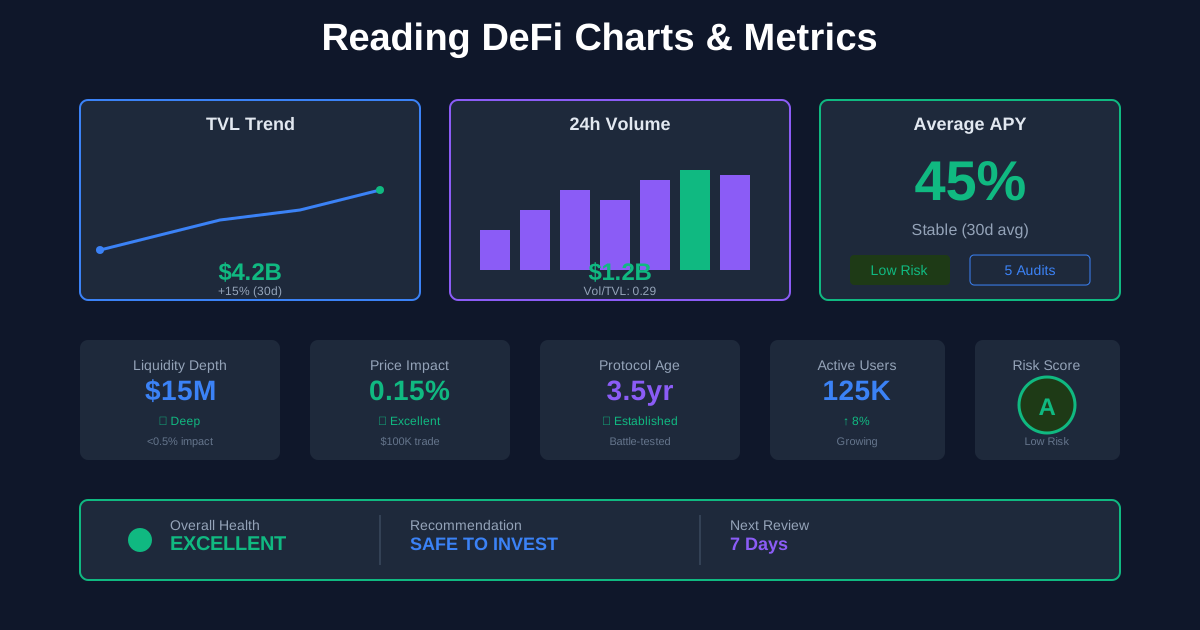
What it is: Total USD value of all assets deposited in a protocol.
Example:
- Uniswap TVL: $4.2 billion
- Means: $4.2B worth of crypto locked in Uniswap pools
Why it matters:
- Higher TVL = More trust from market
- More liquidity = Better trade execution
- Established protocols typically have high TVL
How to interpret:
✅ TVL > $100M: Established protocol, relatively safe
✅ TVL $10M-$100M: Growing protocol, moderate risk
⚠️ TVL < $10M: New/small protocol, higher risk
🚨 TVL declining rapidly: Red flag, users leaving
Where to check:
- DeFi Llama - Best TVL tracker
- Protocol's own website
- Dune Analytics dashboards
Real example:
Aave TVL Trend (6 months):
━━━━━━━━━━━━━━━━━━━━━━━━━━━━
Jan: $8.5B
Feb: $9.2B  ↑ 8% (healthy growth)
Mar: $10.1B ↑ 10%
Apr: $9.8B  ↓ 3% (normal fluctuation)
May: $11.2B ↑ 14% (strong growth)
Jun: $10.8B ↓ 4% (normal)

Trend: Steady upward → Bullish signal
TVL per Chain:
Protocols often operate on multiple chains. Check TVL breakdown:
Uniswap TVL by Chain:
━━━━━━━━━━━━━━━━━━━━━━━━━━━━
Ethereum:  $2.8B (67%)
Arbitrum:  $680M (16%)
Polygon:   $420M (10%)
Optimism:  $280M (7%)

Analysis: Ethereum dominates, but L2s growing
2. Trading Volume
What it is: Total USD value of all trades in a period (usually 24h).
Example:
- Uniswap 24h volume: $1.2 billion
- Means: $1.2B worth of swaps happened today
Why it matters:
- Volume = Activity = Fees generated
- Higher volume = More opportunity for LPs
- Volume trend shows protocol health
How to interpret:
✅ Volume > 10% of TVL daily: Active protocol
⚠️ Volume < 5% of TVL daily: Low activity
🚨 Volume dropping 50%+: Users leaving
Volume/TVL Ratio (Most Important):
Formula: Volume / TVL

Excellent: > 0.5 (50% of TVL traded daily)
Good:      0.2-0.5 (20-50%)
Average:   0.1-0.2 (10-20%)
Poor:      < 0.1 (<10%)
Real example:
Protocol Comparison:
━━━━━━━━━━━━━━━━━━━━━━━━━━━━
Uniswap:
- TVL: $4.2B
- Volume: $1.2B
- Ratio: 0.29 (Good ✓)

PancakeSwap:
- TVL: $2.1B
- Volume: $800M
- Ratio: 0.38 (Excellent ✓)

Dead Protocol:
- TVL: $50M
- Volume: $2M
- Ratio: 0.04 (Poor ✗)
3. APY vs APR (Critical Difference!)
APR (Annual Percentage Rate):
- Simple interest
- Does NOT include compounding
- Lower number
APY (Annual Percentage Yield):
- Compound interest
- Includes compounding effect
- Higher number
The Math:
APR: 50%
If you compound daily:
APY = (1 + 50%/365)^365 - 1
    = 64.8%

Difference: 14.8% more from compounding!
How protocols show returns:
Conservative protocols:
- Show APR (lower number)
- More honest/transparent
Aggressive protocols:
- Show APY (higher number)
- Looks more attractive
- Assumes you compound constantly
What to look for:
✅ Protocol shows both APR and APY: Transparent
⚠️ Only shows APY: Inflated numbers
✅ Shows breakdown: (Base APR + Rewards APR)
🚨 Unclear which they're showing: Red flag
Real example:
Aave Lending Pool:
━━━━━━━━━━━━━━━━━━━━━━━━━━━━
Base APR: 3.5%
Reward APR: 1.2% (in AAVE tokens)
Total APR: 4.7%
Total APY: 4.8% (with daily compounding)

Clear breakdown ✓ Trustworthy ✓
4. Liquidity Depth
What it is: How much liquidity exists at different price levels.
Why it matters:
- Deep liquidity = Low slippage
- Trade large amounts without moving price
- Shallow liquidity = High price impact
How to read depth chart:
Depth Chart (ETH/USDC):
         Bids (Buy)  |  Asks (Sell)
━━━━━━━━━━━━━━━━━━━━━━━━━━━━━━━━━━
Price    Depth       |  Price    Depth
$2,165   $250K       |  $2,175   $280K
$2,160   $580K       |  $2,180   $620K
$2,155   $920K       |  $2,185   $950K
$2,150   $1.4M       |  $2,190   $1.5M

Current Price: $2,170
Spread: $10 (0.46%)

Analysis:
- Good depth both sides
- Symmetrical (balanced)
- Can trade $500K with <0.5% impact
What good liquidity looks like:
✅ Steep depth curve (lots of liquidity near current price)
✅ Symmetrical bids/asks
✅ Depth > $1M within 1% of price
✅ Narrow spread (<0.5% for major pairs)
What bad liquidity looks like:
🚨 Shallow depth curve
🚨 Asymmetric (more buy or sell pressure)
🚨 Wide spread (>2%)
🚨 Depth drops off quickly
5. Price Impact
What it is: How much your trade moves the market price.
Formula:
Price Impact = (Execution Price - Current Price) / Current Price × 100%
Example:
You want to buy $10,000 ETH:
━━━━━━━━━━━━━━━━━━━━━━━━━━━━
Current price: $2,170
Your execution: $2,174
Price impact: 0.18%

Cost of impact: $10,000 × 0.18% = $18
How to interpret:
✅ < 0.1%: Excellent (deep liquidity)
✅ 0.1-0.5%: Good (acceptable)
⚠️ 0.5-1%: Moderate (consider splitting trade)
🚨 1-5%: High (definitely split trade)
🚨 > 5%: Extreme (avoid or use limit order)
Tips to reduce price impact:
- Split large trades into smaller pieces
- Use limit orders instead of market orders
- Trade during high volume periods
- Try different DEXs and compare
- Use aggregators (1inch, Matcha)
6. Fees (Trading + Gas)
Trading Fees:
Different DEXs charge different amounts:
DEX Comparison:
━━━━━━━━━━━━━━━━━━━━━━━━━━━━
Uniswap V3:
- 0.01% (stablecoin pools)
- 0.05% (ETH/USDC)
- 0.30% (most tokens)
- 1.00% (exotic pairs)

Curve:
- 0.04% (standard)
- 0.01-0.10% (varies by pool)

PancakeSwap:
- 0.25% (standard)
- 0.01% (stables)
Gas Fees by Network:
Transaction Cost Comparison:
━━━━━━━━━━━━━━━━━━━━━━━━━━━━
Ethereum: $10-50 per swap
Arbitrum: $0.50-2
Optimism: $0.40-1.50
Polygon:  $0.01-0.10
Base:     $0.30-1
BSC:      $0.20-0.80

Choose network based on trade size!
Total Cost Formula:
Total Cost = Trading Fee + Gas Fee + Price Impact

Example ($1,000 trade on Arbitrum):
- Trading fee: $1,000 × 0.05% = $0.50
- Gas fee: $0.80
- Price impact: $1,000 × 0.15% = $1.50
- Total cost: $2.80 (0.28% of trade)

Good deal ✓
Part 2: Reading DeFi Charts
TVL Charts
What to look for:
1. Trend Direction
Upward trend:     📈 Bullish → Users joining
Sideways:         → Stable → Mature protocol
Downward trend:   📉 Bearish → Users leaving
2. Volatility
Smooth growth:    ✓ Organic, sustainable
Spiky:            ⚠️ Incentive-driven, temporary
Sudden drops:     🚨 Exploit or panic
3. Correlation with Token Price
TVL ↑ + Token ↑ = Healthy growth ✓
TVL ↑ + Token ↓ = Mercenary capital ⚠️
TVL ↓ + Token ↓ = Death spiral 🚨
TVL ↓ + Token ↑ = Users cashing out ⚠️
Real Example - Aave TVL Chart Analysis:
[Hypothetical 1-year chart]

Month 1-3: Steady climb from $6B → $8B
→ Analysis: Healthy organic growth ✓

Month 4: Spike to $12B in 2 weeks
→ Analysis: New incentive program, wait for stabilization ⚠️

Month 5-6: Decline to $9B
→ Analysis: Incentive farmers left, settling at true level ✓

Month 7-12: Gradual growth $9B → $11B
→ Analysis: Return to organic growth, bullish ✓

Overall: Healthy despite volatility ✓
Volume Charts
Key patterns to recognize:
1. Volume Spikes
Why volume spikes happen:
✓ Major news/announcements
✓ Token launches
✓ Market volatility (fear or greed)
✗ Wash trading (fake volume)
✗ Bot activity
2. Volume Trends
Increasing volume = Growing adoption ✓
Stable volume = Mature equilibrium ✓
Decreasing volume = Declining usage 🚨
Sudden drop = Something wrong 🚨
3. Volume Distribution (24h)
Check which pools drive volume:

ETH/USDC: 35% of volume
WBTC/ETH: 15%
USDC/USDT: 12%
Others: 38%

Diverse = healthy ✓
One pool dominates = risky ⚠️
Price Charts (Token Price)
Essential indicators for DeFi tokens:
1. Support and Resistance Levels
Example - UNI Token:

Resistance: $12.50 (struggle to break)
Current:    $10.20
Support:    $8.50 (bounces up from here)

Trading strategy:
- Buy near support ($8.50-9.00)
- Sell near resistance ($12.00-12.50)
- If breaks $12.50 → Next target $15
2. Moving Averages
50-day MA: $9.80
200-day MA: $8.50
Current: $10.20

Analysis:
- Above both MAs = Bullish ✓
- 50-day > 200-day = Golden cross ✓
- Momentum positive ✓
3. Volume + Price Correlation
Price ↑ + Volume ↑ = Strong uptrend ✓
Price ↑ + Volume ↓ = Weak rally ⚠️
Price ↓ + Volume ↑ = Strong selling 🚨
Price ↓ + Volume ↓ = Weak decline ✓
APY/APR Historical Charts
What historical APY tells you:
1. Stability
Stable APY (20-25% for 6 months):
✓ Sustainable yield
✓ Reliable for planning
✓ Lower risk

Volatile APY (10-100% swings):
⚠️ Unsustainable
⚠️ Incentive-dependent
⚠️ Higher risk
2. Trend Analysis
APY Trending Down:
100% → 80% → 60% → 40%

Reasons:
- More competition (more LPs)
- Less demand (lower volume)
- Incentives ending

Decision: Exit or accept lower returns
3. Comparing Pools
Pool A: Consistent 30-35% APY (6mo)
Pool B: 100% → 50% → 25% (same period)

Pool A = Better choice (stable) ✓
Pool B = Risky (declining fast) ⚠️
Part 3: Protocol Health Indicators
Red Flags to Watch For
🚨 Critical Red Flags:
1. TVL Collapse (>50% drop in 7 days)
Before: $500M
After:  $200M

Action: Exit immediately
Reason: Major problem (exploit, loss of confidence)
2. Volume Drying Up
30-day average: $50M/day
Current:        $5M/day (90% decline)

Action: Investigate immediately
Reason: Users abandoning protocol
3. Asymmetric Depth
Buy side:  $2M depth
Sell side: $200K depth

Danger: Everyone trying to exit
Action: Be cautious, may be sell pressure
4. Impossibly High APY
New protocol: 10,000% APY!!!

Analysis:
- Not sustainable
- Likely short-term incentive
- Will crash soon
- High IL risk

Action: Avoid or tiny allocation only
5. Anonymous Team + Low Audit Coverage
Check:
□ Team doxxed? ✗
□ Multiple audits? ✗
□ TVL > $10M? ✓
□ Age > 3 months? ✗

Score: 1/4 → High risk 🚨
Green Flags (Good Signs)
✅ Positive Indicators:
1. Steady TVL Growth
6-month trend: +8-12% per month
Smooth curve, no spikes
Consistent with token price

Signal: Organic, healthy growth ✓
2. Growing Volume/TVL Ratio
Month 1: 0.15
Month 3: 0.22
Month 6: 0.28

Signal: Increasing protocol usage ✓
3. Multiple Revenue Streams
Protocol earns from:
- Trading fees
- Lending fees
- Liquidation fees
- Other sources

Diversified = more stable ✓
4. Strong Community Metrics
Discord: 50K+ active members
Twitter: Growing following
GitHub: Active development
Governance: High participation

Signal: Engaged community ✓
5. Transparent Tokenomics
Clear documentation:
✓ Token distribution
✓ Vesting schedules
✓ Emission rate
✓ Utility clearly defined
✓ No hidden allocations

Signal: Trustworthy team ✓
Part 4: Comparing Protocols
Side-by-Side Analysis Framework
Example: Comparing DEXs
Metric          | Uniswap  | SushiSwap | Curve
━━━━━━━━━━━━━━━━━━━━━━━━━━━━━━━━━━━━━━━━━━━━━━
TVL             | $4.2B    | $850M     | $3.8B
24h Volume      | $1.2B    | $280M     | $450M
Vol/TVL         | 0.29     | 0.33      | 0.12
Chains          | 8        | 15        | 10
Average APY     | 35%      | 45%       | 12%
Audits          | 5+       | 3         | 5+
Age             | 4 years  | 3.5 years | 4 years
Token Price     | Stable   | Declining | Stable
━━━━━━━━━━━━━━━━━━━━━━━━━━━━━━━━━━━━━━━━━━━━━━

Winner for:
- Blue chips: Uniswap (highest TVL, most trusted)
- High APY: SushiSwap (but higher risk)
- Stables: Curve (specialized for this)
Risk Assessment Matrix
Rate each protocol 1-5 (5 = best):
Example - Aave Analysis:
━━━━━━━━━━━━━━━━━━━━━━━━━━━━
TVL:              5 (very high)
Volume:           4 (good activity)
Age:              5 (4+ years)
Audits:           5 (multiple)
Team:             5 (doxxed, reputable)
Code:             5 (open source)
Community:        5 (very active)
Token stability:  4 (relatively stable)
Documentation:    5 (excellent)
━━━━━━━━━━━━━━━━━━━━━━━━━━━━
Total: 47/50 (94%)

Rating: Excellent ✓✓✓
Risk: Very Low
Suitable for: All investors
vs Risky Protocol:
Example - New DeFi Protocol:
━━━━━━━━━━━━━━━━━━━━━━━━━━━━
TVL:              2 (only $15M)
Volume:           2 (low)
Age:              1 (2 months old)
Audits:           2 (one audit)
Team:             2 (pseudonymous)
Code:             3 (open source)
Community:        2 (small)
Token stability:  1 (very volatile)
Documentation:    3 (basic)
━━━━━━━━━━━━━━━━━━━━━━━━━━━━
Total: 18/50 (36%)

Rating: High Risk 🚨
Risk: Very High
Suitable for: Experienced only, small allocation
Part 5: Best Analytics Tools
Essential Dashboards
1. DeFi Llama (defillama.com)
Best for: TVL tracking, protocol comparison
Key features:
- TVL for all chains and protocols
- Historical data
- Chain comparison
- Yield tracking
- No ads, community-driven
How to use:
- Homepage shows top protocols by TVL
- Click protocol → Detailed metrics
- Compare tab → Side-by-side analysis
- Yields → Best APY opportunities
2. Dune Analytics (dune.com)
Best for: Custom queries, deep analysis
Key features:
- SQL queries on blockchain data
- Community dashboards
- Real-time data
- Custom charts
Popular dashboards:
- "DEX Metrics" → Daily volume comparison
- "DeFi Users" → User growth tracking
- "Protocol Revenue" → Fee generation
3. Token Terminal (tokenterminal.com)
Best for: Financial metrics (revenue, P/E ratios)
Key features:
- Protocol revenue
- Token valuations
- P/E ratios for DeFi
- Professional-grade analytics
4. DeBank (debank.com)
Best for: Personal portfolio tracking
Key features:
- All your DeFi positions in one place
- Cross-chain tracking
- Asset allocation pie charts
- Transaction history
5. Nansen (nansen.ai)
Best for: Wallet tracking, smart money
Key features:
- Track smart money wallets
- Token flows
- Early signals
- Requires paid subscription ($100+/month)
Worth it for: Serious investors with $50K+ portfolio
Free vs Paid Tools
Free (Recommended for beginners):
- DeFi Llama ✓
- DeBank ✓
- Dune Analytics (basic) ✓
- CoinGecko ✓
Paid (For serious investors):
- Nansen ($100-1,000/month)
- Token Terminal Pro ($30+/month)
- Dune Premium ($40/month)
- Messari Pro ($25+/month)
When to upgrade to paid:
- Portfolio > $50K
- Active daily trading
- Need advanced analytics
- Research new opportunities constantly
Part 6: Practical Analysis Workflow
Before Investing: Research Checklist
1. Initial Screening (5 minutes)
Quick checks:
□ TVL > $10M?
□ Age > 3 months?
□ Volume/TVL > 0.10?
□ At least 1 audit?

If all yes → Proceed to deep dive
If any no → Skip (too risky)
2. Protocol Deep Dive (30 minutes)
Research steps:

A. TVL Analysis:
□ Check 6-month trend
□ Compare to competitors
□ Verify on multiple sources

B. Volume Analysis:
□ 30-day average volume
□ Volume distribution across pools
□ Volume vs TVL ratio

C. APY Research:
□ Historical APY stability
□ Compare across pools
□ Understand yield sources

D. Risk Assessment:
□ Read audits (at least summary)
□ Check team background
□ Review smart contract code
□ Community sentiment

E. Token Research:
□ Token utility
□ Distribution
□ Vesting schedules
□ Price history
3. Opportunity Validation (15 minutes)
Final checks:

□ Calculate expected ROI
□ Factor in IL (if LP)
□ Include gas costs
□ Set profit target
□ Define exit strategy

Decision matrix:
If ROI > 20% APR + Low risk = Invest ✓
If ROI > 50% APR + Medium risk = Small position ⚠️
If ROI > 100% APR + High risk = Skip or tiny bet only 🚨
During Investment: Monitoring Routine
Daily (5 minutes):
□ Check TVL (major change?)
□ Check APY (still profitable?)
□ Check token price (exit level?)
□ Scan news/announcements
Weekly (30 minutes):
□ Calculate current ROI
□ Compare to alternatives
□ Review exit strategy
□ Check for better opportunities
□ Update tracking spreadsheet
Monthly (1 hour):
□ Full protocol review
□ Competitor comparison
□ Portfolio rebalancing
□ Tax record keeping
□ Strategy adjustment
Part 7: Common Misinterpretations
Mistake 1: Confusing APY with Guaranteed Returns
Wrong thinking: "100% APY means I'll double my money in 1 year guaranteed!"
Reality:
- APY assumes constant compounding
- Doesn't include IL
- Doesn't include token price changes
- Rate changes constantly
- Gas fees eat into returns
Example:
Starting: $1,000 at 100% APY

After 1 year:
Fees earned: $1,000 (100% APY)
IL: -$300 (price moved)
Gas costs: -$50 (collecting fees)
Token depreciation: -$200 (reward token dropped)
━━━━━━━━━━━━━━━━━━━━━━━━━━━━
Net profit: $450 (45% actual return)

Still good, but not 100%!
Mistake 2: Ignoring Volume/TVL Ratio
Wrong thinking: "High TVL = good protocol!"
Reality:
- High TVL with low volume = Dead capital
- Low volume = Low fees
- LPs earn less
Example:
Protocol A:
TVL: $100M
Volume: $2M/day
Ratio: 0.02 (2%)
LP APY: 5% (poor)

Protocol B:
TVL: $50M
Volume: $15M/day
Ratio: 0.30 (30%)
LP APY: 60% (excellent)

Protocol B is better despite lower TVL!
Mistake 3: Chasing High APY Without Understanding Why
Wrong thinking: "500% APY! Must invest!"
Reality:
- High APY = High risk (always)
- Often temporary incentives
- Attracts mercenary capital
- APY crashes fast
Investigation checklist:
Why is APY so high?
□ New incentive program? (temporary)
□ Low TVL? (high risk)
□ High IL potential? (offsetting)
□ Reward tokens? (may dump)
□ Ponzi mechanics? (run!)

Only invest if you understand and accept risks
Mistake 4: Not Factoring in Chain Differences
Wrong thinking: "Same protocol, same returns!"
Reality:
Aave APY Comparison:
━━━━━━━━━━━━━━━━━━━━━━━━━━━━
Ethereum:
- USDC APY: 4.5%
- Gas to deposit: $30
- Break-even: $10K+ deposit

Polygon:
- USDC APY: 5.2%
- Gas to deposit: $0.10
- Break-even: $100+ deposit

Same protocol, different economics!
Choose chain based on position size.
Part 8: Advanced Metrics
For Experienced Analysts
1. Protocol Revenue
Formula:
Revenue = Total Fees Generated - Token Incentives Paid

Example (Uniswap):
Trading fees collected: $500M/year
Token incentives: $0 (none)
Revenue: $500M

vs

Example (New DEX):
Trading fees collected: $100M/year
Token incentives paid: $150M/year
Revenue: -$50M (losing money!)

Sustainable = Revenue > 0
2. P/E Ratio (Price to Earnings)
Formula:
P/E = Market Cap / Annual Revenue

Example:
Market cap: $5B
Annual revenue: $500M
P/E: 10

Lower P/E = Better value (like stocks)
DeFi P/E ranges: 5-50 (varies widely)
3. Token Velocity
How fast tokens circulate

Formula:
Velocity = Transaction Volume / Average Market Cap

High velocity = Tokens not held (selling pressure)
Low velocity = Tokens held (accumulation)

Ideal: Moderate velocity (balanced)
4. Stickiness (User Retention)
What % of users stay month-over-month?

Month 1: 10,000 users
Month 2: 8,500 users remain
Retention: 85% ✓

>80% = Excellent
60-80% = Good
<60% = Poor (users leaving)
Summary: Your Analytics Checklist
Essential metrics to check before investing:
□ TVL > $10M
□ TVL trend: stable or growing
□ Volume/TVL ratio > 0.10
□ APY realistic (<100% ideally)
□ Historical APY stable
□ Protocol age > 3 months
□ Multiple audits completed
□ Team doxxed or reputable
□ Active community
□ Clear documentation
□ No recent exploits
□ Token price stable or growing
□ Liquidity depth adequate
□ Gas costs acceptable
□ Understand all risks
Red flags that mean DON'T invest:
🚨 TVL dropping >50% in 7 days
🚨 Volume dried up (>70% decline)
🚨 Anonymous team + no audits
🚨 APY >500% (unsustainable)
🚨 Recent exploit/hack
🚨 Community complaints about withdrawals
🚨 Code not open source
🚨 Unclear tokenomics
🚨 Wash trading suspected
🚨 Team dumping tokens
Recommended Tools by Experience Level
Beginner:
- DeFi Llama (TVL tracking)
- DeBank (portfolio)
- CoinGecko (token prices)
- Our calculators (web3calc.com)
Intermediate:
- Add: Dune Analytics (deeper data)
- Add: Token Terminal (revenue)
- Add: DexScreener (trading)
- Add: APY Vision (LP tracking)
Advanced:
- Add: Nansen (smart money)
- Add: Messari (research)
- Add: Flipside Crypto (queries)
- Add: Arkham (wallet tracking)
Next Steps
You now know how to:
✅ Read and interpret all major DeFi metrics
✅ Analyze TVL, volume, and APY charts
✅ Spot red flags and green flags
✅ Compare protocols effectively
✅ Use the best analytics tools
✅ Perform thorough due diligence
Continue learning:
Use our tools:
Final Advice
Data-driven investing beats emotional investing every time.
Three principles:
1. Always verify metrics across multiple sources Don't trust one dashboard. Cross-reference everything.
2. Understand WHY metrics look good or bad High APY might be temporary. Rising TVL might be inflated.
3. Track your own performance honestly Calculate your actual returns including all costs.
The best investors are the best researchers. Spend time learning to read DeFi data, and you'll make better decisions than 95% of participants.
Start analyzing protocols today using this guide! 📊
Quick Reference Card
Essential Metrics Cheat Sheet:
━━━━━━━━━━━━━━━━━━━━━━━━━━━━
TVL:
✓ >$100M = Safe
⚠️ $10-100M = Moderate
🚨 <$10M = Risky

Volume/TVL:
✓ >0.3 = Excellent
✓ 0.1-0.3 = Good
🚨 <0.1 = Poor

APY:
✓ 10-50% = Realistic
⚠️ 50-100% = High but possible
🚨 >100% = Unsustainable

Price Impact:
✓ <0.5% = Good
⚠️ 0.5-2% = Acceptable
🚨 >2% = Too high

Best Free Tools:
1. DeFi Llama (TVL)
2. DeBank (portfolio)
3. Dune Analytics (data)
4. CoinGecko (prices)

Daily Routine:
□ Check TVL (5min)
□ Monitor APY (5min)
□ Scan news (5min)
□ Verify positions (5min)
Master these metrics, make better decisions! 🚀
Share this article:
Related Articles
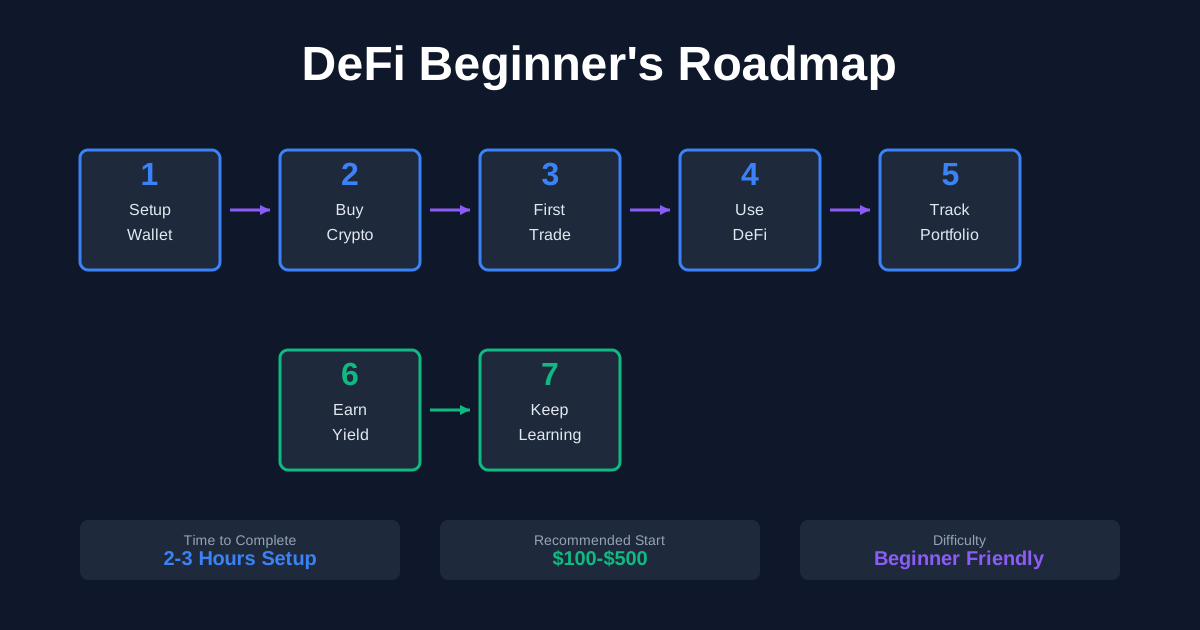
Getting Started with DeFi: Complete Beginner's Roadmap 2025
Your complete step-by-step guide to starting in DeFi. Learn the fundamentals, set up your wallet, make your first trades, and avoid costly mistakes as a DeFi beginner.
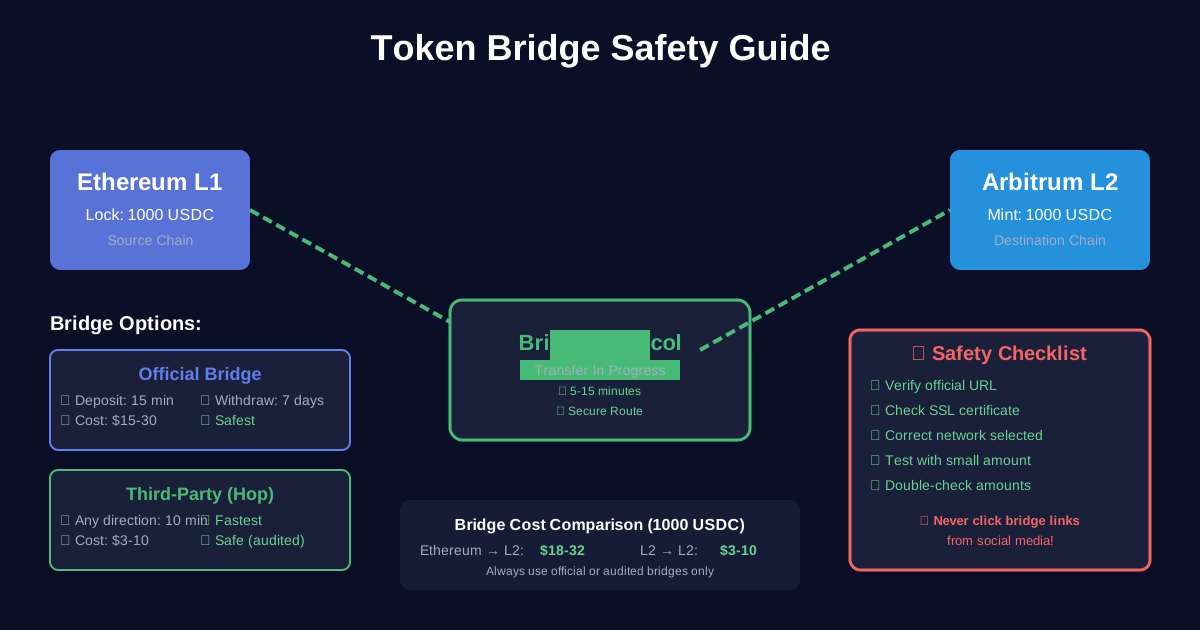
How to Bridge Tokens Between Chains: Complete Safety Guide 2025
Learn to safely bridge crypto between Ethereum, Arbitrum, Base, and other chains. Complete guide covering official bridges, cross-chain protocols, and avoiding scams.
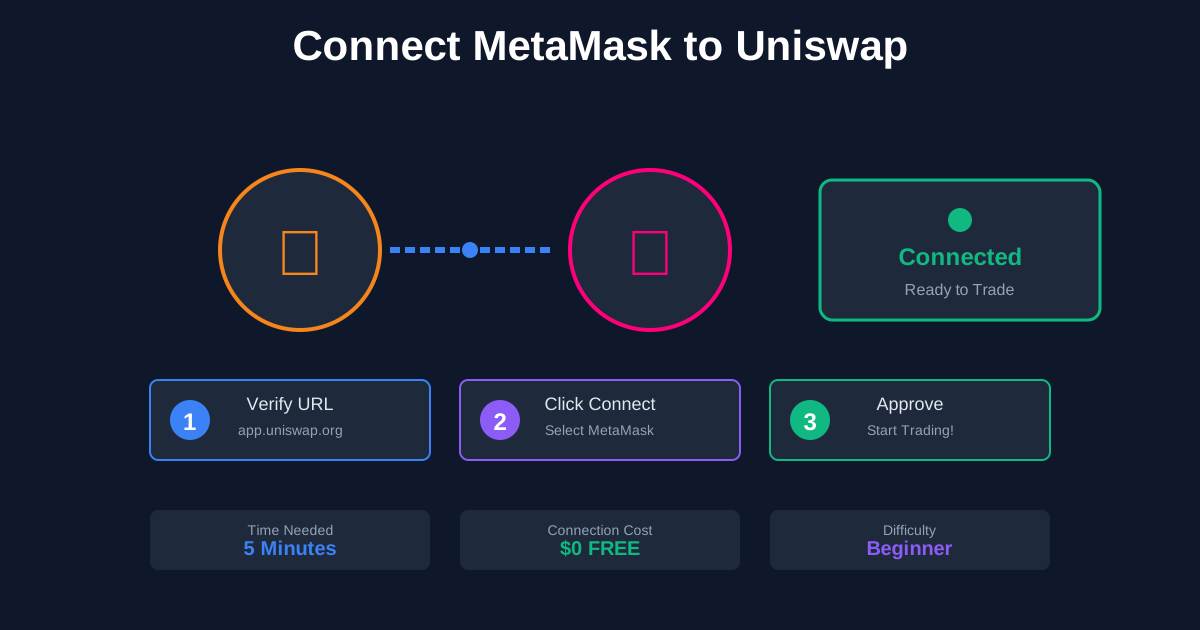
How to Connect MetaMask to Uniswap: Complete Step-by-Step Guide 2025
Learn how to safely connect your MetaMask wallet to Uniswap in 5 minutes. Complete tutorial with screenshots, troubleshooting, and security tips for DeFi beginners.