Understanding Gas Fees on Ethereum: Complete Guide to Save Money 2025
Master Ethereum gas fees with this complete guide. Learn what gas is, how to calculate costs, optimize transactions, and save 90%+ by using Layer 2 networks.
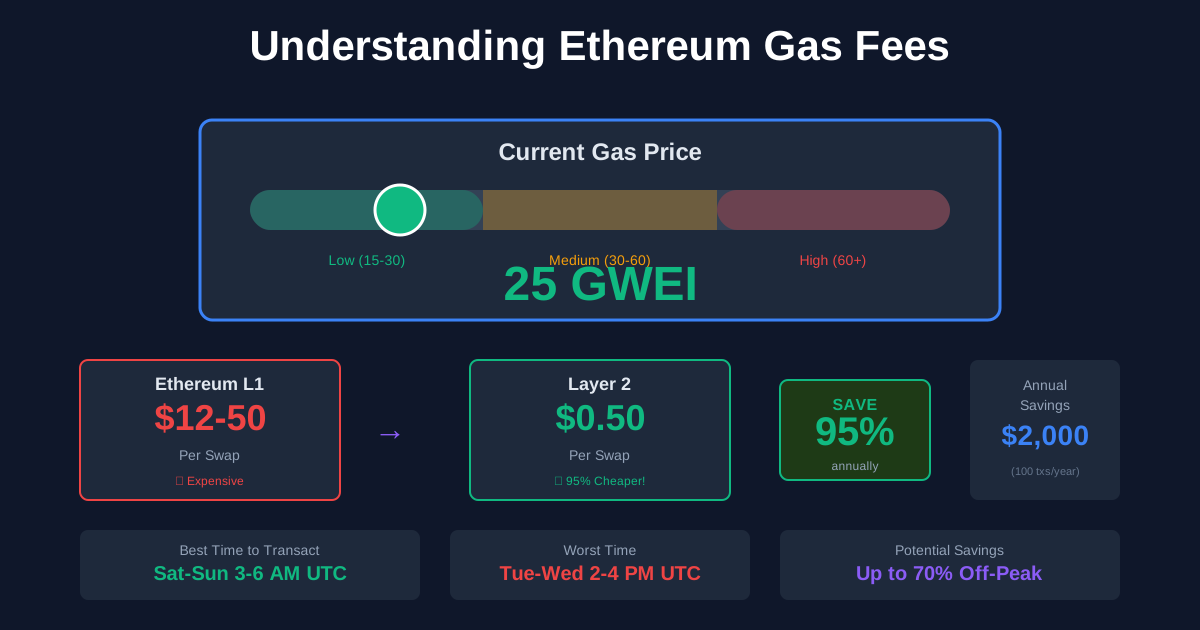
Understanding Gas Fees on Ethereum: Complete Guide to Save Money 2025
Gas fees confuse everyone when they start using Ethereum. Why does a $50 swap cost $30 in fees? What is "gwei"? Why do fees change constantly?
Understanding gas fees is crucial for DeFi profitability. High gas costs can turn profitable trades into losses, especially for small amounts.
This guide will explain exactly how Ethereum gas works, teach you to calculate costs, show you optimization strategies, and reveal how to save 90%+ using Layer 2 networks.
By the end, you'll never overpay for gas again.
What You'll Learn
✅ What gas is and why it exists
✅ How gas prices work (gwei explained)
✅ Calculating transaction costs accurately
✅ Gas optimization strategies
✅ Best times to transact (save 50%+)
✅ Layer 2 alternatives (90%+ cheaper)
✅ Advanced tips for power users
Time needed: 30 minutes to learn
Potential savings: $100-1,000+ per year
Difficulty: Beginner-friendly
Part 1: Gas Fundamentals
What is Gas?
Simple explanation: Gas is the fee you pay to execute transactions on Ethereum.
Why it exists:
- Prevents spam (costs money to use network)
- Compensates miners/validators
- Prioritizes important transactions
- Limits computational complexity
Real-world analogy:
Ethereum = Highway
Gas = Toll fee
Higher gas = Express lane (faster)
Lower gas = Slow lane (cheaper)
Who Gets the Gas Fee?
Before "The Merge" (Sept 2022):
- Miners received all gas fees
- Proof of Work consensus
After "The Merge" (Current):
- Validators receive tips
- Base fee is burned (removed from circulation)
- Proof of Stake consensus
Fee breakdown:
Transaction Fee = Base Fee + Priority Tip

Base Fee: Burned (destroyed) 🔥
Priority Tip: Goes to validators 💰

Example:
Base: 30 gwei (burned)
Tip: 2 gwei (to validator)
Total: 32 gwei per gas unit
Gas Units vs Gas Price
Two components to understand:
1. Gas Units (Gas Limit)
- Amount of computational work
- Fixed per transaction type
- Like "gallons of gas" for your car
2. Gas Price (Gwei)
- Price per gas unit
- Changes constantly
- Like "price per gallon"
Formula:
Total Cost = Gas Units × Gas Price

Example:
21,000 units × 30 gwei = 630,000 gwei
= 0.00063 ETH
= ~$1.37 (at $2,170/ETH)
Part 2: Understanding Gwei
What is Gwei?
Gwei = Gigawei = 1 billion wei
Ethereum denominations:
1 ETH = 1,000,000,000,000,000,000 wei
1 ETH = 1,000,000,000 gwei
1 gwei = 0.000000001 ETH

Think of it like:
$1 = 100 cents
1 ETH = 1 billion gwei
Why use gwei?
- Easier to read than wei
- Standard unit for gas prices
- Everyone uses it
Examples:
Instead of: 0.000000030 ETH per gas
Say: 30 gwei per gas

Instead of: 30,000,000,000 wei
Say: 30 gwei

Much simpler! ✓
Current Gas Price Ranges
Typical Ethereum mainnet gas prices:
⚡ Lightning Fast: 100+ gwei
  Use when: Urgent arbitrage, exploit defense
  Cost: $20-50 per simple transfer

🏃 Fast: 50-100 gwei
  Use when: Need confirmation in 1-2 minutes
  Cost: $10-25 per simple transfer

🚶 Normal: 30-50 gwei
  Use when: Standard transactions
  Cost: $6-12 per simple transfer

🐌 Slow: 15-30 gwei
  Use when: No rush, save money
  Cost: $3-7 per simple transfer

🦥 Very Slow: <15 gwei
  Use when: Weekend, overnight
  Cost: <$3 per simple transfer
Real-time gas prices:
- Etherscan Gas Tracker
- ETH Gas Station
- MetaMask built-in tracker
Part 3: Gas Costs by Transaction Type
Common Transaction Gas Usage
Simple transactions (Gas Units):
ETH Transfer:              21,000 units
ERC-20 Transfer:          ~65,000 units
ERC-20 Approve:           ~46,000 units
Uniswap Swap:            ~150,000 units
Add Liquidity:           ~180,000 units
Remove Liquidity:        ~120,000 units
Mint NFT:                ~100,000 units
Aave Deposit:            ~200,000 units
Aave Withdraw:           ~150,000 units
Compound Borrow:         ~250,000 units
Cost Calculator
At 30 gwei (current example):
ETH Transfer:
21,000 × 30 = 630,000 gwei = 0.00063 ETH ≈ $1.37

ERC-20 Transfer:
65,000 × 30 = 1,950,000 gwei = 0.00195 ETH ≈ $4.23

Uniswap Swap:
150,000 × 30 = 4,500,000 gwei = 0.0045 ETH ≈ $9.77

Aave Deposit:
200,000 × 30 = 6,000,000 gwei = 0.006 ETH ≈ $13.02
At 100 gwei (high congestion):
ETH Transfer: $4.57 (3.3x more!)
ERC-20 Transfer: $14.11
Uniswap Swap: $32.55
Aave Deposit: $43.40
The same actions cost 3-4x more at peak times!
Complex DeFi Operations
Multi-step transactions cost more:
Opening LP Position on Uniswap V3:
1. Approve Token A: 46,000 units
2. Approve Token B: 46,000 units
3. Add Liquidity: 180,000 units
━━━━━━━━━━━━━━━━━━━━━━━━━━━━━━━━━
Total: ~272,000 units

At 30 gwei: $17.66
At 100 gwei: $58.86

First-time cost! Subsequent positions cheaper.
Yield farming example:
Entering Convex Finance Position:
1. Approve LP token: 46,000
2. Deposit to Convex: 150,000
3. Stake CVX: 100,000
4. Claim rewards setup: 80,000
━━━━━━━━━━━━━━━━━━━━━━━━━━━━━━━━━
Total: ~376,000 units

At 30 gwei: $24.41
At 100 gwei: $81.39

Complex strategies = expensive entry!
Part 4: When to Transact (Save 50%+)
Gas Price Patterns
Daily patterns (UTC time):
🌅 Early Morning (2-6 AM UTC):
Gas: 15-25 gwei
Best time: 4-5 AM UTC
Reason: Asia sleeping, US sleeping, Europe waking

☀️ Morning (6-10 AM UTC):
Gas: 25-40 gwei
Reason: Europe active

🌞 Afternoon (10-16 PM UTC):
Gas: 40-80 gwei
Reason: Europe + US overlap (highest!)

🌆 Evening (16-22 PM UTC):
Gas: 35-60 gwei
Reason: US primetime

🌙 Night (22-2 AM UTC):
Gas: 20-35 gwei
Reason: Only Asia active

BEST TIME: 3-6 AM UTC (middle of US night)
WORST TIME: 14-16 PM UTC (Euro/US peak)
Weekly patterns:
Monday: Medium (40-60 gwei)
Tuesday: High (50-80 gwei) - Busiest day
Wednesday: High (50-80 gwei)
Thursday: Medium (40-60 gwei)
Friday: Medium-Low (30-50 gwei)
Saturday: Low (20-40 gwei) - Best day!
Sunday: Low (20-40 gwei) - Also great!

BEST DAYS: Saturday & Sunday
WORST DAY: Tuesday & Wednesday
Seasonal patterns:
Bull Market: Higher gas (50-200+ gwei avg)
Bear Market: Lower gas (15-40 gwei avg)
NFT Mints: Spike to 500+ gwei (avoid!)
Major Events: Spike to 200+ gwei
Holidays: Lower gas (people away)
Gas Price Alerts
Set up alerts to catch cheap gas:
1. Blocknative Gas Estimator
- Browser extension
- Alerts when gas drops
- Set target price
2. ETH Gas Station
- Telegram bot
- Custom alerts
- Historical data
3. MetaMask Mobile
- Built-in notifications
- Simple setup
Strategy:
1. Set alert for <20 gwei
2. Batch all transactions
3. Execute when alert triggers
4. Save 50-70% on gas
Part 5: Gas Optimization Strategies
Strategy 1: Batch Transactions
Instead of:
Day 1: Approve USDC (46,000 gas)
Day 2: Swap USDC (150,000 gas)
Day 3: Approve DAI (46,000 gas)
Day 4: Add liquidity (180,000 gas)
━━━━━━━━━━━━━━━━━━━━━━━━━━━━━━━━━
Total: 422,000 gas
At 50 gwei: $45.71
Do this:
Wait for low gas weekend:
All 4 transactions together
At 20 gwei: $18.28

Savings: $27.43 (60%!)
Batching tips:
- Queue non-urgent transactions
- Wait for weekend/off-peak
- Execute all at once
- Huge savings for frequent traders
Strategy 2: Adjust Gas Settings
In MetaMask:
- Click "Edit" on gas fee
- Choose "Advanced"
- Set custom values:
Max Base Fee: Your limit (e.g., 30 gwei)
Priority Fee: Tip to validator (1-2 gwei)
Gas Limit: Leave default (usually correct)
Conservative approach:
Max Base Fee: 25 gwei
Priority Fee: 1 gwei
Max Wait: 15 minutes

Transaction will only go through if gas ≤25 gwei
Might wait, but saves money!
Aggressive approach:
Max Base Fee: 100 gwei
Priority Fee: 5 gwei
Max Wait: Instant

Guaranteed fast, but expensive
Use for urgent only!
Strategy 3: Failed Transaction Prevention
Failed transactions STILL cost gas!
Common causes:
❌ Slippage too low (price moved)
❌ Out of gas (limit too low)
❌ Approval not set
❌ Insufficient balance
❌ Smart contract revert

All waste your gas fee! 💸
Prevention checklist:
✅ Check slippage (0.5-1% usually safe)
✅ Verify gas limit (use recommended)
✅ Approve tokens first
✅ Confirm sufficient balance
✅ Test with small amount first
✅ Use simulation tools
Simulation tools:
- Tenderly - Test transactions before sending
- Etherscan Write Contract - Shows if will fail
- MetaMask - Built-in simulation (sometimes)
Strategy 4: Use Gas Tokens (Advanced)
What are gas tokens?
- GST2, CHI tokens
- Pre-buy gas when cheap
- Use when expensive
- Complex to use
How they work:
1. When gas is 15 gwei: Mint gas tokens
2. Tokens store cheap gas
3. When gas is 100 gwei: Burn tokens
4. Get discount on transaction

Savings: 20-40% on expensive gas
Worth it for: Large, frequent transactions
Note: Less effective post-EIP-1559. Most users skip this.
Strategy 5: Transaction Acceleration/Cancellation
If transaction stuck (gas too low):
Option 1: Speed Up
1. Click pending transaction in MetaMask
2. Click "Speed Up"
3. Increase gas price
4. Confirm
5. Replaces old transaction
Option 2: Cancel
1. Click pending transaction
2. Click "Cancel"
3. Pay gas to cancel
4. Resubmit with correct settings
Option 3: Replace (Advanced)
Send 0 ETH to yourself
Same nonce as stuck transaction
Higher gas price
Cancels original transaction
Part 6: Layer 2 Solutions (90%+ Savings!)
Why Layer 2?
Problem: Ethereum mainnet expensive
Solution: Layer 2 networks (L2s)
Benefits:
- 90-99% cheaper gas
- 10-100x faster transactions
- Same security (most L2s)
- Easy to use
Major Layer 2 Networks
Optimistic Rollups:
1. Arbitrum
Gas Cost: $0.50-2 per swap
Speed: 2-5 seconds
TVL: $3.8B
Best For: General DeFi
Withdrawal Time: 7 days to L1
2. Optimism
Gas Cost: $0.40-1.50 per swap
Speed: 2-5 seconds
TVL: $2.1B
Best For: General DeFi
Withdrawal Time: 7 days to L1
3. Base (Coinbase L2)
Gas Cost: $0.30-1 per swap
Speed: 2-5 seconds
TVL: $1.8B
Best For: Coinbase users
Withdrawal Time: 7 days to L1
ZK Rollups:
4. zkSync Era
Gas Cost: $0.20-0.80 per swap
Speed: Instant
TVL: $850M
Best For: Lowest gas
Withdrawal Time: Hours (much faster!)
5. Polygon zkEVM
Gas Cost: $0.01-0.10 per swap
Speed: Instant
TVL: $450M
Best For: Ultra-cheap transactions
Withdrawal Time: Hours
Sidechains:
6. Polygon PoS
Gas Cost: $0.01-0.10 per swap
Speed: Instant
TVL: $1.4B
Best For: Cheapest option
Security: Separate from Ethereum
Cost Comparison
Swapping $1,000 USDC for ETH:
Network          | Gas Cost | Speed  | Security
━━━━━━━━━━━━━━━━━━━━━━━━━━━━━━━━━━━━━━━━━━━━━
Ethereum         | $9-50    | 12s    | Highest
Arbitrum         | $0.80    | 3s     | High (L2)
Optimism         | $0.70    | 3s     | High (L2)
Base             | $0.60    | 3s     | High (L2)
zkSync Era       | $0.40    | 2s     | High (ZK)
Polygon zkEVM    | $0.05    | 2s     | High (ZK)
Polygon PoS      | $0.03    | 2s     | Medium

SAVINGS: 95-99.7% on Layer 2! 🎉
Annual savings example:
Active DeFi user:
- 100 transactions/year
- Average: $20 gas on Ethereum

Ethereum cost: $2,000/year
Arbitrum cost: $80/year
Polygon cost: $3/year

Savings: $1,920-1,997/year! 💰
How to Use Layer 2
Simple process:
-
Bridge assets to L2
- Use official bridge
- One-time cost ($10-30)
- Worth it after 5-10 transactions
-
Use DeFi on L2
- Same protocols (Uniswap, Aave, etc.)
- Same interface
- 90%+ cheaper
-
Bridge back when needed
- Optional (can stay on L2)
- Costs similar to bridge in
Read our guide: Layer 2 Solutions: Arbitrum, Optimism, Base
Part 7: Advanced Gas Concepts
EIP-1559 Explained
What changed (August 2021):
Before EIP-1559:
Gas Price = One number
Miners get everything
Auction system (bid for space)
Unpredictable costs
After EIP-1559:
Total Fee = Base Fee + Priority Tip

Base Fee:
- Algorithmically determined
- Burns (reduces ETH supply)
- Predictable

Priority Tip:
- You choose
- Goes to validators
- Incentive for fast inclusion
Benefits:
- More predictable fees
- Better UX
- ETH becomes deflationary
- Less overpaying
Gas Limit vs Gas Used
Important distinction:
Gas Limit:
- Maximum you'll pay
- Set by you
- Safety buffer
Gas Used:
- Actual gas consumed
- Usually less than limit
- What you actually pay
Example:
You set: 200,000 gas limit
Transaction uses: 183,254 gas
You pay for: 183,254 (not 200,000!)

Extra goes back to you ✓
Why set higher limit?
- Prevent "out of gas" error
- Unused amount refunded
- Default usually correct
When to adjust:
❌ Never set lower than recommended
✅ Can set 10-20% higher for safety
❌ Setting too high wastes nothing (refunded)
   But looks scarier in wallet!
Flashbots (MEV Protection)
What is MEV?
- Maximal Extractable Value
- Bots front-run your trades
- You get worse prices
Flashbots solution:
Private transaction mempool
Prevents front-running
Same gas cost
Better execution

How to use:
1. Use Flashbots RPC in MetaMask
2. Or use MEV-protection DEXs
3. Protects large trades
Worth it for:
- Trades > $10,000
- Important transactions
- Price-sensitive swaps
Part 8: Gas Fee Mistakes to Avoid
Mistake 1: Using Mainnet for Small Amounts
The Error:
Swapping $100 on Ethereum
Gas cost: $12
Total cost: 12% of trade!

Losing money to fees 💸
The Fix:
Use Layer 2 for amounts < $1,000
Gas cost: $0.50
Total cost: 0.5% of trade ✓

10x better! 🎉
Mistake 2: Not Checking Gas Before Confirming
The Error:
Clicks "Confirm" without looking
Gas: 200 gwei (very high!)
$60 swap fee for $200 trade

30% fee! 😱
The Fix:
Always check gas price before confirming
If high: Wait or use L2
Save 50-90%
Mistake 3: Setting Slippage Too Low
The Error:
Sets 0.1% slippage
Price moves 0.2%
Transaction fails
Still pays gas!

Wasted $15 💸
The Fix:
Set reasonable slippage:
- Stablecoins: 0.5%
- Major tokens: 0.5-1%
- Volatile tokens: 1-3%

Prevents failed transactions ✓
Mistake 4: Approving Unlimited Tokens on Mainnet
The Error:
Every new token: 46,000 gas approval
10 tokens: $100+ in approval fees
Then still pay swap fees!

Double paying 💸
The Fix:
Option 1: Use L2 (cheap approvals)
Option 2: Approve unlimited (one-time cost)
Option 3: Use DEX aggregators (batch approvals)
Mistake 5: Panic During High Gas
The Error:
Gas spikes to 300 gwei
Panics, must transact NOW
Pays $80 for urgent swap

Overpaid 10x! 😱
The Fix:
Stay calm
Ask: Is this truly urgent?
Most transactions can wait
Set gas alerts
Transact when cheap

Patience saves money ✓
Part 9: Tools and Resources
Gas Tracking Tools
Real-time gas prices:
- Etherscan Gas Tracker - Most popular
- ETH Gas Station - Historical data
- Blocknative - Predictions
- Gas Now - Simple interface
Browser extensions:
- Blocknative - Gas price monitoring
- Gnosis Safe - Transaction batching
- MetaMask - Built-in gas estimation
Mobile apps:
- MetaMask Mobile - Gas alerts
- Rainbow Wallet - Gas tracking
- Zerion - Portfolio + gas
Calculation Tools
Use our calculator: Gas Fee Calculator
Features:
- Real-time gas prices
- Cost by transaction type
- Network comparison
- Savings calculator
Other calculators:
- Etherscan Gas Calculator
- L2 Fees (l2fees.info)
- Crypto Fee Comparison
Part 10: Gas Fee FAQs
Q: Why do gas fees change so much?
A: Network congestion. More users = higher fees (supply and demand).
Q: Can I get refund if transaction fails?
A: No. Gas still consumed by network.
Q: How to avoid high gas?
A: Use L2 networks, transact off-peak, batch transactions.
Q: What's a safe gas limit to set?
A: Use recommended (default). Can add 10-20% buffer.
Q: Worth moving to L2?
A: Yes, if you make >5 transactions/year. Break even fast.
Q: When will Ethereum gas be cheap?
A: Unlikely on mainnet. That's why L2s exist.
Q: How much gas to keep in wallet?
A:
- Ethereum: 0.02-0.05 ETH ($40-100)
- Arbitrum: 0.002-0.005 ETH ($4-10)
- Polygon: $5-10 in MATIC
Q: Can I set gas to 0?
A: No. Minimum ~1 gwei. Transaction won't process at 0.
Summary: Gas Fee Optimization Checklist
Before every transaction:
□ Check current gas price
□ Compare to historical average
□ Can this wait for cheaper gas?
□ Should I use L2 instead?
□ Is gas limit reasonable?
□ Slippage set correctly?
□ Will this transaction succeed?
Long-term strategy:
□ Move most activity to L2
□ Batch mainnet transactions
□ Transact on weekends/off-peak
□ Set up gas price alerts
□ Use gas tracking tools
□ Keep gas cost records (taxes)
□ Review and optimize monthly
Expected savings:
Beginner (no optimization): $0 saved
Basic optimization: $200-500/year
Advanced optimization: $500-2,000/year
Moving to L2: $1,000-5,000/year

All strategies combined: $2,000-10,000/year! 💰
Next Steps
You now understand:
✅ What gas is and how it works
✅ How to calculate gas costs
✅ When to transact for best prices
✅ Optimization strategies
✅ Layer 2 alternatives
✅ How to save 90%+ on fees
Continue learning:
- Layer 2 Solutions: Arbitrum, Optimism, Base
- How to Bridge Tokens Between Chains
- Getting Started with DeFi
Use our tools:
- Gas Fee Calculator - Calculate transaction costs
- Token Price Calculator - Compare prices across chains
- DCA Calculator - Optimize buying strategy
Final Thoughts
Gas fees are NOT a barrier—they're a choice.
You can:
- Pay $50/transaction on Ethereum mainnet
- Pay $0.50/transaction on Arbitrum
- Pay $0.03/transaction on Polygon
The choice is yours. Learn to optimize, use the right networks, and transact at the right times.
For 95% of users, Layer 2 is the answer. Take 30 minutes to bridge once, save thousands per year.
Stop overpaying for gas. Start using these strategies today! ⚡💰
Quick Reference Card
Gas Price Guide (Ethereum):
━━━━━━━━━━━━━━━━━━━━━━━━━━━━
<20 gwei:  Excellent time ✓✓✓
20-40:     Good time ✓✓
40-60:     Average ✓
60-100:    High, wait if possible
>100:      Very high, avoid!

Best Times (UTC):
━━━━━━━━━━━━━━━━━━━━━━━━━━━━
Best hours: 3-6 AM
Best days: Saturday, Sunday
Worst: Tuesday 2-4 PM

Quick Savings:
━━━━━━━━━━━━━━━━━━━━━━━━━━━━
1. Use Layer 2 (90% savings)
2. Transact weekends (50% savings)
3. Batch transactions (30% savings)
4. Set gas alerts (wait for cheap)
5. Avoid peak hours

Emergency Resources:
━━━━━━━━━━━━━━━━━━━━━━━━━━━━
Gas tracker: etherscan.io/gastracker
L2 costs: l2fees.info
Our calculator: web3calc.com/tools/gas-fee
Master gas fees, maximize profits! 🚀
Share this article:
Related Articles
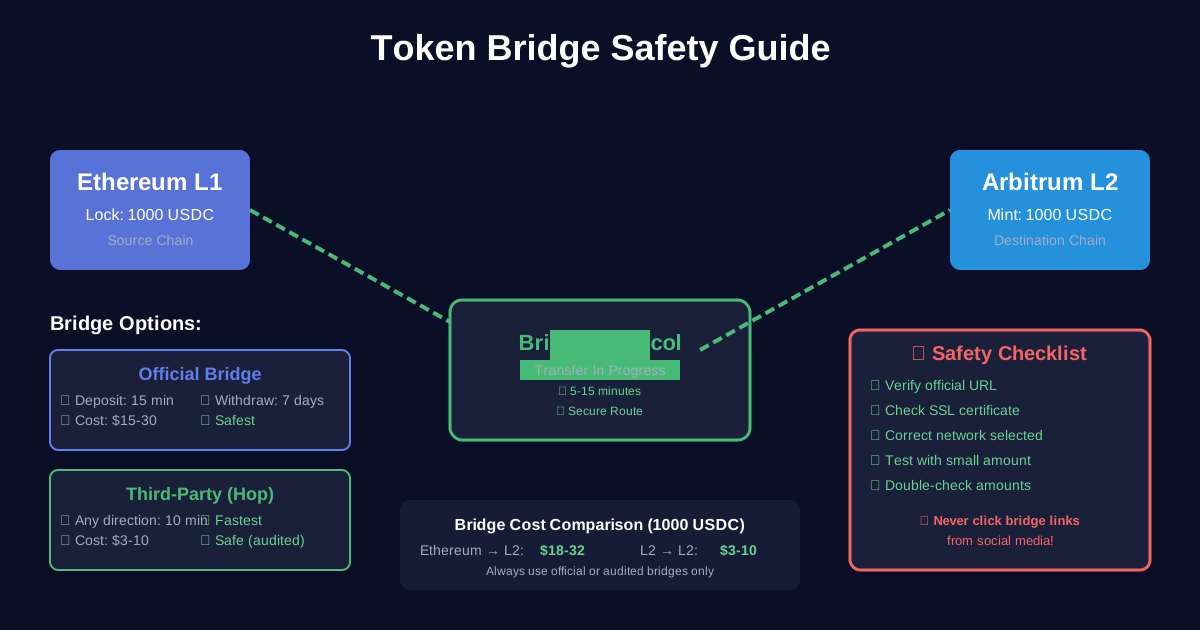
How to Bridge Tokens Between Chains: Complete Safety Guide 2025
Learn to safely bridge crypto between Ethereum, Arbitrum, Base, and other chains. Complete guide covering official bridges, cross-chain protocols, and avoiding scams.
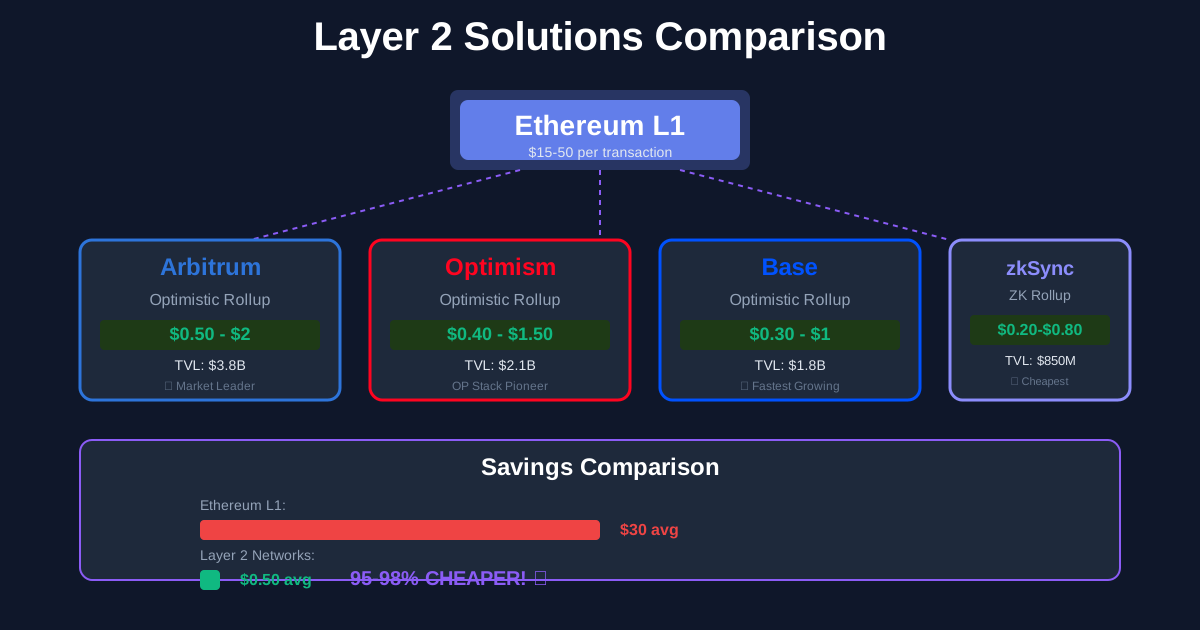
Layer 2 Solutions Explained: Arbitrum, Optimism, Base Complete Guide 2025
Master Ethereum Layer 2 networks and save 95% on gas fees. Complete comparison of Arbitrum, Optimism, Base, zkSync, and Polygon with setup tutorials.
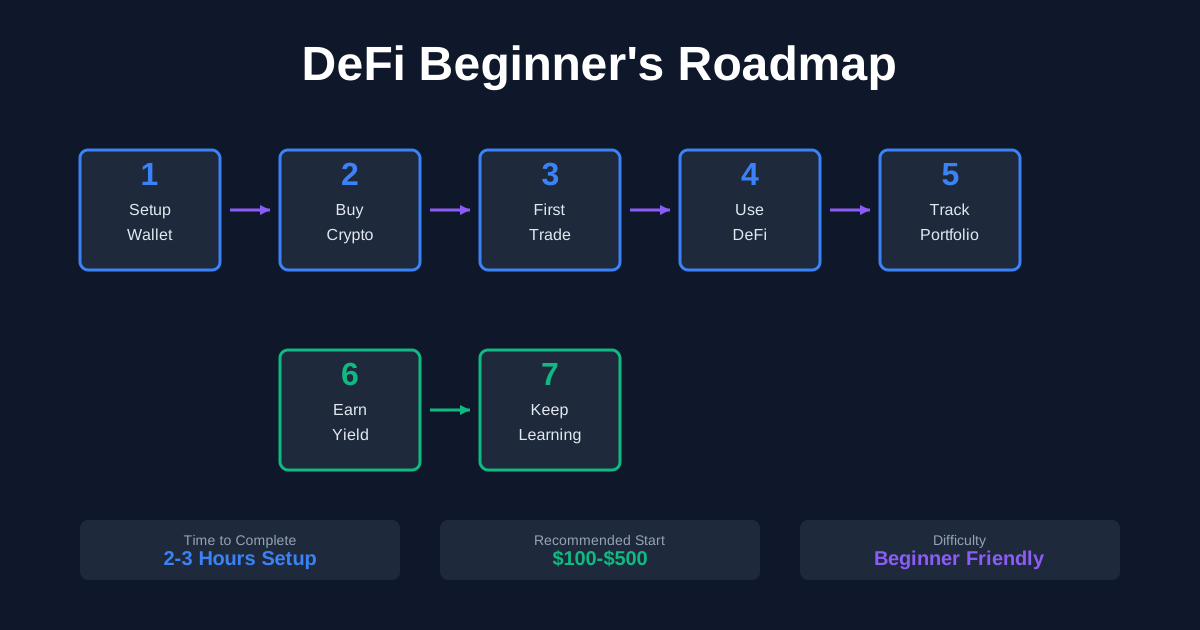
Getting Started with DeFi: Complete Beginner's Roadmap 2025
Your complete step-by-step guide to starting in DeFi. Learn the fundamentals, set up your wallet, make your first trades, and avoid costly mistakes as a DeFi beginner.