Yield Farming Strategies for Beginners: Maximize Your DeFi Returns in 2025
Discover proven yield farming strategies for beginners. Learn how to earn passive income through DeFi protocols, minimize risks, and optimize your returns.
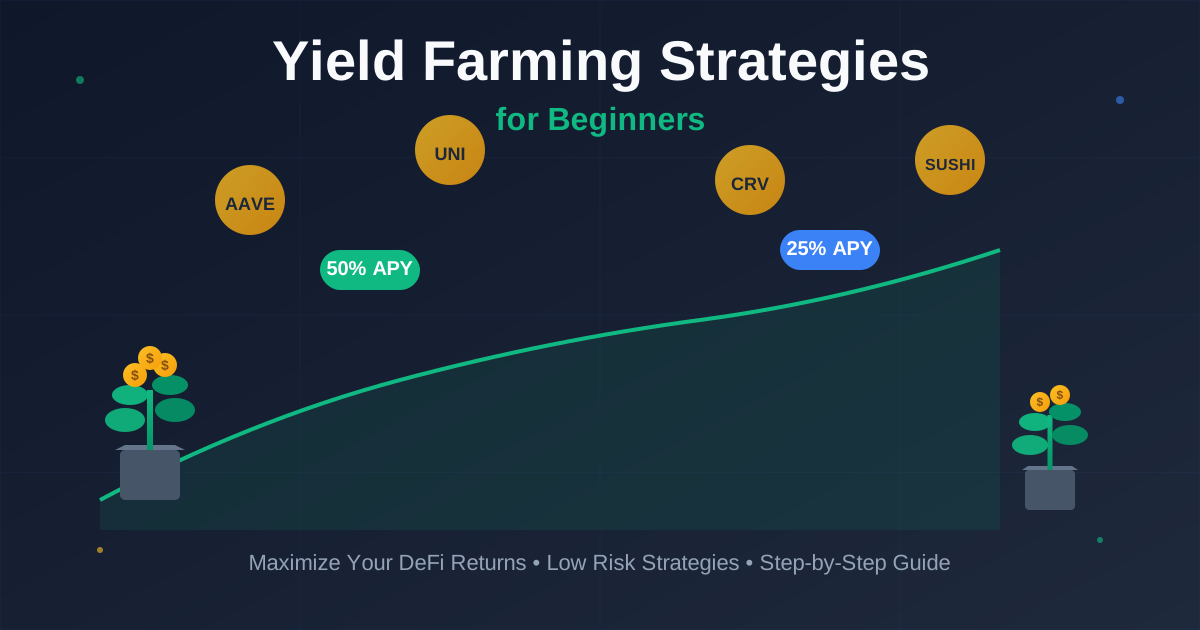
Yield Farming Strategies for Beginners: Maximize Your DeFi Returns in 2025
Yield farming has become one of the most popular ways to earn passive income in DeFi. But with so many protocols, strategies, and risks involved, where should beginners start? This comprehensive guide will walk you through proven yield farming strategies that can help you maximize returns while managing risk.
What is Yield Farming?
Yield farming (also called liquidity mining) is the practice of staking or lending crypto assets to generate high returns in the form of additional cryptocurrency. Think of it as putting your crypto to work instead of letting it sit idle in your wallet.
Key Components:
- Liquidity Provision: Depositing tokens into liquidity pools
- Staking: Locking tokens to secure a network or protocol
- Lending: Providing assets to borrowers in return for interest
- Rewards: Earning fees, interest, or governance tokens
Why Yield Farm?
Traditional savings accounts offer 0.5-2% APY. DeFi yield farming can offer:
- 5-15% APY on stablecoin pairs (lower risk)
- 20-50% APY on major crypto pairs (moderate risk)
- 100%+ APY on new protocols (higher risk)
However, higher returns come with higher risks. Let's explore strategies from safest to most aggressive.
Strategy 1: Stablecoin Farming (Conservative)
Risk Level: ⭐ Low
Expected APY: 5-15%
Best For: Beginners, risk-averse investors
How It Works
Provide liquidity to stablecoin pairs like USDC/USDT, DAI/USDC, or USDC/BUSD. Since both assets maintain $1 value, you avoid impermanent loss while earning trading fees and rewards.
Recommended Protocols
-
Curve Finance
- Specializes in stablecoin pools
- Low slippage, high efficiency
- Bonus CRV token rewards
- Typical APY: 5-12%
-
Aave
- Supply stablecoins for lending
- Earn interest from borrowers
- Very liquid, easy to withdraw
- Typical APY: 3-8%
-
Uniswap V3
- Narrow range on stablecoin pairs
- Higher capital efficiency
- Earn trading fees
- Typical APY: 8-15%
Step-by-Step Example
1. Buy $1,000 USDC and $1,000 DAI
2. Connect wallet to Curve Finance
3. Deposit into USDC/DAI pool
4. Stake LP tokens for CRV rewards
5. Compound rewards weekly
Pros:
- Minimal impermanent loss risk
- Predictable returns
- High liquidity
Cons:
- Lower yields than volatile pairs
- Still exposed to smart contract risk
Strategy 2: Blue Chip Farming (Moderate)
Risk Level: ⭐⭐ Medium
Expected APY: 15-40%
Best For: Intermediate users comfortable with volatility
How It Works
Provide liquidity to pairs with established cryptocurrencies like ETH/USDC, BTC/ETH, or ETH/USDT. Higher volatility means higher impermanent loss risk, but also higher rewards.
Recommended Protocols
-
Uniswap V2/V3
- Most liquid DEX
- ETH/USDC pool: 15-25% APY
- Deep liquidity, tight spreads
-
SushiSwap
- Similar to Uniswap
- Extra SUSHI rewards
- Multiple chains supported
-
Balancer
- Multi-token pools
- Customizable weights
- Lower impermanent loss
Managing Impermanent Loss
Key Strategies:
- Choose pairs with correlated assets (ETH/WBTC)
- Use narrow ranges in Uniswap V3
- Rebalance when prices shift significantly
- Calculate break-even: IL must be < fee earnings
Example Calculation:
Initial: 1 ETH ($2,000) + 2,000 USDC = $4,000
After 2x price increase: 0.707 ETH + 2,828 USDC = $5,656
Impermanent Loss: 5.7%
Fee Revenue Needed: >5.7% to profit
Time Required: 2-4 months typically
Use our Impermanent Loss Calculator to estimate your potential IL before farming.
Strategy 3: Single-Sided Staking (Beginner-Friendly)
Risk Level: ⭐ Low to Medium
Expected APY: 4-20%
Best For: Those who want to avoid impermanent loss
How It Works
Stake a single asset without providing liquidity. You earn rewards without the complexity of managing two tokens or worrying about impermanent loss.
Recommended Protocols
-
Lido (stETH)
- Stake ETH for stETH
- Earn 3-4% APY
- Keep liquidity with stETH
-
AAVE
- Supply single assets
- Earn lending interest
- Very secure, audited
-
Convex Finance
- Stake CRV tokens
- Boost Curve rewards
- 10-15% APY
Pros and Cons
Pros:
- No impermanent loss
- Simpler to manage
- Lower gas fees (one token)
Cons:
- Generally lower yields
- Single asset price risk
- Less diversification
Strategy 4: Auto-Compounding Vaults (Hands-Off)
Risk Level: ⭐⭐ Medium
Expected APY: 20-60%
Best For: Busy users who want automation
How It Works
Deposit assets into vaults that automatically harvest rewards, swap them, and reinvest. This maximizes compound interest without manual work.
Recommended Protocols
-
Yearn Finance
- Pioneer of yield aggregation
- Expert strategies
- High TVL, battle-tested
-
Beefy Finance
- Multi-chain support
- Auto-compounds every few hours
- Simple UI
-
Convex Finance
- Optimizes Curve yields
- Auto-stakes rewards
- Boost mechanism
The Power of Compounding
Manual vs Auto-Compounding:
$10,000 at 30% APY
Manual (compound monthly): $13,493 after 1 year
Auto (compound daily): $13,499 after 1 year
Difference: Only $6, but scales with larger amounts
Strategy 5: Layer 2 Farming (Lower Fees)
Risk Level: ⭐⭐ Medium
Expected APY: 15-50%
Best For: Users tired of high Ethereum gas fees
Why Layer 2?
Ethereum gas fees can eat into profits. Layer 2 solutions offer:
- 90% lower transaction costs
- Faster confirmations
- Same security as Ethereum
Recommended Chains
-
Arbitrum
- Top protocols: GMX, Camelot
- Ethereum-compatible
- 15-40% APY
-
Optimism
- Velodrome Finance
- OP token rewards
- Growing ecosystem
-
Base (Coinbase L2)
- Aerodrome, Uniswap
- Easy onboarding
- 20-50% APY
Getting Started on Arbitrum
1. Bridge assets using Arbitrum Bridge
2. Add Arbitrum network to MetaMask
3. Swap for desired tokens on Uniswap
4. Provide liquidity on GMX or Camelot
5. Stake LP tokens for rewards
Strategy 6: Stablecoin Lending (Ultra-Safe)
Risk Level: ⚡ Very Low
Expected APY: 3-10%
Best For: Maximum safety, minimal effort
How It Works
Simply supply stablecoins to lending protocols. Borrowers pay interest, which you earn. No impermanent loss, no liquidity providing.
Top Platforms
-
Aave
- Supply USDC: 3-6% APY
- Instant withdrawal
- Battle-tested
-
Compound
- Supply DAI: 4-8% APY
- COMP token rewards
- Very liquid
-
Morpho
- Optimized rates
- Built on Aave/Compound
- 5-10% APY
When to Use This Strategy
- Market is highly volatile
- You need guaranteed liquidity
- Risk tolerance is very low
- Learning DeFi basics
Advanced Strategy: Leveraged Yield Farming
Risk Level: ⭐⭐⭐⭐ Very High
Expected APY: 50-200%+
Best For: Experienced farmers only
How It Works
Borrow assets to increase your farming position size. This amplifies both gains and losses.
Example:
Your Capital: $10,000
Borrow: $10,000 (2x leverage)
Total Farming: $20,000
If 30% APY: Earn $6,000 (minus borrowing costs)
If IL hits hard: Lose more than without leverage
Protocols Supporting Leverage
-
Gearbox Protocol
- Up to 10x leverage
- Isolated risk
- Multiple strategies
-
Alpaca Finance
- Leveraged yield farming
- Automated liquidation protection
- 3-6x leverage
⚠️ Warning: Only use leverage if you:
- Fully understand liquidation risks
- Can afford to lose your capital
- Monitor positions daily
- Know how to calculate health factors
Risk Management: Essential Tips
1. Diversify Your Farms
Don't put all assets in one protocol. Spread across:
- 40% stablecoin farms (safe)
- 30% blue chip pairs (moderate)
- 20% single staking (simple)
- 10% experimental (high risk)
2. Research Smart Contract Audits
Always check:
- Has the protocol been audited?
- By which firms? (CertiK, Trail of Bits, etc.)
- How old is the protocol? (>6 months preferred)
- What's the Total Value Locked (TVL)?
3. Understand Rug Pull Risks
Red flags to avoid:
- Anonymous team
- No audit
- Extremely high APYs (>500%)
- New protocol with low TVL
- No token unlock schedule
4. Calculate Your Break-Even Point
Use our APY Calculator to determine:
- How long to recover gas fees?
- When do you start profiting?
- What's your real APY after fees?
5. Monitor Impermanent Loss
Check IL daily if farming volatile pairs:
- 2x price change = 5.7% IL
- 3x price change = 13.4% IL
- 5x price change = 25.5% IL
If IL > accumulated fees, consider exiting.
Tax Implications
Important: Yield farming creates taxable events:
- Harvesting rewards = income
- Swapping tokens = capital gains
- LP token trading = capital gains
Use our Crypto Tax Calculator to estimate your obligations.
Step-by-Step: Your First Yield Farm
Complete Beginner Tutorial
Goal: Earn 8% APY safely with $1,000
Step 1: Prepare Assets
Buy $500 USDC + $500 USDT on Coinbase
Transfer to MetaMask wallet
Keep $50 ETH for gas fees
Step 2: Choose Protocol
Go to Curve Finance (curve.fi)
Connect MetaMask
Select "USDC/USDT" pool
Step 3: Add Liquidity
Click "Deposit"
Enter $500 USDC and $500 USDT
Approve tokens (2 transactions)
Confirm deposit
Receive LP tokens
Step 4: Stake for Rewards
Go to "Stake" tab
Stake your LP tokens
Start earning CRV rewards
Step 5: Compound Weekly
Harvest CRV rewards
Swap CRV to USDC/USDT
Add to pool again
Restake LP tokens
Expected Results:
- Base APY: 5-8%
- CRV rewards: 2-4%
- Total APY: 7-12%
- Monthly earnings: $6-10
Common Mistakes to Avoid
1. Chasing High APYs
Mistake: Farming new protocols with 1,000% APY
Reality: High APYs don't last, tokens dump fast
Solution: Stick to protocols with >$50M TVL and reasonable APYs
2. Ignoring Gas Fees
Mistake: Farming with $100 on Ethereum
Reality: Gas fees eat all profits
Solution: Use Layer 2 or farm with >$1,000
3. Not Tracking Performance
Mistake: Assuming you're profitable
Reality: IL might exceed fee earnings
Solution: Use our Portfolio Tracker to monitor
4. Leaving Rewards Unharvested
Mistake: Letting rewards sit for months
Reality: Missing compound interest gains
Solution: Harvest and compound weekly/monthly
5. Using Hot Wallets for Large Amounts
Mistake: Keeping $50K+ in MetaMask
Reality: Vulnerable to hacks
Solution: Use hardware wallet (Ledger, Trezor)
Best Protocols by Chain (2025)
Ethereum
- Curve Finance - Stablecoins, audited, deep liquidity
- Uniswap V3 - Blue chips, concentrated liquidity
- Aave - Lending, single-sided, safe
Arbitrum
- GMX - Perpetuals, GLP vault, 20-30% APY
- Camelot - Native DEX, ARB rewards
- Uniswap V3 - Cross-chain liquidity
Optimism
- Velodrome - Vote-escrowed model, high APYs
- Uniswap V3 - Reliable, liquid
- Aave - Lending, OP rewards
Polygon
- QuickSwap - Low fees, MATIC rewards
- Aave - Polygon markets, 5-15% APY
- Balancer - Multi-token pools
BSC (Binance Smart Chain)
- PancakeSwap - Largest BSC DEX, CAKE rewards
- Venus - Lending, stable rates
- Alpaca Finance - Leveraged farming
Tools to Maximize Your Farming
Essential Calculators
-
- Calculate potential IL before farming
- Compare different price scenarios
- Factor in fee revenues
-
- Compare actual vs advertised returns
- Account for compounding frequency
- Calculate break-even time
-
- Monitor all positions in one place
- Track P/L across protocols
- Export for tax reporting
-
- Estimate transaction costs
- Compare chains
- Optimize farming timing
Portfolio Tracking Tools
- Zapper.fi - Multi-chain portfolio dashboard
- DeBank - Comprehensive DeFi tracker
- Zerion - Mobile-friendly tracking
Safety Checkers
- DeFi Safety - Protocol risk ratings
- RugDoc - Scam detection
- TokenSniffer - Contract verification
Real-World Yield Farming Examples
Example 1: Conservative (Beginner)
Profile: $5,000, risk-averse, 6-month timeframe
Strategy:
- 60% Curve USDC/USDT: $3,000 at 8% = $240/year
- 30% Aave USDC lending: $1,500 at 5% = $75/year
- 10% ETH staking on Lido: $500 at 4% = $20/year
Total Return: $335/year (6.7% blended APY)
Risk: Very low
Effort: Minimal (monthly check-ins)
Example 2: Moderate (Intermediate)
Profile: $20,000, moderate risk, active management
Strategy:
- 40% Uniswap V3 ETH/USDC: $8,000 at 20% = $1,600/year
- 30% GMX GLP vault: $6,000 at 25% = $1,500/year
- 20% Curve 3pool: $4,000 at 10% = $400/year
- 10% Arbitrum native farms: $2,000 at 40% = $800/year
Total Return: $4,300/year (21.5% blended APY)
Risk: Medium
Effort: Weekly rebalancing
Example 3: Aggressive (Advanced)
Profile: $50,000, high risk tolerance, daily monitoring
Strategy:
- 30% Leveraged farming (2x): $15,000 at 60% = $9,000/year
- 25% New protocol launches: $12,500 at 80% = $10,000/year
- 25% Blue chip LP: $12,500 at 30% = $3,750/year
- 20% Stablecoin safety: $10,000 at 8% = $800/year
Total Return: $23,550/year (47% blended APY)
Risk: High
Effort: Daily management required
The Future of Yield Farming
Emerging Trends (2025)
-
Real-World Asset (RWA) Yields
- Tokenized treasuries: 5% risk-free
- Real estate tokens
- Bridging TradFi and DeFi
-
Restaking Protocols
- EigenLayer ecosystem
- Multiple yield layers
- 10-20% base yields
-
Cross-Chain Yield Optimization
- Automated chain hopping
- Best rate finding
- Lower friction
-
Institutional DeFi
- Compliance-friendly protocols
- Higher liquidity
- More stable yields
Conclusion: Your Yield Farming Action Plan
Week 1: Learn & Prepare
- Read this guide thoroughly
- Research 3 protocols
- Set up hardware wallet
- Calculate your risk tolerance
Week 2: Start Small
- Farm $500-1,000 on stablecoins
- Use Curve or Aave
- Track performance daily
- Learn the interfaces
Week 3: Expand Carefully
- Add blue chip pair farming
- Try Layer 2 protocols
- Set up auto-compounding
- Monitor IL regularly
Week 4+: Optimize
- Review performance weekly
- Rebalance based on market
- Compound rewards
- Scale up gradually
Final Thoughts
Yield farming can generate substantial passive income, but success requires:
✅ Education - Understand mechanics fully
✅ Patience - Start small, scale gradually
✅ Risk Management - Diversify, use audited protocols
✅ Active Management - Monitor IL, compound regularly
✅ Realistic Expectations - 15-30% APY is excellent
Remember: Never farm with money you can't afford to lose. DeFi is still experimental technology with smart contract risks, regulatory uncertainty, and market volatility.
Start with conservative strategies, master the basics, and only then explore higher-risk opportunities. The best yield farmers are patient, disciplined, and always learning.
Ready to Start Yield Farming?
Use our free DeFi calculators to plan your strategy:
- Impermanent Loss Calculator - Estimate IL risk
- APY/APR Calculator - Compare real returns
- Portfolio Tracker - Monitor all farms
- Staking Rewards Calculator - Calculate staking yields
Disclaimer: This article is for educational purposes only and does not constitute financial advice. Cryptocurrency investments carry significant risk. Always do your own research and consult with financial advisors before making investment decisions.
Last updated: December 9, 2025
Share this article:
Related Articles
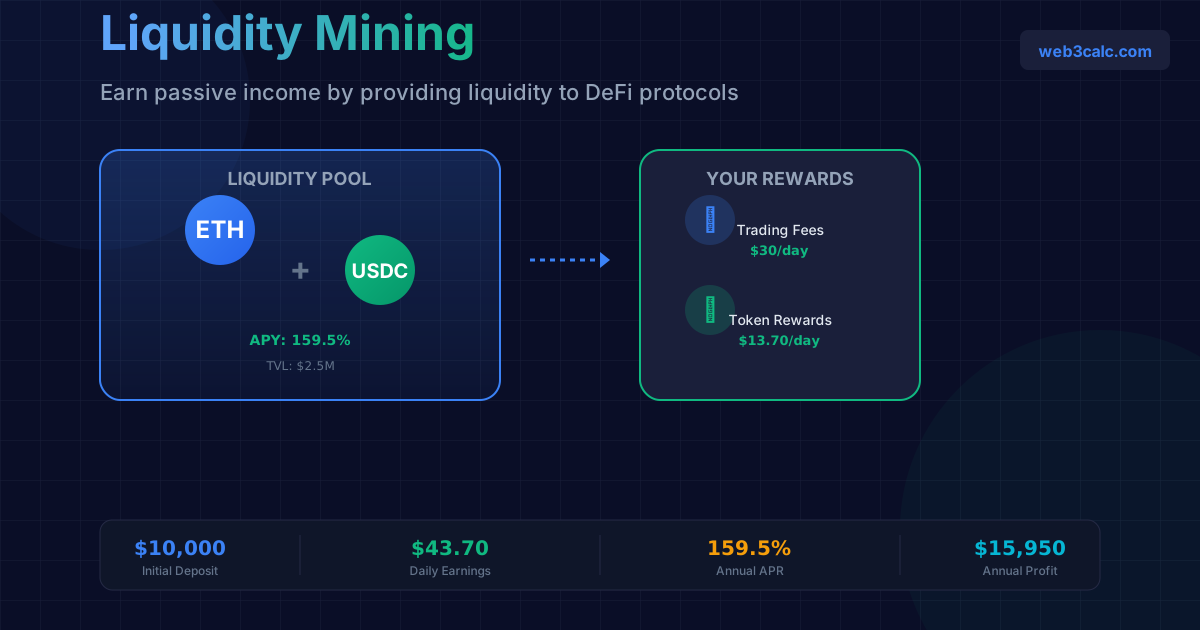
What is Liquidity Mining? Complete Guide to Earning Passive Income in DeFi
Discover how liquidity mining works, learn strategies to maximize your returns, and understand the risks involved in providing liquidity to DeFi protocols.
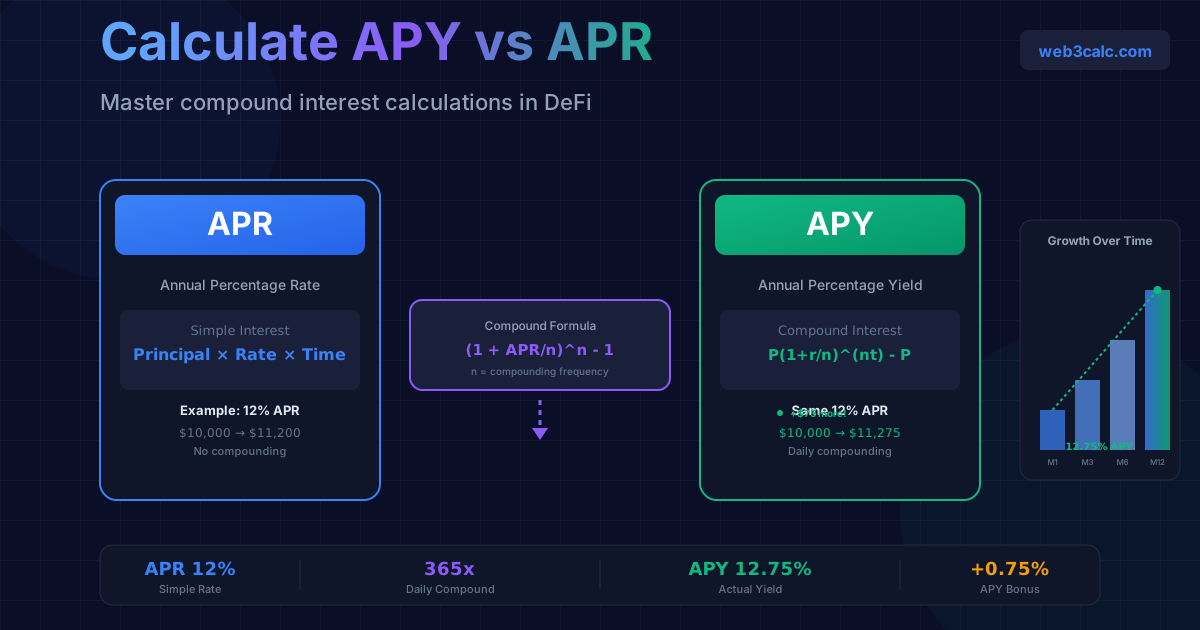
How to Calculate APY vs APR in DeFi: Complete Guide with Examples
Master the difference between APY and APR in DeFi. Learn calculation formulas, understand compound interest, and discover how to maximize your crypto yields.
What is Total Value Locked (TVL)? Complete Guide to DeFi's Most Important Metric
Learn everything about Total Value Locked (TVL) in DeFi. Understand how TVL works, why it matters, and how to use it to evaluate DeFi protocols safely.