How to Calculate APY vs APR in DeFi: Complete Guide with Examples
Master the difference between APY and APR in DeFi. Learn calculation formulas, understand compound interest, and discover how to maximize your crypto yields.
How to Calculate APY vs APR in DeFi: Complete Guide with Examples
If you've explored DeFi yield farming or staking, you've definitely encountered APY and APR percentages. But do you really understand the difference? More importantly, do you know how to calculate them to verify if a protocol's advertised returns are accurate?
In this comprehensive guide, we'll break down everything you need to know about APY and APR calculations in DeFi, with real examples and practical tools.
What's the Difference? APR vs APY
Before diving into calculations, let's clarify the fundamental difference:
APR (Annual Percentage Rate)
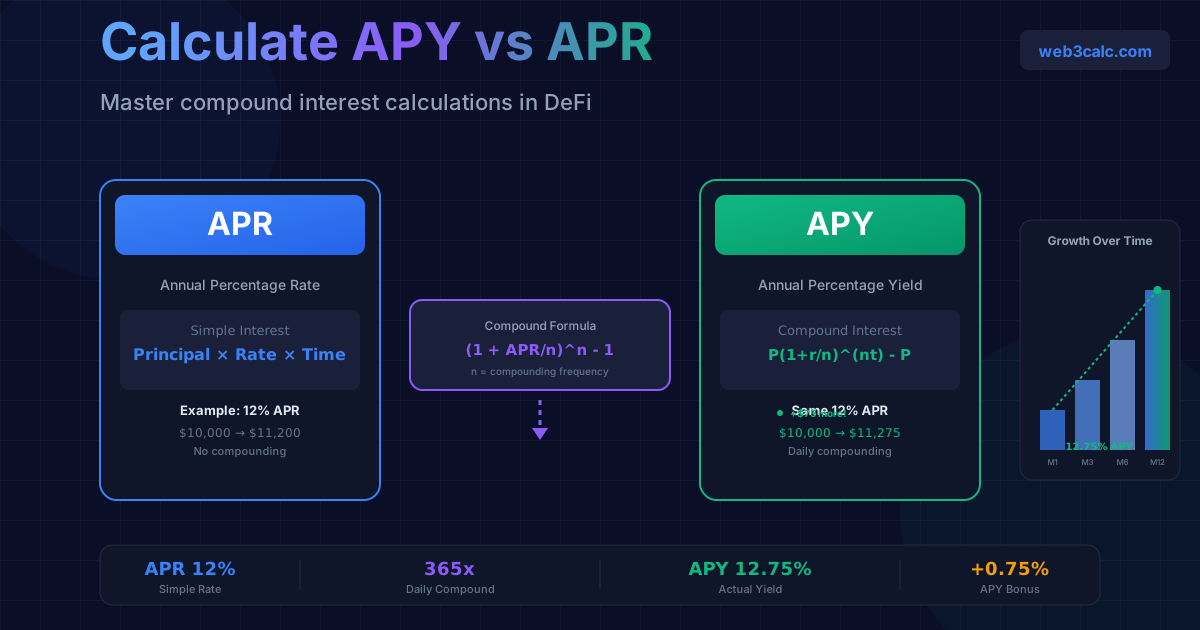
Definition: APR is the simple interest rate earned over one year without considering the effect of compounding.
Key characteristics:
- Fixed rate that doesn't change with time
- Doesn't account for reinvesting earnings
- Lower than APY (if compounding occurs)
- Used for loans, credit cards, and some DeFi protocols
Example: If you deposit $10,000 at 12% APR for one year:
- Interest earned = $10,000 × 0.12 = $1,200
- Final amount = $11,200
APY (Annual Percentage Yield)
Definition: APY is the effective annual rate of return taking into account compound interest.
Key characteristics:
- Variable rate that increases with compounding frequency
- Assumes you reinvest all earnings
- Higher than APR (when compounding occurs)
- Shows actual returns you'll receive
- Standard in DeFi for accurate comparison
Example: If you deposit $10,000 at 12% APR compounded daily for one year:
- Interest earned = $1,274.75
- Final amount = $11,274.75
- Effective APY = 12.75%
That's an extra $74.75 just from compounding!
The APY Calculation Formula
The mathematical formula for calculating APY from APR is:
APY = (1 + APR/n)^n - 1
Where:
- APR = Annual Percentage Rate (as a decimal)
- n = Number of compounding periods per year
- ^ = Raised to the power of
Compounding Frequencies
Different DeFi protocols compound at different frequencies:
| Frequency | n value | Common in | |-----------|---------|-----------| | Yearly | 1 | Traditional finance | | Semi-annually | 2 | Bonds | | Quarterly | 4 | Some savings accounts | | Monthly | 12 | Credit cards | | Weekly | 52 | Some DeFi protocols | | Daily | 365 | Most DeFi protocols | | Hourly | 8,760 | Advanced DeFi | | Every block (~13s on Ethereum) | ~2,425,846 | Some DeFi (approximates continuous) |
Step-by-Step APY Calculation Examples
Example 1: Monthly Compounding
You find a DeFi protocol offering 20% APR with monthly compounding. What's the real APY?
Given:
- APR = 20% = 0.20
- n = 12 (monthly compounding)
Calculation:
APY = (1 + 0.20/12)^12 - 1
APY = (1 + 0.01667)^12 - 1
APY = (1.01667)^12 - 1
APY = 1.2194 - 1
APY = 0.2194
APY = 21.94%
Result: The actual APY is 21.94%, which is 1.94% higher than the advertised APR!
Example 2: Daily Compounding
Aave shows 5% APR for USDC lending with daily compounding. What's the APY?
Given:
- APR = 5% = 0.05
- n = 365 (daily compounding)
Calculation:
APY = (1 + 0.05/365)^365 - 1
APY = (1 + 0.000137)^365 - 1
APY = (1.000137)^365 - 1
APY = 1.05127 - 1
APY = 0.05127
APY = 5.13%
Result: The actual APY is 5.13%, earning you an extra 0.13% through daily compounding.
Example 3: No Compounding
A protocol offers 15% APR with no auto-compounding (you must claim rewards manually).
Given:
- APR = 15% = 0.15
- n = 1 (annual, no compounding)
Calculation:
APY = (1 + 0.15/1)^1 - 1
APY = (1.15)^1 - 1
APY = 1.15 - 1
APY = 0.15
APY = 15%
Result: When there's no compounding, APY = APR = 15%.
Example 4: Continuous Compounding (Per Block)
Curve Finance compounds rewards with every Ethereum block (~13 seconds). What's the effective APY if APR is 8%?
Given:
- APR = 8% = 0.08
- n = 2,425,846 (approximate blocks per year)
For very high frequency compounding, we can use the continuous compounding formula:
APY = e^APR - 1
Where e ≈ 2.71828 (Euler's number)
Calculation:
APY = e^0.08 - 1
APY = 2.71828^0.08 - 1
APY = 1.0833 - 1
APY = 0.0833
APY = 8.33%
Result: With continuous compounding, the APY is 8.33%.
Calculating APR from APY (Reverse Calculation)
Sometimes protocols show APY but you want to know the base APR. Here's the reverse formula:
APR = n × ((1 + APY)^(1/n) - 1)
Example: Convert APY to APR
A protocol advertises 25% APY with daily compounding. What's the base APR?
Given:
- APY = 25% = 0.25
- n = 365
Calculation:
APR = 365 × ((1 + 0.25)^(1/365) - 1)
APR = 365 × ((1.25)^0.00274 - 1)
APR = 365 × (1.000614 - 1)
APR = 365 × 0.000614
APR = 0.2241
APR = 22.41%
Result: The base APR is 22.41%.
Compound Interest Formula: Calculate Total Returns
To calculate your actual earnings over time, use the compound interest formula:
A = P × (1 + r/n)^(n×t)
Where:
- A = Final amount
- P = Principal (initial investment)
- r = Annual interest rate (APR as decimal)
- n = Compounding frequency per year
- t = Time in years
Example: Calculate 6-Month Returns
You invest $5,000 in a DeFi protocol with 30% APR, compounded daily. How much will you have after 6 months?
Given:
- P = $5,000
- r = 0.30
- n = 365
- t = 0.5 (6 months)
Calculation:
A = 5,000 × (1 + 0.30/365)^(365×0.5)
A = 5,000 × (1.000822)^182.5
A = 5,000 × 1.1618
A = $5,809
Result: After 6 months, you'll have $5,809, earning $809 in interest.
Real DeFi Protocol Examples
Let's look at actual protocols and their APY/APR calculations:
1. Aave USDC Lending
Advertised: 3.5% APR Compounding: Daily (auto-compounds if you enable it) Calculated APY: 3.56%
APY = (1 + 0.035/365)^365 - 1 = 0.0356 = 3.56%
On $10,000 for 1 year:
- APR only: $350 interest
- With APY: $356 interest
- Difference: $6
2. Curve Finance 3pool
Advertised: 5% APR from trading fees Additional: 3% APR in CRV rewards Total APR: 8% Compounding: Per block (continuous) Calculated APY: 8.33%
APY = e^0.08 - 1 = 0.0833 = 8.33%
On $10,000 for 1 year:
- Base APR: $800 interest
- With compound APY: $833 interest
- Difference: $33
3. Uniswap V3 ETH/USDC 0.3% Pool
Scenario: Pool generates 20% APR from fees Compounding: Manual (you must claim and reinvest) If you compound weekly: APY ≈ 22.02% If you compound monthly: APY ≈ 21.94% If you never compound: APY = APR = 20%
Weekly compounding calculation:
APY = (1 + 0.20/52)^52 - 1 = 0.2202 = 22.02%
On $10,000 for 1 year:
- No compounding: $2,000 interest
- Weekly compounding: $2,202 interest
- Difference: $202
4. Yearn Finance Vault
Strategy: Auto-compounds USDC on multiple protocols Base APR from protocols: 6% Compounding: Optimized (varies, but ~daily) Effective APY: 6.18%
APY = (1 + 0.06/365)^365 - 1 = 0.0618 = 6.18%
Why use Yearn? They auto-compound for you, saving gas fees and maximizing returns.
Common Mistakes in APY/APR Calculations
❌ Mistake 1: Not Accounting for Gas Fees
Problem: Compounding costs gas. If you earn $50 but gas costs $30, your net gain is only $20.
Solution: Calculate break-even compounding frequency:
Break-even frequency = (Gas cost × Frequency) < (Additional APY gain)
Example:
- Gas per compound: $20
- Position size: $10,000
- APR: 12%
- Compounding daily adds 0.75% APY ($75/year)
- Compounding monthly adds 0.70% APY ($70/year)
If you compound daily: 365 × $20 = $7,300 in gas fees ❌ If you compound monthly: 12 × $20 = $240 in gas fees ✅
Verdict: Monthly compounding is optimal here.
❌ Mistake 2: Confusing Advertised APY with Realized APY
Problem: Protocols show APY assuming optimal conditions (price stability, continuous compounding).
Reality check:
- Token rewards can lose value
- Impermanent loss reduces APY
- Protocol changes can affect rates
- Market conditions vary
❌ Mistake 3: Not Considering Impermanent Loss
Problem: High APY from liquidity pools can be negated by impermanent loss.
Example:
- Pool APY: 50%
- Impermanent loss: 20%
- Net APY: 30%
Always use our Impermanent Loss Calculator before providing liquidity!
❌ Mistake 4: Ignoring Token Inflation
Problem: High APY from token rewards means high inflation, which crashes token price.
Example:
- Farm offers 1000% APY in FARM tokens
- Token supply inflates 500% annually
- Token price drops 80%
- Real return: -60% (you lost money!)
Red flag: If APY > 100%, investigate tokenomics carefully.
How to Calculate APY in Different DeFi Scenarios
Scenario 1: Single-Asset Staking (Simple)
Protocol: Lido stETH APR: 4% Compounding: Daily (automatic through rebasing)
APY = (1 + 0.04/365)^365 - 1 = 4.08%
Formula: Standard APY calculation.
Scenario 2: LP Tokens with Multiple Reward Tokens
Protocol: Sushiswap ETH/USDC pool Trading fee APR: 8% SUSHI reward APR: 12% Total APR: 20% Compounding: Manual
Without compounding:
APY = 20% (same as APR)
With weekly manual compounding:
APY = (1 + 0.20/52)^52 - 1 = 22.02%
Scenario 3: Leveraged Yield Farming
Protocol: Alpaca Finance (3x leverage) Base farm APR: 15% Leverage: 3x Borrow cost APR: 8%
Calculation:
Leveraged APY = (Farm APR × Leverage) - (Borrow APR × (Leverage - 1))
Leveraged APY = (15% × 3) - (8% × 2)
Leveraged APY = 45% - 16%
Leveraged APY = 29%
Note: This is simplified. Real calculations must include liquidation risk.
Scenario 4: Auto-Compounding Vault
Protocol: Beefy Finance on PancakeSwap pool Base APR: 30% Vault compounds: Every 8 hours (3x daily = 1,095x per year)
APY = (1 + 0.30/1095)^1095 - 1 = 34.97%
Beefy's edge: They compound ~1,095 times per year automatically, adding nearly 5% extra yield!
Tools for Calculating APY/APR
1. Our APY/APR Calculator
Use our APY/APR Calculator to:
- Convert between APY and APR
- Compare different compounding frequencies
- Calculate projected returns
- See compound interest breakdown
2. Manual Calculation Spreadsheet
Create your own spreadsheet with these formulas:
Excel/Google Sheets Formula for APY:
=POWER(1+(APR/frequency), frequency)-1
Example:
Cell A1: 0.12 (APR)
Cell A2: 365 (daily compounding)
Cell A3: =POWER(1+(A1/A2), A2)-1
Result: 0.1275 or 12.75% APY
3. Python Script
For developers, here's a Python function:
def calculate_apy(apr, compounding_frequency):
    """
    Calculate APY from APR
    apr: Annual Percentage Rate (as decimal, e.g., 0.12 for 12%)
    compounding_frequency: Times per year
    """
    apy = (1 + apr / compounding_frequency) ** compounding_frequency - 1
    return apy

# Example
apr = 0.15  # 15%
frequency = 365  # Daily
apy = calculate_apy(apr, frequency)
print(f"APY: {apy * 100:.2f}%")  # Output: APY: 16.18%
Comparing Multiple DeFi Options
When choosing between protocols, always compare APY, not APR. Here's a decision framework:
Example Comparison
| Protocol | APR | Compounding | Calculated APY | Risk Level | |----------|-----|-------------|----------------|------------| | Aave USDC | 3.5% | Daily | 3.56% | Very Low | | Curve 3pool | 5% | Per block | 5.13% | Low | | Uniswap V3 | 20% | Manual | 20-22% | Medium | | New Farm XYZ | 500% | Daily | 545% | Very High |
Best choice depends on:
- Your risk tolerance
- Capital size (gas fees matter)
- Time commitment (manual vs auto)
- Trust in protocol
APY Optimization Strategies
Strategy 1: Calculate Optimal Compounding Frequency
Formula:
Optimal frequency = Total APY gain / (Gas cost per compound + time cost)
Example:
- Position: $50,000 at 10% APR
- Gas per compound: $15
- Daily compound adds 0.52% APY = $260/year
- Monthly compound adds 0.47% APY = $235/year
Daily: 365 × $15 = $5,475 gas ❌ Weekly: 52 × $15 = $780 gas ✅ Monthly: 12 × $15 = $180 gas ✅✅
Best choice: Monthly compounding (saves gas, still gets most APY benefit)
Strategy 2: Use Auto-Compounding Vaults
Protocols like Yearn, Beefy, and Autofarm handle compounding for you:
Benefits:
- Compound more frequently (higher APY)
- Save gas fees (pooled with others)
- Save time (set and forget)
Trade-offs:
- Small performance fee (typically 0.5-2%)
- Smart contract risk
- Less control
Strategy 3: Layer Your Yields
Stack multiple yield sources for higher effective APY:
Example:
- Stake ETH → get stETH (4% APY)
- Provide stETH/ETH liquidity → earn fees (6% APY)
- Stake LP tokens → earn governance tokens (8% APY)
- Total potential APY: 18%+
Risk: Each layer adds complexity and smart contract risk.
When APY Doesn't Tell the Full Story
APY is useful but has limitations:
1. Variable vs Fixed Rates
Most DeFi = Variable APY
- Changes based on demand
- Today's 50% APY might be 5% tomorrow
- Always check historical rates
2. Token Price Volatility
High APY in declining assets = Losses
Example:
- Start: $10,000 in TOKEN at $100 (100 tokens)
- APY: 200% (awesome!)
- End year: 300 tokens worth $10 each = $3,000
- Net result: -70% loss despite 200% APY
3. Impermanent Loss
For liquidity pools:
Real APY = Nominal APY - Impermanent Loss %
Use our IL Calculator to get the full picture.
Advanced: APY in Perpetual Protocols
Some protocols offer yields on perpetual futures:
Example: GMX
- Stake GLP (liquidity pool)
- Earn trading fees + esGMX rewards
- APR calculation is complex:
Total APY = (Trading fees APR + esGMX APR + Multiplier points boost)
Current rates:
- ETH fees: ~15% APR
- esGMX rewards: ~10% APR
- Boost: ~5% APR
- Total: ~30% APY
Red Flags: Unrealistic APY Claims
🚩 Warning Signs
- APY > 1000%: Usually unsustainable, investigate tokenomics
- No explanation of yield source: Where do rewards come from?
- New protocol with huge APY: Often "vampire attack" or ponzi
- APY without time lock: Why would they pay so much for liquid stakes?
- No audit: Smart contract risk is huge
Safer APY Ranges
- Stablecoins: 3-15% APY (realistic)
- Major assets (ETH, BTC): 4-20% APY
- Blue-chip DeFi tokens: 10-40% APY
- Volatile altcoins: 20-100% APY (with high risk)
- New protocols: 100%+ APY (extreme risk)
Tax Implications of APY
Different jurisdictions tax compound interest differently:
USA (example):
- Each compounding event may be taxable
- Auto-compounding creates tax events
- Manual compounding = clearer tax reporting
Consult a crypto tax professional!
Conclusion: Mastering APY/APR Calculations
Understanding APY vs APR calculations is essential for:
- Comparing protocols fairly (apples to apples)
- Maximizing your returns (optimal compounding)
- Avoiding scams (unrealistic APY claims)
- Making informed decisions (risk-adjusted returns)
Key Takeaways
✅ APY > APR (when compounding occurs) ✅ More frequent compounding = Higher APY (but consider gas costs) ✅ Always compare APY, not APR ✅ Verify claims with your own calculations ✅ Factor in risks: IL, token price, gas fees ✅ Use tools like our APY/APR Calculator
Ready to Calculate Your DeFi Returns?
Try our free tools:
- APY/APR Calculator - Compare compounding strategies
- Impermanent Loss Calculator - Factor in LP risks
- Token Price Calculator - Track reward token values
Disclaimer: This article is for educational purposes only and does not constitute financial advice. DeFi involves significant risk. Always do your own research and never invest more than you can afford to lose. Past performance doesn't guarantee future results.
Share this article:
Related Articles
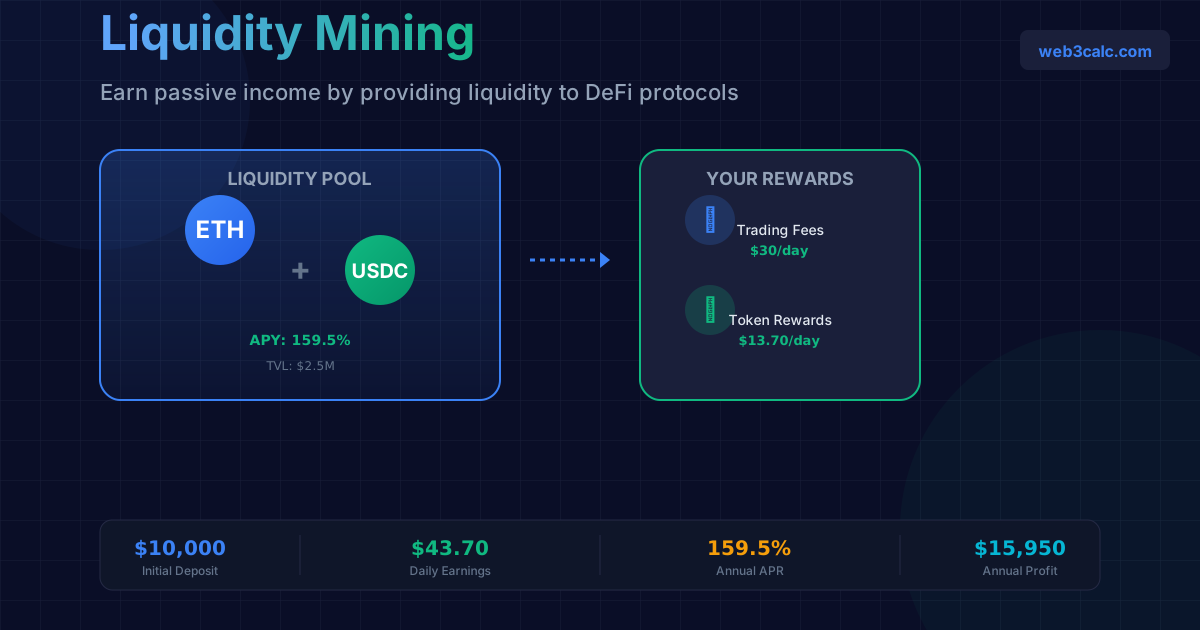
What is Liquidity Mining? Complete Guide to Earning Passive Income in DeFi
Discover how liquidity mining works, learn strategies to maximize your returns, and understand the risks involved in providing liquidity to DeFi protocols.
What is Total Value Locked (TVL)? Complete Guide to DeFi's Most Important Metric
Learn everything about Total Value Locked (TVL) in DeFi. Understand how TVL works, why it matters, and how to use it to evaluate DeFi protocols safely.
Yield Farming Strategies for Beginners: Maximize Your DeFi Returns in 2025
Discover proven yield farming strategies for beginners. Learn how to earn passive income through DeFi protocols, minimize risks, and optimize your returns.