Layer 2 Solutions Explained: Arbitrum, Optimism, Base Complete Guide 2025
Master Ethereum Layer 2 networks and save 95% on gas fees. Complete comparison of Arbitrum, Optimism, Base, zkSync, and Polygon with setup tutorials.
Layer 2 Solutions Explained: Arbitrum, Optimism, Base Complete Guide 2025
Tired of paying $20-50 in gas fees for every Ethereum transaction? Layer 2 solutions are your answer.
Layer 2 networks offer the same security as Ethereum but with 95-99% lower fees and 10-100x faster transactions. Yet most users haven't made the switch because they seem complicated.
This guide will explain exactly what Layer 2 is, compare all major L2 networks, and walk you through getting started on each one.
By the end, you'll be using L2s confidently and saving thousands per year.
What You'll Learn
✅ What Layer 2 is and how it works
✅ Complete comparison of all major L2s
✅ How to set up and use each network
✅ When to use which Layer 2
✅ Bridging assets between networks
✅ Best DeFi protocols on each L2
✅ Common mistakes and how to avoid them
Time needed: 1 hour to learn, 30 min to set up
Potential savings: $1,000-5,000+ per year
Difficulty: Beginner-friendly
Part 1: Understanding Layer 2
What is Layer 2?
Simple explanation: Layer 2 is a separate blockchain that runs "on top" of Ethereum, handling transactions off the main chain to reduce costs and increase speed.
The Analogy:
Ethereum = Main highway (expensive toll, congested)
Layer 2 = Express lanes (cheaper, faster)

Both get you to same destination!
Why Layer 2 Exists
The Problem:
- Ethereum can only handle ~15 transactions per second
- High demand = High gas fees ($10-50+ per transaction)
- Slow for users, expensive for small amounts
The Solution:
- Process transactions off Ethereum mainnet
- Bundle many transactions together
- Submit batch to Ethereum
- Users pay fraction of mainnet cost
Result:
- 95-99% cheaper fees
- 10-100x more throughput
- Same security (for most L2s)
- Better user experience
How Layer 2 Works
Process (Simplified):
1. You send transaction on L2
   ↓
2. L2 processes it instantly (2-5 seconds)
   ↓
3. L2 batches 1000s of transactions
   ↓
4. Submits batch to Ethereum mainnet
   ↓
5. Ethereum validates and secures batch
   ↓
6. Your transaction is finalized ✓

Cost: Split among all transactions in batch
Your share: $0.50 instead of $50!
Security:
- L2 inherits Ethereum security
- If L2 misbehaves, users can exit to Ethereum
- Your funds are safe
Part 2: Types of Layer 2
Optimistic Rollups
How they work:
- Assume transactions are valid ("optimistic")
- Process immediately
- 7-day challenge period for disputes
- If fraud detected, invalid transactions rolled back
Examples:
- Arbitrum
- Optimism
- Base
Pros:
✅ EVM compatible (works with existing Ethereum contracts)
✅ Easier for developers
✅ More mature ecosystem
✅ Lower fees
Cons:
❌ 7-day withdrawal time to Ethereum
❌ Slightly less efficient than ZK
ZK Rollups (Zero-Knowledge)
How they work:
- Use cryptographic proofs (zk-SNARKs)
- Mathematically prove transactions valid
- No challenge period needed
- Faster finality
Examples:
- zkSync Era
- Polygon zkEVM
- StarkNet
Pros:
✅ Faster withdrawals (hours, not days)
✅ More efficient (even lower fees)
✅ Better security guarantees
Cons:
❌ Less EVM compatibility (improving)
❌ Newer technology
❌ Smaller ecosystems (growing fast)
Sidechains
How they work:
- Separate blockchain with own validators
- Not technically "Layer 2"
- Different security model
Examples:
- Polygon PoS
- Gnosis Chain
Pros:
✅ Very cheap (often <$0.01)
✅ Very fast
✅ Large ecosystems
Cons:
❌ Less secure than Ethereum
❌ Different trust assumptions
Part 3: Major Layer 2 Networks Compared
Complete Comparison Table
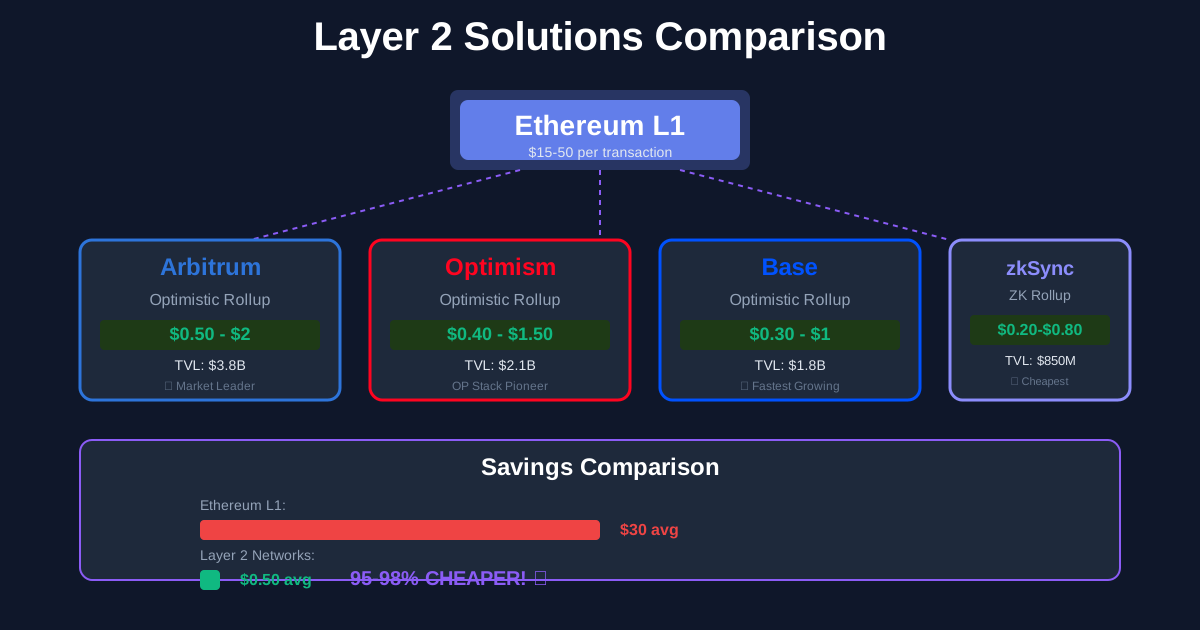
| Network | Type | Gas Cost | Speed | TVL | Security | Ecosystem | Best For | |---------|------|----------|-------|-----|----------|-----------|----------| | Arbitrum | Optimistic | $0.50-2 | 2-5s | $3.8B | High | Largest | General DeFi | | Optimism | Optimistic | $0.40-1.50 | 2-5s | $2.1B | High | Large | General DeFi | | Base | Optimistic | $0.30-1 | 2-5s | $1.8B | High | Growing | Coinbase users | | zkSync Era | ZK Rollup | $0.20-0.80 | 1-3s | $850M | Very High | Medium | Lowest fees | | Polygon zkEVM | ZK Rollup | $0.10-0.50 | 1-3s | $450M | Very High | Growing | Ultra cheap | | Polygon PoS | Sidechain | $0.01-0.10 | 1-2s | $1.4B | Medium | Large | Cheapest |
Detailed Network Profiles
Arbitrum: The Market Leader
Overview
Launch: August 2021
Type: Optimistic Rollup
TVL: $3.8B (largest L2)
Daily Transactions: 2M+
Token: ARB
Why it's popular:
- First major L2 to launch
- Largest DeFi ecosystem
- Best liquidity
- Most protocols available
- Proven track record
Key Metrics
Costs:
Simple transfer: $0.50
Token swap: $0.80-1.50
Uniswap trade: $1-2
Aave deposit: $2-3

Savings vs Ethereum: 95-97%
Speed:
Transaction time: 2-5 seconds
Finality: Instant (L2)
Withdrawal to L1: 7 days
Pros:
✅ Most established L2
✅ Highest liquidity
✅ Most DeFi protocols
✅ Best documentation
✅ Strong security record
Cons:
❌ Not cheapest option
❌ 7-day withdrawal
❌ Gas still noticeable for tiny amounts
Top Protocols on Arbitrum
DEXs:
- Uniswap (most liquid)
- Camelot (native)
- SushiSwap
- Curve

Lending:
- Aave
- Radiant Capital
- Compound

Derivatives:
- GMX (most popular)
- Gains Network
- Vela Exchange

Yield:
- Pendle
- Jones DAO
- Plutus DAO
Getting Started on Arbitrum
Step 1: Add Network to MetaMask
Manual setup:
Network Name: Arbitrum One
RPC URL: https://arb1.arbitrum.io/rpc
Chain ID: 42161
Currency: ETH
Block Explorer: https://arbiscan.io
Or visit bridge.arbitrum.io and click "Add to MetaMask"
Step 2: Bridge Assets
- Go to bridge.arbitrum.io
- Connect MetaMask
- Select amount to bridge
- Approve transaction
- Wait 10-15 minutes
- Assets appear on Arbitrum!
Bridge costs:
- Ethereum → Arbitrum: $15-30 (one-time)
- Worth it after 10-15 transactions
Step 3: Start Using DeFi
Visit any protocol:
- app.uniswap.org → Select Arbitrum
- app.aave.com → Select Arbitrum
- Works same as mainnet, just cheaper!
Optimism: The Challenger
Overview
Launch: December 2021
Type: Optimistic Rollup
TVL: $2.1B
Daily Transactions: 800K+
Token: OP
Why it's notable:
- Second-largest Optimistic Rollup
- Strong focus on public goods
- OP Stack (used by Base, others)
- Growing ecosystem
- Competitive with Arbitrum
Key Metrics
Costs:
Simple transfer: $0.40
Token swap: $0.70-1.20
Uniswap trade: $0.80-1.50
Aave deposit: $1.50-2.50

Savings vs Ethereum: 95-97%
Slightly cheaper than Arbitrum ✓
Speed:
Transaction time: 2-5 seconds
Finality: Instant (L2)
Withdrawal to L1: 7 days
Pros:
✅ Slightly cheaper than Arbitrum
✅ Strong ecosystem
✅ Good liquidity
✅ OP Stack technology leader
✅ Retroactive funding for users
Cons:
❌ Smaller than Arbitrum
❌ Less liquidity
❌ 7-day withdrawal
Top Protocols on Optimism
DEXs:
- Uniswap
- Velodrome (native, popular)
- Curve

Lending:
- Aave
- Sonne Finance (native)

Derivatives:
- Synthetix (originated here)
- Lyra Finance

Yield:
- Beefy Finance
- Yearn
Getting Started on Optimism
Network Details:
Network Name: Optimism
RPC URL: https://mainnet.optimism.io
Chain ID: 10
Currency: ETH
Block Explorer: https://optimistic.etherscan.io
Bridge: app.optimism.io/bridge
Same process as Arbitrum:
- Add network
- Bridge assets ($15-30 one-time)
- Start using DeFi
Base: Coinbase's Layer 2
Overview
Launch: August 2023
Type: Optimistic Rollup (OP Stack)
TVL: $1.8B
Daily Transactions: 1.5M+
Token: None (uses ETH)
Why it's exciting:
- Backed by Coinbase
- Easy Coinbase integration
- Fastest growing L2
- No token (pure utility)
- Consumer-focused
Key Metrics
Costs:
Simple transfer: $0.30
Token swap: $0.50-0.80
Uniswap trade: $0.60-1
Aave deposit: $1-2

Savings vs Ethereum: 96-98%
Cheapest Optimistic Rollup! ✓
Speed:
Transaction time: 2-5 seconds
Finality: Instant (L2)
Withdrawal to L1: 7 days
Pros:
✅ Cheapest Optimistic Rollup
✅ Coinbase backing (trust)
✅ Easy Coinbase on-ramp
✅ Growing very fast
✅ Simple, user-friendly
Cons:
❌ Newer (less proven)
❌ Smaller ecosystem
❌ Less liquidity than Arbitrum
Top Protocols on Base
DEXs:
- Uniswap
- Aerodrome (native)
- BaseSwap

Lending:
- Aave
- Moonwell (native)

Social:
- Friend.tech (consumer app)

Others:
- Many consumer apps launching here
Getting Started on Base
Network Details:
Network Name: Base
RPC URL: https://mainnet.base.org
Chain ID: 8453
Currency: ETH
Block Explorer: https://basescan.org
Bridge: bridge.base.org
Coinbase Advantage: If you use Coinbase:
- Withdraw directly to Base (no bridge needed!)
- Much cheaper and faster
- Native integration
zkSync Era: Zero-Knowledge Leader
Overview
Launch: March 2023
Type: ZK Rollup
TVL: $850M
Daily Transactions: 400K+
Token: ZK (launched 2024)
Why it matters:
- Leading ZK technology
- Lowest fees
- Fast withdrawals (hours, not days)
- EVM compatible
- Strong developer focus
Key Metrics
Costs:
Simple transfer: $0.20
Token swap: $0.40-0.60
Uniswap trade: $0.50-0.80
Aave deposit: $0.80-1.50

Savings vs Ethereum: 97-99%
Cheapest overall! ✓✓✓
Speed:
Transaction time: 1-3 seconds (faster!)
Finality: Instant (L2)
Withdrawal to L1: Few hours (vs 7 days!)
Pros:
✅ Lowest fees
✅ Fast withdrawals
✅ Better security (ZK proofs)
✅ Growing ecosystem
✅ Active development
Cons:
❌ Smaller ecosystem
❌ Lower liquidity
❌ Newer technology
Top Protocols on zkSync Era
DEXs:
- SyncSwap (native)
- Mute.io (native)
- PancakeSwap

Lending:
- Reactor Fusion
- ZeroLend

Others:
- Growing rapidly
- Many Ethereum protocols expanding here
Getting Started on zkSync Era
Network Details:
Network Name: zkSync Era
RPC URL: https://mainnet.era.zksync.io
Chain ID: 324
Currency: ETH
Block Explorer: https://explorer.zksync.io
Bridge: bridge.zksync.io
Polygon zkEVM: Ultra-Cheap Option
Overview
Launch: March 2023
Type: ZK Rollup
TVL: $450M
Daily Transactions: 200K+
Token: POL (formerly MATIC)
Why choose it:
- Cheapest option
- Polygon brand recognition
- EVM equivalent (not just compatible)
- Fast withdrawals
- Polygon ecosystem support
Key Metrics
Costs:
Simple transfer: $0.10
Token swap: $0.20-0.30
Trades: $0.15-0.50

Savings vs Ethereum: 98-99.5%
Near-free transactions! ✓✓✓
Pros:
✅ Absolute cheapest
✅ Fast withdrawals
✅ ZK security
✅ Perfect EVM compatibility
Cons:
❌ Smallest ecosystem of major L2s
❌ Lowest liquidity
❌ Confusion with Polygon PoS
Polygon PoS: The Sidechain Giant
Overview
Launch: 2020
Type: Sidechain (NOT L2)
TVL: $1.4B
Daily Transactions: 3M+
Token: POL
Important: Not technically Layer 2, but worth mentioning.
Why it's popular:
- Incredibly cheap ($0.01 per transaction)
- Very fast (2 second blocks)
- Huge ecosystem
- Long track record
Key difference:
- Separate security model
- Not Ethereum-secured
- Own validator set
- Higher risk vs true L2s
When to use:
- Testing/learning
- Very small amounts
- Gaming/NFTs
- When need absolute cheapest
Part 4: Which Layer 2 Should You Choose?
Decision Matrix
Use Arbitrum if:
✅ Want most established option
✅ Need best liquidity
✅ Want most protocol options
✅ Doing serious DeFi (>$10K)
✅ Value proven track record
Use Optimism if:
✅ Want Arbitrum alternative
✅ Slightly lower fees matter
✅ Like OP Stack innovation
✅ Value public goods focus
Use Base if:
✅ Have Coinbase account
✅ Want absolute lowest fees
✅ Prefer consumer-focused apps
✅ Like simplicity
✅ Excited by new ecosystem
Use zkSync Era if:
✅ Want lowest possible fees
✅ Fast withdrawals important
✅ Believe in ZK technology
✅ Okay with smaller ecosystem
Use Polygon zkEVM if:
✅ Want absolute cheapest
✅ Making tiny transactions
✅ Testing strategies
Use Polygon PoS if:
✅ Learning DeFi
✅ Testing only
✅ Gaming/NFTs
✅ Need <$0.01 transactions
⚠️ Understand security tradeoffs
By Use Case
Large DeFi Portfolio ($50K+):
→ Arbitrum (best liquidity)

Medium Portfolio ($5-50K):
→ Arbitrum or Optimism

Small Portfolio ($500-5K):
→ Base or zkSync Era

Testing/Learning:
→ Polygon PoS or zkSync Era

NFT Trading:
→ Arbitrum or Polygon PoS

Frequent Small Trades:
→ zkSync Era or Polygon zkEVM

One-time Use:
→ Base (if Coinbase user)
→ Arbitrum (otherwise)
Part 5: Using Multiple Layer 2s
Multi-L2 Strategy
Why use multiple L2s?
- Best fees on each
- Arbitrage opportunities
- Diversification
- Protocol access
Recommended setup:
Primary L2: Arbitrum
- 70% of funds
- Main DeFi activities
- Best liquidity

Secondary L2: Base or zkSync Era
- 20% of funds
- Small trades
- Experimental positions

Testing L2: Polygon PoS
- 10% of funds
- Learn strategies
- Test new protocols
Cross-L2 Transfers
Problem: Assets on different L2s
Solutions:
Option 1: Bridge via Ethereum (Slow)
Arbitrum → Ethereum → Base
Time: 7 days + bridge time
Cost: $15-30 + $10-20
Total: $25-50, 7+ days
Option 2: Cross-L2 Bridge (Fast)
Use services like:
- Hop Protocol
- Across Protocol
- Stargate

Arbitrum → Base
Time: 5-15 minutes
Cost: $5-15
Total: Much faster! ✓
Option 3: CEX (Easiest)
Arbitrum → Coinbase → Base
Time: 1 hour
Cost: Withdrawal fees vary
Total: Simple but centralized
Part 6: Setting Up Your First L2
Complete Setup Tutorial
We'll use Arbitrum as example (same process for others)
Step 1: Add Network to MetaMask (2 minutes)
Method A - Automatic:
- Visit bridge.arbitrum.io
- Click "Connect Wallet"
- Click "Add Arbitrum to MetaMask"
- Approve in MetaMask popup
- Done! ✓
Method B - Manual:
- Open MetaMask
- Click network dropdown
- Click "Add Network"
- Click "Add network manually"
- Enter details (from comparison tables above)
- Click "Save"
- Done! ✓
Step 2: Get ETH for Gas (Important!)
You need ETH on the L2 for gas fees.
Two options:
Option A - Bridge from Ethereum:
- Have ETH on Ethereum
- Bridge to Arbitrum (covers gas + gives you ETH)
- Costs $15-30
Option B - Buy directly on L2:
- Some exchanges support L2 withdrawals
- Coinbase → Base (direct)
- Binance → Arbitrum (sometimes)
- Check your exchange
Recommended: Bridge at least 0.01 ETH (~$20) for gas
Step 3: Bridge Your Assets
- Go to official bridge
- Connect MetaMask (Ethereum network)
- Select token to bridge
- Enter amount
- Click "Deposit to Arbitrum"
- Approve token spending (if first time)
- Confirm transaction
- Wait 10-15 minutes
- Check Arbitrum network in MetaMask
- Assets should appear! ✓
Step 4: Verify Everything Works
Make small test transaction:
- Go to app.uniswap.org
- Switch to Arbitrum network
- Swap $10 worth of tokens
- Check gas cost (~$1-2)
- If successful, you're ready! ✓
Part 7: Common Mistakes & How to Avoid
Mistake 1: Bridging Too Little
The Error:
Bridges $100 to Arbitrum
Bridge cost: $20
Only $80 usable
20% lost to bridge! 💸
The Fix:
Bridge larger amounts:
- Minimum: $500
- Recommended: $1,000+
- Bridge cost amortized

$20 bridge on $1,000 = 2% (acceptable)
Mistake 2: Wrong Network Selected
The Error:
Sends transaction on Ethereum
Thinks on Arbitrum
Pays $50 gas instead of $1
😱
The Fix:
Always verify network:
1. Check MetaMask network dropdown
2. Check website network indicator
3. Double-check before confirming

Both should show "Arbitrum" ✓
Mistake 3: Not Having Gas Token
The Error:
Bridges only USDC to Arbitrum
Has no ETH for gas
Can't make any transactions
Stuck! 😱
The Fix:
Always bridge some ETH:
- Minimum: 0.005 ETH (~$10)
- Recommended: 0.01-0.02 ETH ($20-40)
- Covers 20-40 transactions

Never bridge only ERC-20 tokens!
Mistake 4: Using Wrong Bridge
The Error:
Uses random bridge website
Not official
Gets scammed
Loses funds 💸
The Fix:
Only use official bridges:
✓ bridge.arbitrum.io (Arbitrum)
✓ app.optimism.io/bridge (Optimism)
✓ bridge.base.org (Base)
✓ bridge.zksync.io (zkSync)

Bookmark these URLs!
Mistake 5: Impatience with Bridging
The Error:
Bridges to Arbitrum
Checks after 2 minutes
"Where's my money?!"
Panics unnecessarily
The Fix:
Bridge times are normal:
- To L2: 10-20 minutes (normal!)
- From L2: 7 days for Optimistic Rollups
- Set timer, relax ✓

Transaction won't fail, just wait
Part 8: Best Practices
Gas Management on L2s
How much gas to keep:
Arbitrum/Optimism/Base:
- Minimum: 0.005 ETH ($10)
- Comfortable: 0.01 ETH ($20)
- Active trader: 0.02-0.05 ETH ($40-100)

zkSync Era/Polygon zkEVM:
- Minimum: 0.003 ETH ($6)
- Comfortable: 0.005 ETH ($10)
- Active trader: 0.01 ETH ($20)

Even cheaper, need less gas! ✓
Refilling gas:
- Bridge more ETH when needed
- Or swap tokens for ETH on L2
- Keep buffer for emergencies
Security Practices
Smart contract risks:
✅ Use established protocols
✅ Check audits
✅ Start with small amounts
✅ Verify contract addresses
✅ Use official interfaces only
Bridge safety:
✅ Only official bridges
✅ Bookmark URLs
✅ Double-check addresses
✅ Start with small test
✅ Verify arrival before bridging more
Portfolio Allocation
Conservative:
Ethereum L1: 50% (long-term holds)
Arbitrum L2: 40% (main DeFi)
Base/zkSync: 10% (experimental)
Balanced:
Ethereum L1: 30%
Arbitrum L2: 50%
Base/zkSync: 15%
Polygon PoS: 5%
Aggressive:
Ethereum L1: 10%
Arbitrum L2: 40%
Optimism L2: 20%
Base L2: 20%
zkSync Era: 10%
Part 9: Future of Layer 2
What's Coming
Near-term (2025-2026):
- More L2s launching
- Better interoperability
- Shared liquidity
- Native account abstraction
- Better bridging UX
Long-term (2027+):
- L2s become primary
- Ethereum L1 for settlement only
- Most users never use L1
- Sub-cent transaction fees
- Seamless cross-L2 experience
Emerging L2s to Watch
Scroll: ZK Rollup (EVM equivalent)
Linea: ConsenSys ZK Rollup
Starknet: Cairo-based ZK
Manta Pacific: Modular L2
Blast: High-yield L2

All launching/growing 2024-2025
Summary: Your L2 Action Plan
Week 1: Setup
Day 1: Add Arbitrum to MetaMask
Day 2: Bridge $500-1,000 to Arbitrum
Day 3: Test with small swap
Day 4-7: Use DeFi protocols on Arbitrum
Week 2: Expand
Day 1: Add Base to MetaMask
Day 2: Bridge $200-500 to Base
Day 3: Compare gas costs
Day 4-7: Try protocols on Base
Week 3: Optimize
Review gas savings
Decide primary L2
Move more funds if comfortable
Set up cross-L2 bridges for future
Month 2+:
Explore zkSync Era
Try Polygon zkEVM
Find arbitrage opportunities
Optimize based on experience
Quick Reference: L2 URLs
Official Bridges:
Arbitrum: bridge.arbitrum.io
Optimism: app.optimism.io/bridge
Base: bridge.base.org
zkSync Era: bridge.zksync.io
Polygon zkEVM: portal.polygon.technology
Network Details:
Arbitrum One: Chain ID 42161
Optimism: Chain ID 10
Base: Chain ID 8453
zkSync Era: Chain ID 324
Polygon zkEVM: Chain ID 1101
Block Explorers:
Arbitrum: arbiscan.io
Optimism: optimistic.etherscan.io
Base: basescan.org
zkSync Era: explorer.zksync.io
Polygon zkEVM: zkevm.polygonscan.com
Final Thoughts
Layer 2 is not optional anymore—it's essential.
If you're still using only Ethereum mainnet for DeFi, you're overpaying by 95%+.
Three key takeaways:
- Start with Arbitrum - Most established, best liquidity
- Bridge enough - Minimum $500, ideally $1,000+
- Keep gas ETH - Always have 0.01+ ETH on L2
The future is multi-L2. Get comfortable with Arbitrum first, then expand to others.
Stop overpaying for gas. Switch to Layer 2 today! 🚀
Continue Learning
Use our tools:
Share this article:
Related Articles
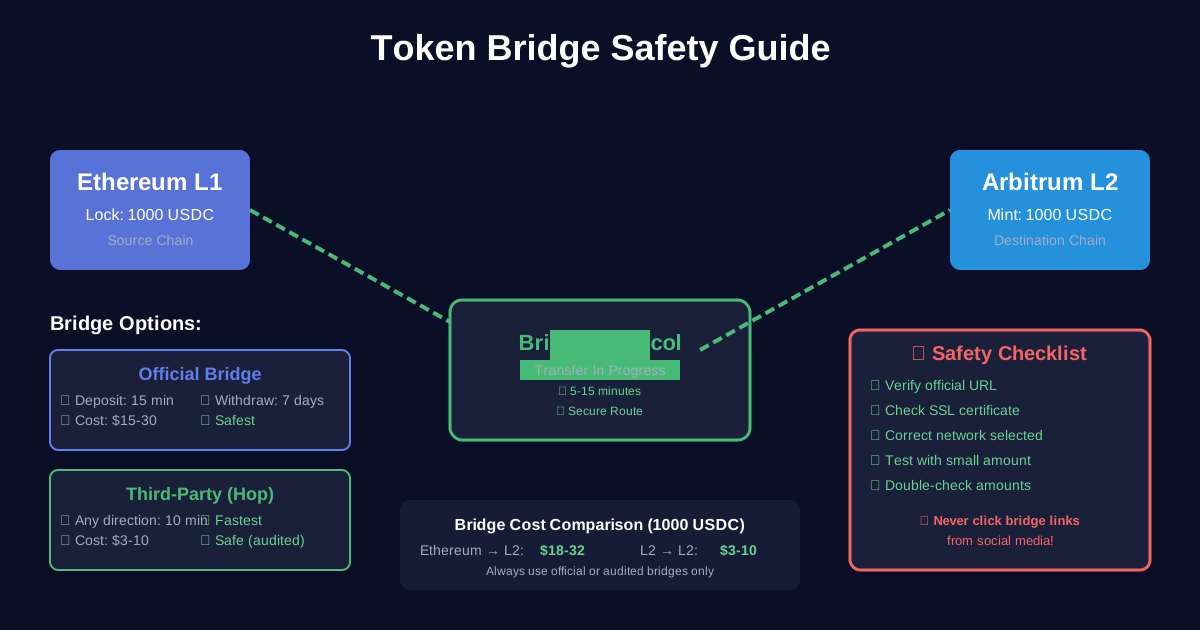
How to Bridge Tokens Between Chains: Complete Safety Guide 2025
Learn to safely bridge crypto between Ethereum, Arbitrum, Base, and other chains. Complete guide covering official bridges, cross-chain protocols, and avoiding scams.
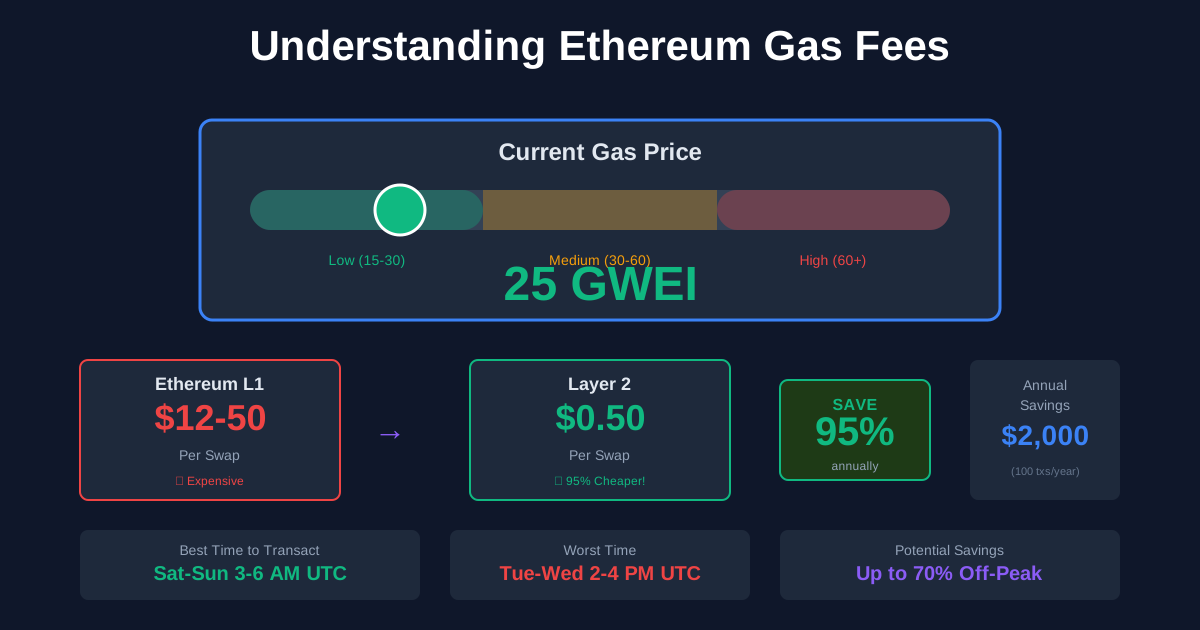
Understanding Gas Fees on Ethereum: Complete Guide to Save Money 2025
Master Ethereum gas fees with this complete guide. Learn what gas is, how to calculate costs, optimize transactions, and save 90%+ by using Layer 2 networks.
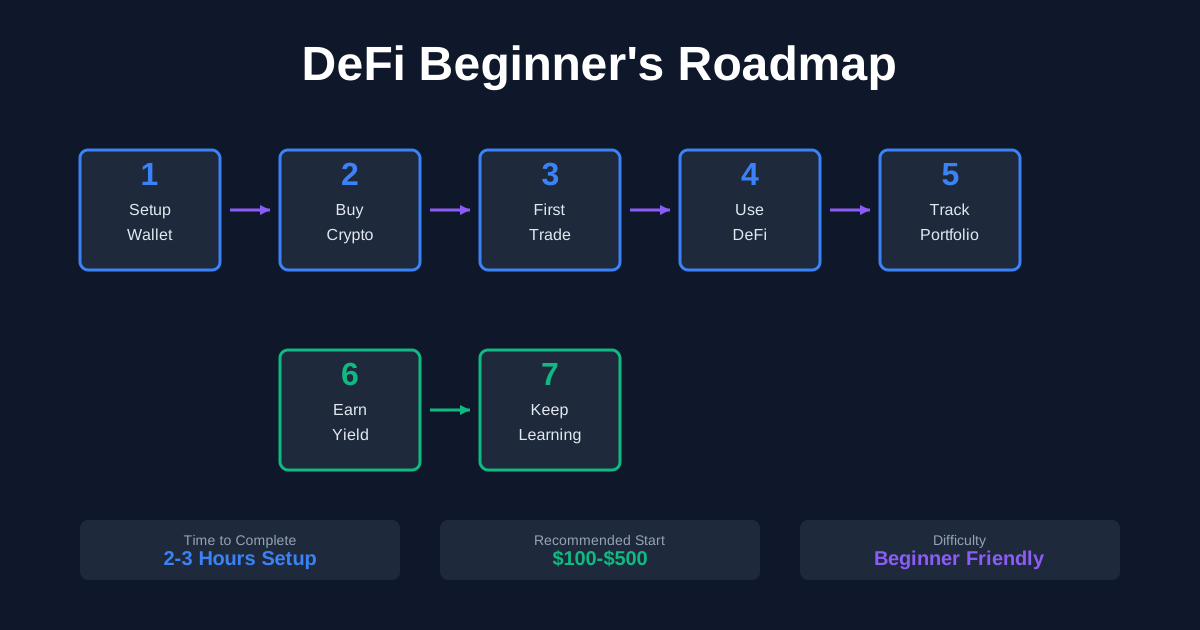
Getting Started with DeFi: Complete Beginner's Roadmap 2025
Your complete step-by-step guide to starting in DeFi. Learn the fundamentals, set up your wallet, make your first trades, and avoid costly mistakes as a DeFi beginner.