Top 10 DeFi Protocols in 2025: Complete Analysis and Rankings
Top 10 DeFi Protocols in 2025: Complete Analysis and Rankings
The DeFi ecosystem has matured significantly, with $100+ billion in total value locked across hundreds of protocols. But which protocols are truly leading the industry in 2025? Which ones offer the best combination of security, returns, and innovation?
In this comprehensive guide, we analyze the Top 10 DeFi Protocols by TVL, examining their features, security, risks, and opportunities. Whether you're looking to stake, lend, trade, or yield farm, this guide will help you identify the best platforms for your DeFi journey.
How We Rank DeFi Protocols
Our ranking methodology considers:
- Total Value Locked (TVL) - Market trust indicator
- Security & Audits - Multiple audits, track record
- Product Innovation - Features and user experience
- Community & Governance - Decentralization and activity
- Token Economics - Sustainability and value capture
- Multi-chain Support - Accessibility and reach
Data Source: DeFi Llama (as of January 2025)
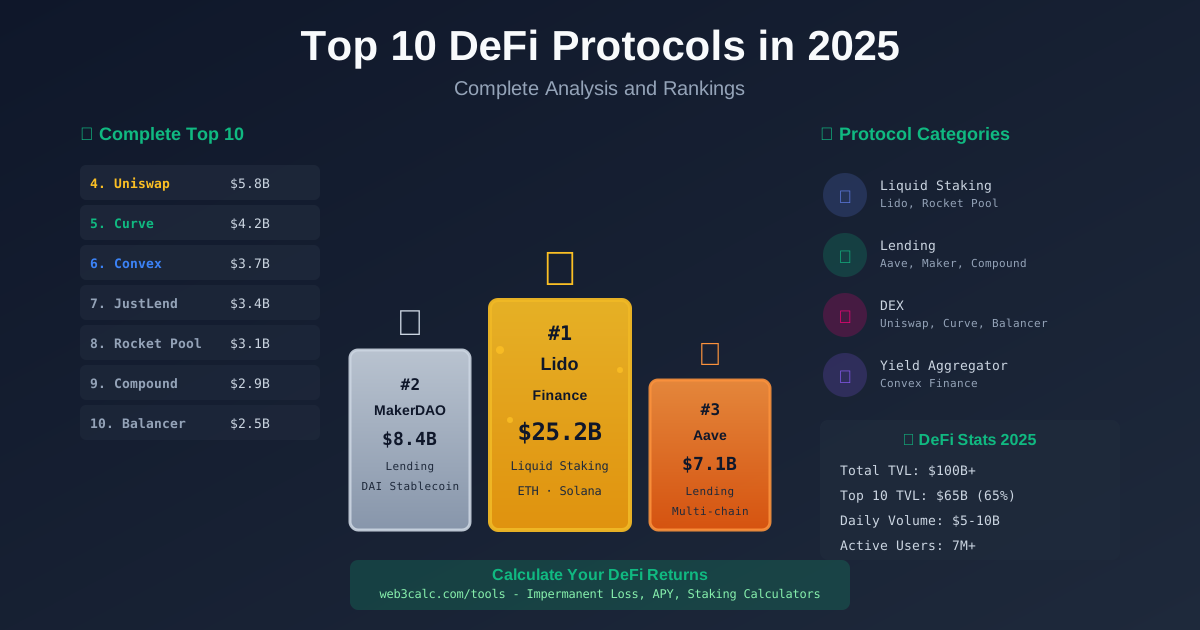
Top 10 DeFi Protocols (2025)
| Rank | Protocol | TVL | Category | Chain(s) | |------|----------|-----|----------|----------| | 1 | Lido | $25.2B | Liquid Staking | Ethereum, Solana | | 2 | MakerDAO | $8.4B | Lending | Ethereum | | 3 | Aave | $7.1B | Lending | Multi-chain | | 4 | Uniswap | $5.8B | DEX | Ethereum, L2s | | 5 | Curve Finance | $4.2B | DEX (Stablecoins) | Multi-chain | | 6 | Convex Finance | $3.7B | Yield Aggregator | Ethereum | | 7 | JustLend | $3.4B | Lending | Tron | | 8 | Rocket Pool | $3.1B | Liquid Staking | Ethereum | | 9 | Compound | $2.9B | Lending | Ethereum, L2s | | 10 | Balancer | $2.5B | DEX | Multi-chain |
Let's dive deep into each protocol.
#1: Lido Finance - Liquid Staking Leader
TVL: $25.2 Billion | Token: LDO | Chain: Ethereum, Solana
What is Lido?
Lido is the largest DeFi protocol by TVL, offering liquid staking for Ethereum and other proof-of-stake chains. Users stake ETH and receive stETH (liquid staked ETH) which can be used in other DeFi protocols while still earning staking rewards.
Key Features
Liquid Staking:
- Stake any amount of ETH (no 32 ETH minimum)
- Receive stETH tokens (1:1 with ETH)
- Use stETH in DeFi while earning staking rewards
- No lock-up period (unlike solo staking)
Current APY:
- ETH Staking: ~3.5% APY
- Solana Staking (stSOL): ~7% APY
Total Staked:
- 9.2M ETH (~$25B)
- Dominates 30%+ of all staked ETH
Security & Audits
✅ Audited by: Sigma Prime, Quantstamp, MixBytes, Certora ✅ Bug Bounty: Up to $2M ✅ Track Record: Operating since 2020, zero exploits ✅ Multi-sig: Governance by LDO token holders
Pros & Cons
Pros:
- ✅ Largest, most trusted liquid staking protocol
- ✅ Deep liquidity (stETH trades close to 1:1 with ETH)
- ✅ Widely integrated across DeFi (Aave, Curve, Uniswap)
- ✅ No minimum stake requirement
- ✅ Professional node operators
Cons:
- ⚠️ Centralization concerns (30%+ of staked ETH)
- ⚠️ Smart contract risk (though extensively audited)
- ⚠️ stETH can depeg temporarily during market stress
- ⚠️ Not fully decentralized (node operator permissioned)
Best For
- ETH holders wanting to earn staking rewards without locking up funds
- DeFi users needing liquid collateral
- Long-term ETH holders (set and forget)
How to Use Lido
- Visit Lido.fi
- Connect wallet (MetaMask, Ledger, etc.)
- Enter ETH amount to stake
- Receive stETH (1:1 ratio)
- Use stETH in other DeFi protocols or hold for staking rewards
#2: MakerDAO - Decentralized Stablecoin Pioneer
TVL: $8.4 Billion | Token: MKR | Chain: Ethereum
What is MakerDAO?
MakerDAO is the issuer of DAI, the largest decentralized stablecoin. Users lock collateral (ETH, WBTC, USDC, etc.) in "Vaults" to mint DAI, which maintains a $1 peg through algorithmic mechanisms and governance.
Key Features
Collateralized Debt Positions (CDPs):
- Lock collateral, mint DAI (up to ~80% LTV)
- Pay stability fees (interest) on borrowed DAI
- Liquidation if collateral value drops below threshold
Multi-Collateral Support:
- ETH, WBTC, stETH
- USDC, USDP (stablecoin backing)
- Real-world assets (RWA) - new innovation
DSR (DAI Savings Rate):
- Earn yield on DAI holdings (currently ~5% APY)
- No lock-up, withdraw anytime
Security & Audits
✅ Audited by: Trail of Bits, PeckShield, ChainSecurity ✅ Battle-Tested: Operating since 2017, survived multiple crashes ✅ Decentralized Governance: MKR token holders vote on all changes ✅ Emergency Shutdown: Built-in safety mechanism
Pros & Cons
Pros:
- ✅ Most decentralized stablecoin (truly algorithmic)
- ✅ Deep liquidity ($5.3B DAI circulating)
- ✅ Survived 2020 crash, 2022 bear market
- ✅ Real-world asset integration (innovative)
- ✅ No centralized entity can freeze DAI
Cons:
- ⚠️ Complexity (harder to understand than simple lending)
- ⚠️ Liquidation risk if collateral drops
- ⚠️ Governance can be slow
- ⚠️ Backed partially by USDC (some centralization)
Best For
- Users needing decentralized leverage (borrow against crypto)
- DAI holders earning passive income via DSR
- Believers in decentralized stablecoins
How to Use MakerDAO
Option 1: Borrow DAI
- Visit Oasis.app
- Open a Vault
- Deposit collateral (ETH, WBTC, etc.)
- Generate DAI (borrow)
- Manage liquidation risk
Option 2: Earn on DAI
- Hold DAI
- Deposit into DSR (DAI Savings Rate)
- Earn ~5% APY automatically
#3: Aave - Leading Lending Protocol
TVL: $7.1 Billion | Token: AAVE | Chain: Ethereum, Polygon, Avalanche, Arbitrum, Optimism
What is Aave?
Aave is the top multi-chain lending protocol, allowing users to lend and borrow crypto assets with both variable and stable interest rates. Known for innovative features like flash loans and credit delegation.
Key Features
Lending & Borrowing:
- Deposit crypto, earn interest (variable rates)
- Borrow against collateral (overcollateralized)
- Both variable and stable rate borrowing
Flash Loans:
- Borrow millions without collateral
- Repay within same transaction
- Used by arbitrageurs, liquidators, developers
E-Mode (Efficiency Mode):
- Higher LTV for correlated assets
- Example: Borrow USDC against USDT at 95% LTV
Isolation Mode:
- Borrow against risky assets with limited exposure
Supply APY (Examples):
- USDC: 3-5% APY
- ETH: 1-2% APY
- Stablecoins: 3-6% APY
Borrow APY:
- Variable: 2-8% depending on utilization
- Stable: 4-10% (fixed for period)
Security & Audits
✅ Audited by: OpenZeppelin, Consensys Diligence, Trail of Bits, ABDK, Peckshield ✅ Bug Bounty: Up to $250K ✅ Safety Module: AAVE stakers backstop protocol ✅ Track Record: Operating since 2020, zero exploits on core protocol
Pros & Cons
Pros:
- ✅ Most feature-rich lending protocol
- ✅ Multi-chain (access from Ethereum, L2s, Avalanche, etc.)
- ✅ Deep liquidity ($7B+ TVL)
- ✅ Innovative features (flash loans, e-mode)
- ✅ Strong security track record
Cons:
- ⚠️ Complex for beginners
- ⚠️ Liquidation risk if borrowed against volatile assets
- ⚠️ Rates fluctuate based on utilization
- ⚠️ Some markets have lower liquidity
Best For
- Lenders seeking passive income on crypto holdings
- Borrowers needing liquidity without selling
- Advanced users utilizing flash loans
- Multi-chain users (available on 6+ chains)
How to Use Aave
Lending:
- Visit app.aave.com
- Select chain (Ethereum, Polygon, etc.)
- Connect wallet
- Deposit assets → Start earning interest immediately
Borrowing:
- Deposit collateral first
- Select asset to borrow
- Choose variable or stable rate
- Monitor health factor (>1.0 to avoid liquidation)
#4: Uniswap - DEX King
TVL: $5.8 Billion | Token: UNI | Chain: Ethereum, Polygon, Arbitrum, Optimism, Base
What is Uniswap?
Uniswap is the largest decentralized exchange (DEX) by volume, pioneering the Automated Market Maker (AMM) model. Uniswap V3 introduced concentrated liquidity, dramatically improving capital efficiency.
Key Features
Uniswap V3 (Current Version):
- Concentrated liquidity (choose price range)
- Multiple fee tiers (0.01%, 0.05%, 0.30%, 1%)
- LP NFTs (positions are unique)
- Capital efficiency up to 4,000x vs V2
Uniswap V4 (Coming Soon):
- Hooks (customizable pool logic)
- Even better gas efficiency
- Flash accounting
Trading Volume:
- $1.5-2B daily volume
- 1,000+ trading pairs
- Deepest liquidity for most ERC-20 tokens
Security & Audits
✅ Audited by: Trail of Bits, ABDK, Consensys Diligence ✅ Bug Bounty: Up to $2.25M (one of the highest) ✅ Open Source: Fully auditable code ✅ Battle-Tested: Billions in volume since 2018
Pros & Cons
Pros:
- ✅ Deepest liquidity (best prices, low slippage)
- ✅ Permissionless (any token can be listed)
- ✅ V3 concentrated liquidity = higher LP returns
- ✅ Multi-chain availability
- ✅ Trusted brand, strong security
Cons:
- ⚠️ V3 requires active management (not passive like V2)
- ⚠️ Impermanent loss risk for LPs
- ⚠️ Gas fees on Ethereum can be high
- ⚠️ Lower APYs than competitors (due to efficiency)
Best For
- Traders seeking best prices and deep liquidity
- LPs willing to actively manage positions (V3)
- Token projects wanting to launch with credibility
- Multi-chain users (Ethereum + Layer 2s)
How to Use Uniswap
Swapping:
- Visit app.uniswap.org
- Connect wallet
- Select tokens to swap
- Review price and slippage
- Confirm transaction
Providing Liquidity (V3):
- Select "Pool" → "New Position"
- Choose token pair and fee tier
- Set price range (concentrated liquidity)
- Deposit tokens
- Monitor and adjust range as needed
Use our Impermanent Loss Calculator before providing liquidity!
#5: Curve Finance - Stablecoin DEX
TVL: $4.2 Billion | Token: CRV | Chain: Ethereum, Polygon, Arbitrum, Optimism, Avalanche, Fantom
What is Curve?
Curve is the leading DEX for stablecoins, optimized for low-slippage trades between similar assets (USDC/USDT, ETH/stETH). Its specialized AMM algorithm offers much better pricing than Uniswap for stablecoin swaps.
Key Features
StableSwap AMM:
- Optimized for pegged assets (stablecoins, wETH/stETH)
- Ultra-low slippage (0.01-0.05% for large trades)
- Much better than Uniswap for stablecoins
CRV Tokenomics:
- Vote-lock CRV → veCRV (voting power)
- Boost LP rewards up to 2.5x
- Earn protocol fees
- Vote on gauge weights (direct CRV emissions)
Major Pools:
- 3pool (USDC/USDT/DAI) - $800M TVL
- stETH/ETH - $500M TVL
- frxETH/ETH - $300M TVL
APYs:
- Stablecoin pools: 2-8% base + CRV rewards
- ETH derivative pools: 3-10% APY
- Boosted positions: Up to 20%+ APY
Security & Audits
✅ Audited by: Trail of Bits, Quantstamp, MixBytes ✅ Bug Bounty: Up to $1M ✅ Operating Since: 2020, zero exploits on core contracts ✅ Emergency DAO: Can pause pools if needed
Pros & Cons
Pros:
- ✅ Best stablecoin swap pricing (lowest slippage)
- ✅ Strong tokenomics (veCRV incentives)
- ✅ High APYs for LPs (especially with boost)
- ✅ Multi-chain deployment
- ✅ Deep liquidity in stablecoins
Cons:
- ⚠️ Complex tokenomics (requires learning veCRV system)
- ⚠️ Requires locking CRV for 4 years to maximize boost
- ⚠️ Some pools have admin keys (but reputable team)
- ⚠️ UI can be confusing for beginners
Best For
- Stablecoin traders (best prices, lowest slippage)
- Stablecoin LPs seeking yield with minimal IL
- CRV holders wanting governance and boosted rewards
- ETH liquid staking users (stETH/ETH pools)
How to Use Curve
Swapping Stablecoins:
- Visit curve.fi
- Connect wallet
- Select pool (e.g., 3pool for USDC/USDT/DAI)
- Swap with ultra-low slippage
Providing Liquidity:
- Navigate to "Pools"
- Select pool (check APY)
- Deposit tokens (balanced or single-sided)
- Optionally: Stake LP tokens for CRV rewards
#6: Convex Finance - Curve Yield Booster
TVL: $3.7 Billion | Token: CVX | Chain: Ethereum
What is Convex?
Convex is a yield aggregator built on top of Curve, allowing anyone to earn boosted CRV rewards without locking CRV for 4 years. It holds massive amounts of veCRV, providing max boost to all depositors.
Key Features
Boosted Curve Yields:
- Deposit Curve LP tokens into Convex
- Earn boosted CRV rewards (2.5x) automatically
- Plus CVX rewards on top
- No need to lock CRV
CVX Token:
- Stake CVX → earn protocol fees
- Vote on Curve gauge weights (Votium bribes)
- CVX locks become vlCVX (voting power)
Total APYs:
- Base Curve APY: 3-5%
- Boosted CRV: +5-10%
- CVX rewards: +2-5%
- Total: 10-20% APY on stablecoins
Security & Audits
✅ Audited by: Mixbytes ✅ Built on Curve: Inherits Curve's security ✅ Operating Since: 2021, no exploits ✅ Non-custodial: Users maintain control
Pros & Cons
Pros:
- ✅ Higher yields than Curve alone
- ✅ No need to lock CRV for years
- ✅ Simple (deposit and earn)
- ✅ Compounding available via cvxCRV
Cons:
- ⚠️ Adds another smart contract layer
- ⚠️ CVX price can be volatile
- ⚠️ Not as decentralized as Curve alone
- ⚠️ Withdrawal sometimes has small fee
Best For
- Curve LPs wanting maximum yield without locking CRV
- Passive yield farmers (set and forget)
- Users seeking stablecoin yields (10-20% APY)
#7-10: Quick Overview
#7: JustLend (Tron)
TVL: $3.4B | Category: Lending
Tron's largest lending protocol, similar to Aave/Compound. High APYs but centralization concerns around Tron blockchain.
#8: Rocket Pool (Ethereum)
TVL: $3.1B | Category: Liquid Staking
Decentralized alternative to Lido. More decentralized (permissionless node operators) but less liquidity for rETH.
#9: Compound (Ethereum, L2s)
TVL: $2.9B | Category: Lending
Original DeFi lending protocol. Simpler than Aave but less features. Reliable, battle-tested.
#10: Balancer (Multi-chain)
TVL: $2.5B | Category: DEX
Flexible multi-token pools (up to 8 tokens). Ideal for diversified exposure and index-like products.
Comparison Matrix: Which Protocol for What?
| Use Case | Best Protocol | Alternative | |----------|---------------|-------------| | Staking ETH | Lido (liquid) | Rocket Pool (decentralized) | | Lending Stablecoins | Aave | Compound | | Borrowing Against ETH | MakerDAO (DAI) | Aave | | Trading Major Tokens | Uniswap | 1inch (aggregator) | | Swapping Stablecoins | Curve | Uniswap V3 (0.01% tier) | | Passive Stablecoin Yield | Convex + Curve | Aave | | Yield Farming | Convex | Various farms | | Decentralized Leverage | MakerDAO | Aave |
How to Choose the Right Protocol
Step 1: Define Your Goal
Passive Income:
- → Lido (ETH staking)
- → Aave (lend stablecoins)
- → Curve + Convex (stablecoin LP)
Active Trading:
- → Uniswap (best liquidity)
- → Curve (stablecoins)
- → 1inch (best prices via aggregation)
Leverage/Borrowing:
- → MakerDAO (decentralized)
- → Aave (multi-chain, flexible)
Step 2: Assess Risk Tolerance
Conservative (Safety First):
- Lido, Aave, Curve, Compound
- Focus on audited, battle-tested protocols
- Lower APYs but much safer
Moderate:
- Convex, Rocket Pool, Balancer
- Good track record, slightly more complex
Aggressive:
- Newer protocols, higher APYs
- Experimental features
- Higher risk, higher reward potential
Step 3: Consider Chain Preferences
Ethereum Mainnet Only:
- Maximum security and liquidity
- Higher gas fees
- Best for large positions ($10K+)
Layer 2s (Arbitrum, Optimism, Base):
- Lower fees (good for smaller positions)
- Growing liquidity
- Still relatively safe
Alternative L1s:
- Even lower fees
- Higher risk (newer chains)
- Smaller ecosystems
Step 4: Start Small, Scale Up
- Research protocol documentation
- Deposit small amount ($100-500) to test
- Monitor for 1-2 weeks
- Scale up if comfortable with process and returns
Multi-Protocol DeFi Strategy
Don't use just one protocol! Diversify to reduce risk:
Sample $50,000 Portfolio:
Tier 1 (60% - $30K) - Safety First
- $12K → Lido (ETH staking) - 3.5% APY
- $10K → Aave (lend USDC) - 4% APY
- $8K → Curve 3pool → Convex - 12% APY
Tier 2 (30% - $15K) - Balanced Growth
- $8K → Uniswap V3 (ETH-USDC) - 20% APY
- $7K → MakerDAO (DSR) - 5% APY
Tier 3 (10% - $5K) - High Risk/Reward
- $3K → New protocol yield farming - 50%+ APY
- $2K → Experimental pools
Expected Returns:
- Tier 1: $30K × 7% average = $2,100
- Tier 2: $15K × 12% average = $1,800
- Tier 3: $5K × 50% average = $2,500 (if successful)
- Total: $6,400 / year = 12.8% APY
Essential Tools for Multi-Protocol Management
1. Portfolio Tracker
Track all your DeFi positions across protocols and chains.
2. Impermanent Loss Calculator
Calculate IL risk before LPing on Uniswap, Curve, or Balancer.
3. DeFi Llama
Monitor protocol TVL, track trends, discover new opportunities.
4. Zapper
See all your DeFi positions in one dashboard.
5. DeBank
Track net worth across chains and protocols.
6. APY Vision
Analyze LP position performance, historical data.
Common Mistakes to Avoid
❌ Mistake 1: Chasing Highest APY
Problem: 200% APY on unknown protocol → lose everything to exploit.
Solution: Stick to top 20 protocols by TVL. If APY seems too good to be true, it probably is.
❌ Mistake 2: No Diversification
Problem: 100% of funds in one protocol → if hacked, total loss.
Solution: Spread across 5+ protocols minimum.
❌ Mistake 3: Ignoring Gas Fees
Problem: Deposit $1,000 to Ethereum mainnet, pay $100 gas fees (10% loss immediately).
Solution: Use Layer 2s for smaller amounts, or batch transactions.
❌ Mistake 4: Not Monitoring Positions
Problem: Protocol APY drops from 20% to 2%, you don't notice for months.
Solution: Check positions weekly, rebalance monthly.
❌ Mistake 5: Forgetting About Impermanent Loss
Problem: LP in volatile pairs, price moves 100%, suffer massive IL.
Solution: Use our Impermanent Loss Calculator before LPing.
The Future of DeFi (2025 and Beyond)
Emerging Trends
1. Real-World Asset (RWA) Integration
- MakerDAO leading with treasury bonds
- Lending against tokenized real estate
- $10B+ expected in RWA by 2026
2. Account Abstraction
- Gasless transactions
- Social recovery
- Better UX for mainstream
3. Layer 2 Dominance
- Arbitrum, Optimism, Base growing fast
- Ethereum L1 for settlement only
- 90%+ of transactions on L2s by 2026
4. Improved Security
- Formal verification becoming standard
- Real-time monitoring and alerts
- Decentralized insurance maturing
5. Regulatory Clarity
- More protocols incorporating compliance
- Regulated DeFi products
- Institutional adoption increasing
Conclusion: Your DeFi Protocol Game Plan
For Beginners:
- Start with Lido (ETH staking) - simplest, safest
- Try Aave (lending) - straightforward passive income
- Explore Uniswap (swapping) - learn DEX basics
- Graduate to Curve + Convex - higher yields
For Intermediate:
- Diversify across 5+ protocols
- Use MakerDAO for leverage
- Provide liquidity on Uniswap V3
- Optimize with Convex for Curve yields
For Advanced:
- Multi-chain strategy (Ethereum + L2s)
- Active Uniswap V3 LP management
- veCRV/CVX governance participation
- Yield optimization across protocols
Golden Rules:
✅ Only use protocols with $100M+ TVL (unless you're an expert) ✅ Diversify across protocols, chains, and strategies ✅ Start with top 10 protocols before exploring others ✅ Monitor positions weekly, rebalance monthly ✅ Never invest more than you can afford to lose
Start Your DeFi Journey Today
Ready to explore these protocols? Use our tools to make informed decisions:
📊 Impermanent Loss Calculator - Before LPing
💰 Staking Rewards Calculator - Calculate returns
💱 Token Price Calculator - Compare prices
📈 Portfolio Tracker - Monitor everything
⛽ Gas Fee Calculator - Optimize transaction timing
The DeFi landscape is constantly evolving. Bookmark this guide and check back regularly for updates on protocol rankings and new opportunities!
Tags: #DeFi #Lido #MakerDAO #Aave #Uniswap #Curve #TVL #LiquidStaking #Lending #DEX
Share this article:
Related Articles
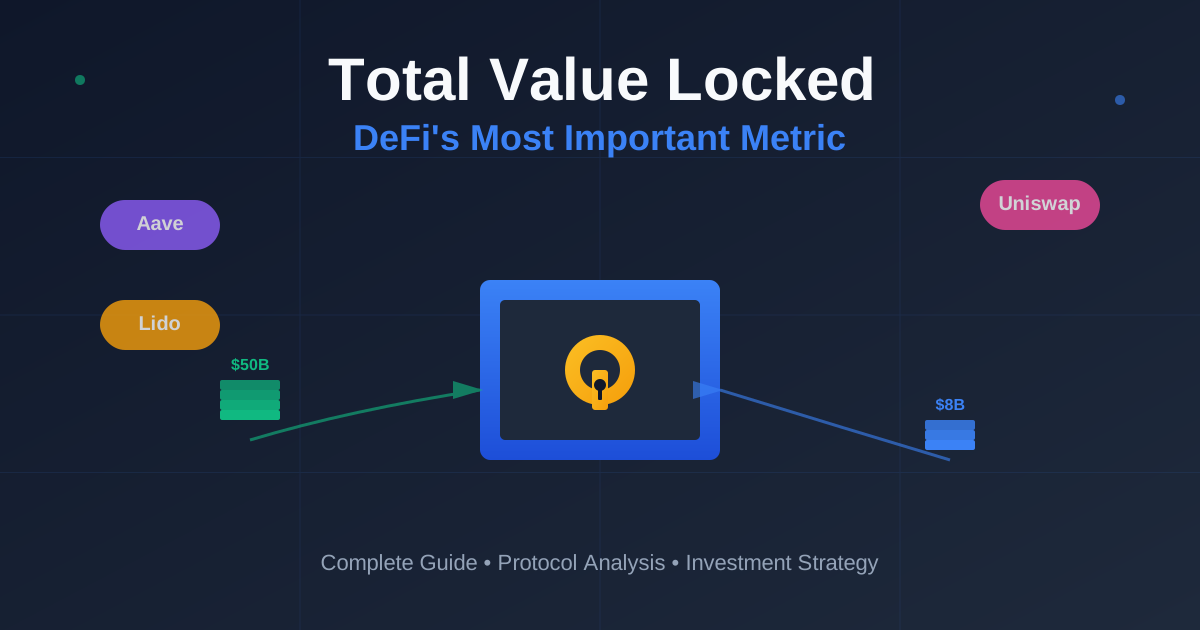
What is Total Value Locked (TVL)? Complete Guide to DeFi's Most Important Metric
Learn everything about Total Value Locked (TVL) in DeFi. Understand how TVL works, why it matters, and how to use it to evaluate DeFi protocols safely.
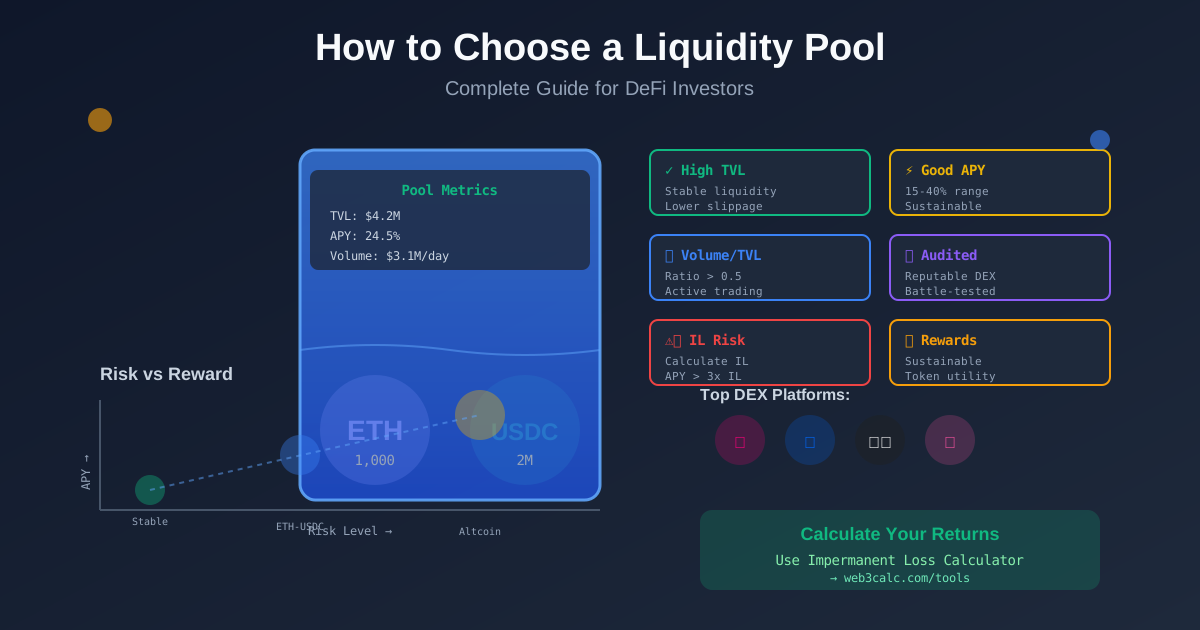
How to Choose a Liquidity Pool: Complete Guide for DeFi Investors
# How to Choose a Liquidity Pool: Complete Guide for DeFi Investors Choosing the right liquidity pool can make the difference between earning **50%+ APY** and losing money to impermanent loss. With...
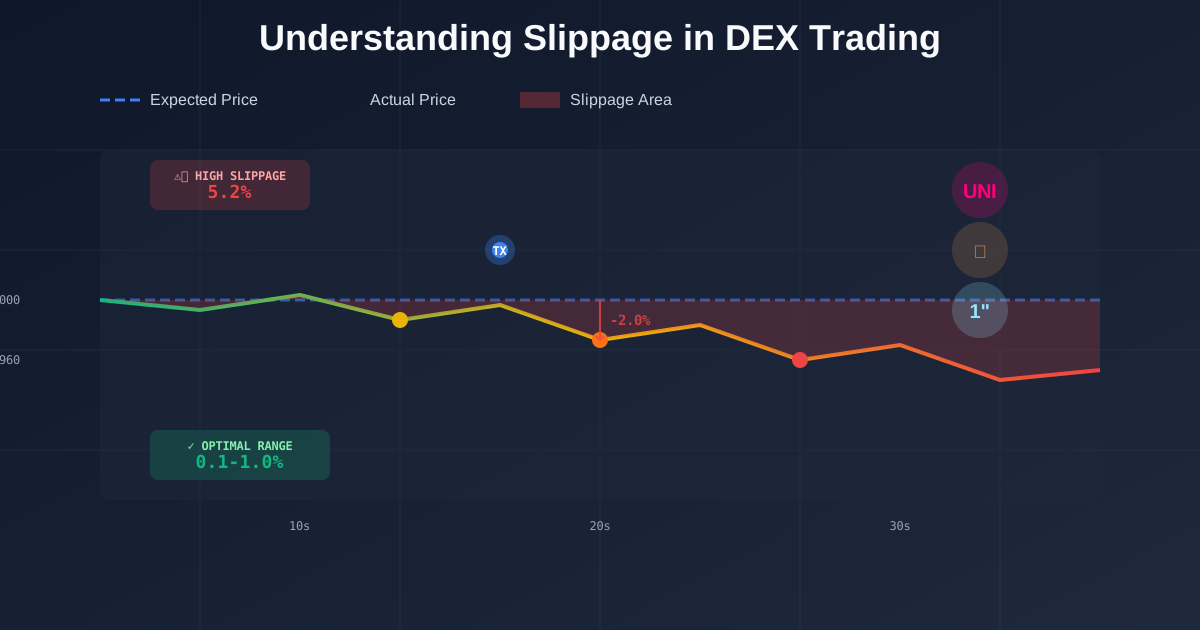
Understanding Slippage in DEX Trading: Complete Guide 2025
# Understanding Slippage in DEX Trading: Complete Guide 2025 If you've ever traded on a decentralized exchange (DEX) like Uniswap or PancakeSwap, you've likely encountered **slippage**—the differenc...