How to Choose a Liquidity Pool: Complete Guide for DeFi Investors
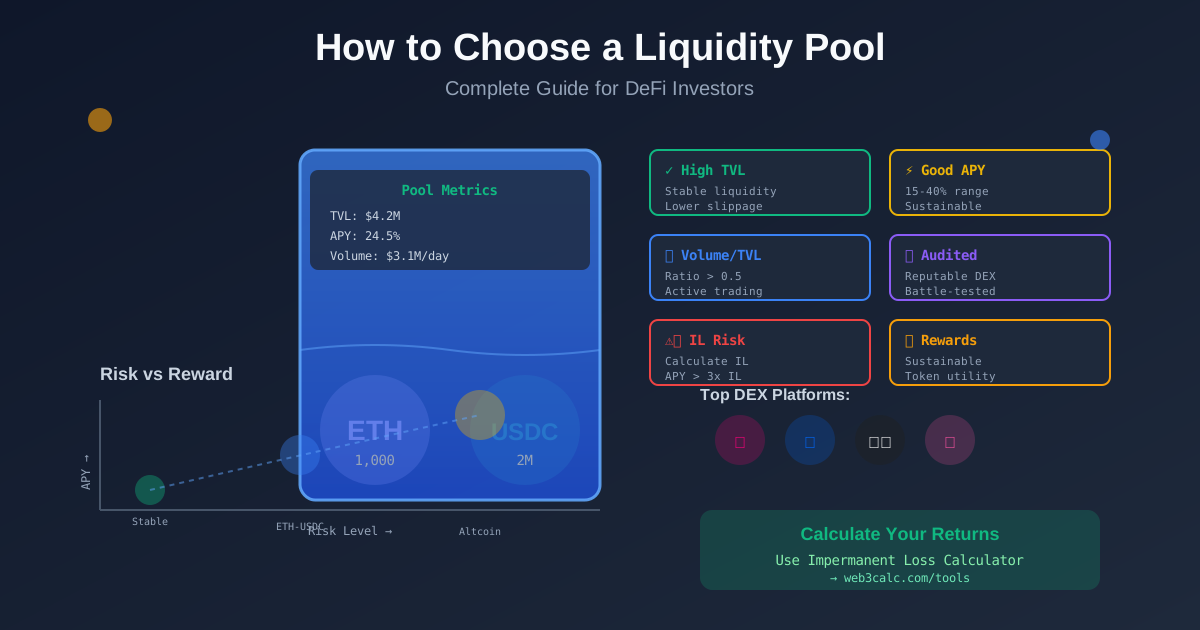
How to Choose a Liquidity Pool: Complete Guide for DeFi Investors
Choosing the right liquidity pool can make the difference between earning 50%+ APY and losing money to impermanent loss. With thousands of pools across dozens of DEXs, how do you identify the best opportunities while managing risk?
In this comprehensive guide, you'll learn the exact framework professional DeFi investors use to evaluate and select profitable liquidity pools. We'll cover key metrics, risk assessment strategies, and real-world examples to help you make informed decisions.
What is a Liquidity Pool?
A liquidity pool is a smart contract that holds two tokens (or more) that users can trade against. Liquidity providers (LPs) deposit tokens into the pool and earn fees from trades, plus often additional rewards from liquidity mining programs.
How Liquidity Pools Work
Basic Mechanism:
- You deposit equal value of two tokens (e.g., $1,000 ETH + $1,000 USDC)
- You receive LP tokens representing your share of the pool
- Traders pay fees when swapping tokens (typically 0.05-1%)
- You earn a proportional share of all trading fees
- You may also earn reward tokens (liquidity mining)
Example:
- Pool: ETH-USDC on Uniswap V3
- Your deposit: 0.5 ETH ($1,000) + 1,000 USDC
- Pool size: 1,000 ETH ($2M) + 2,000,000 USDC
- Your share: 0.05% of the pool
- You earn 0.05% of all trading fees + UNI rewards
The Liquidity Pool Selection Framework
Professional LPs evaluate pools using this systematic 7-step framework:
Step 1: Define Your Risk Tolerance
Conservative Investors:
- Focus on stablecoin pairs (USDC-USDT, DAI-USDC)
- Accept lower APY (5-20%) for minimal impermanent loss
- Prefer established protocols (Uniswap, Curve)
Moderate Investors:
- Major crypto pairs (ETH-USDC, BTC-ETH)
- Target 20-50% APY
- Balance IL risk with fee income
Aggressive Investors:
- Volatile altcoin pairs (UNI-ETH, SUSHI-ETH)
- Target 50-200%+ APY
- Accept high IL risk for potential rewards
Key Metrics to Evaluate Every Pool
1. Total Value Locked (TVL)
What it means: Total amount of capital deposited in the pool.
Interpretation:
- High TVL ($10M+): More stable, lower risk, lower APY
- Medium TVL ($1M-$10M): Balanced risk/reward
- Low TVL (<$1M): Higher risk, potentially higher APY, higher slippage
Red Flags:
- TVL dropped >50% recently → LPs exiting
- TVL artificially inflated by team's own tokens
- Extremely low TVL (<$100K) → insufficient liquidity
Example:
Pool A: ETH-USDC, TVL $150M, APY 12%
Pool B: ETH-USDC, TVL $500K, APY 45%

Analysis: Pool A is safer but lower return.
Pool B's high APY may not compensate for slippage risk.
2. Annual Percentage Yield (APY)
APY Components:
- Base trading fees (0.05-1% per trade)
- Liquidity mining rewards (bonus tokens)
- Compounding effects
APY Evaluation:
| APY Range | Risk Level | Typical Scenario | |-----------|-----------|------------------| | 5-15% | Low | Stablecoin pools, major pairs | | 15-30% | Medium | Established altcoin pairs | | 30-60% | High | New pools, promotional rewards | | 60%+ | Very High | High volatility or temporary incentives |
Warning Signs:
- APY >200% is often unsustainable
- APY mostly from reward tokens (not fees) → Risk of token dump
- APY dropped significantly in past week → Incentives ending
3. Trading Volume (24h)
Why it matters: Higher volume = more fee income for LPs.
Volume-to-TVL Ratio:
Efficiency Ratio = 24h Volume / TVL
Benchmarks:
- Excellent: Ratio > 1.0 (Volume exceeds TVL daily)
- Good: Ratio 0.5-1.0
- Average: Ratio 0.2-0.5
- Poor: Ratio < 0.2
Example:
Pool: UNI-ETH
TVL: $50M
24h Volume: $40M
Ratio: 0.8 (Good - high fee generation)
4. Impermanent Loss Risk
Critical Factor: IL can erase all your fee earnings.
IL Risk Assessment:
| Pool Type | IL Risk | When to Choose | |-----------|---------|----------------| | Stablecoin-Stablecoin | Minimal (<1%) | Risk-averse, passive income | | Major-Major correlated | Low (1-5%) | ETH-WBTC, balanced exposure | | Major-Stable | Medium (5-15%) | ETH-USDC, directional bet | | Altcoin-Major | High (15-30%) | UNI-ETH, high conviction | | Altcoin-Altcoin | Very High (30%+) | Speculative, short-term |
IL Calculation Tool: Use our Impermanent Loss Calculator to estimate potential IL for any price scenario.
Rule of Thumb:
- APY should be 3-4x higher than expected IL to be worthwhile
- If you expect 10% IL, target minimum 30-40% APY
5. Fee Tier (Uniswap V3 Specific)
Uniswap V3 offers multiple fee tiers:
| Fee Tier | Best For | Examples | |----------|----------|----------| | 0.01% | Stable pairs | USDC-USDT, DAI-USDC | | 0.05% | Major pairs | ETH-USDC, WBTC-ETH | | 0.30% | Most pairs | Standard altcoins | | 1.00% | Volatile pairs | Exotic/new tokens |
Choosing Fee Tier:
- Lower fee = compete with other LPs, need higher volume
- Higher fee = less competition, but fewer trades
- Check which tier has highest TVL → market consensus
6. Protocol Reputation and Security
Tier 1 Protocols (Highest Trust):
- Uniswap, Curve, Balancer
- Multiple audits, battle-tested
- TVL >$1B, years of operation
Tier 2 Protocols (Established):
- SushiSwap, PancakeSwap, Trader Joe
- Audited, large community
- TVL $100M-$1B
Tier 3 Protocols (Higher Risk):
- New DEXs, clones
- Limited track record
- TVL <$100M
Security Checklist:
- ✅ Multiple security audits from reputable firms
- ✅ Open-source code
- ✅ Bug bounty program
- ✅ Active developer team
- ✅ No history of exploits
- ⚠️ New protocol (<6 months old)
- ❌ Anonymous team
- ❌ Unaudited code
7. Token Reward Sustainability
Many pools offer additional rewards beyond trading fees. Evaluate sustainability:
Sustainable Rewards:
- Protocol has revenue model (fees)
- Rewards decrease gradually over time
- Token has utility/demand beyond farming
Unsustainable Rewards:
- Extremely high APY (500%+) with no real revenue
- Constant emission of new tokens
- No token utility (only used for farming)
- Team can mint unlimited tokens
Example Analysis:
Pool A: ETH-USDC on Curve
- APY: 8% (6% fees + 2% CRV rewards)
- CRV has utility (governance, boosting rewards)
- Curve generates real fee revenue
- ✅ Sustainable
Pool B: SCAM-BUSD on Random DEX
- APY: 800% (2% fees + 798% SCAM rewards)
- SCAM token has no utility
- Team mints tokens to pay rewards
- ❌ Unsustainable (likely to collapse)
Pool Selection Strategy by Investment Goal
Goal 1: Passive Income (Low Risk)
Target Profile:
- Minimize impermanent loss
- Steady, predictable returns
- Set-and-forget strategy
Best Pool Types:
- Stablecoin pools: USDC-USDT, DAI-USDC, USDC-USDT on Curve
- Expected APY: 5-15%
- Advantages: Minimal IL, predictable returns, low monitoring
- Platforms: Curve Finance (optimized for stables)
Recommended Pools:
-
Curve 3pool (USDC-USDT-DAI)
- TVL: $400M+
- APY: 8-12%
- Risk: Very low
-
Uniswap V3 USDC-USDT (0.01% fee)
- TVL: $200M+
- APY: 5-8%
- Risk: Very low
Goal 2: Balanced Growth (Medium Risk)
Target Profile:
- Accept moderate IL for higher returns
- Active portfolio management
- Diversified exposure
Best Pool Types:
- Blue-chip pairs: ETH-USDC, WBTC-ETH, ETH-USDT
- Expected APY: 15-40%
- Advantages: Good liquidity, established pairs, reasonable IL
- Platforms: Uniswap V3, Balancer
Recommended Pools:
-
Uniswap V3 ETH-USDC (0.05% fee)
- TVL: $150M+
- APY: 20-35%
- Risk: Medium (10-15% IL if ETH moves 50%)
-
Balancer ETH-WBTC-USDC
- TVL: $50M+
- APY: 25-40%
- Risk: Medium (multi-asset reduces IL)
Goal 3: Maximum Yield (High Risk)
Target Profile:
- Willing to accept high IL for high returns
- Active monitoring and rebalancing
- Strong conviction in tokens
Best Pool Types:
- Altcoin pairs: UNI-ETH, SUSHI-ETH, MATIC-ETH
- New incentive programs: Promotional liquidity mining
- Expected APY: 50-200%+
- Advantages: Potential for outsized returns
- Platforms: SushiSwap, PancakeSwap, New DEXs
Recommended Pools (Example):
-
SushiSwap UNI-ETH
- TVL: $10M+
- APY: 60-100%
- Risk: High (30%+ IL potential)
-
New Protocol Incentivized Pool
- TVL: $5M+
- APY: 150-300%
- Risk: Very high (IL + smart contract risk)
Step-by-Step: Choosing Your First Pool
Step 1: Research the Protocol
Where to Research:
- Official documentation
- DeFi Llama - Protocol TVL and history
- Twitter/Discord community
- Audit reports (CertiK, Trail of Bits)
Step 2: Analyze Pool Metrics
Data Sources:
- DEX interface (Uniswap, Curve, etc.)
- Dex Screener - Volume, liquidity data
- APY Vision - Historical pool performance
- Revert Finance - Position analysis
Key Questions:
- Is TVL stable or declining?
- Is volume consistent or spiking?
- What's the Volume/TVL ratio?
- Are rewards sustainable?
Step 3: Calculate Expected Returns
Formula:
Expected Return = Fee APY + Reward APY - Expected IL
Example:
Pool: ETH-USDC on Uniswap V3
Fee APY: 25%
Reward APY: 10% (UNI incentives)
Expected IL: 8% (if ETH moves 30%)

Expected Return = 25% + 10% - 8% = 27% net APY
Use our Impermanent Loss Calculator for accurate IL estimates.
Step 4: Start Small
Best Practice:
- Start with 5-10% of your intended allocation
- Monitor for 1-2 weeks
- Check actual returns vs. expectations
- Scale up if performance meets goals
Step 5: Monitor and Rebalance
Weekly Monitoring:
- Check current APY vs. initial APY
- Monitor pool TVL changes
- Track your position value
- Calculate actual IL
Rebalancing Triggers:
- APY drops >30% from initial
- TVL decreases >40%
- Better opportunities emerge
- Your position is 20%+ in IL
Advanced Pool Selection Strategies
Strategy 1: Concentrated Liquidity (Uniswap V3)
Instead of providing liquidity across all prices, concentrate it in a specific range.
Benefits:
- 2-20x capital efficiency
- Higher fee earnings per dollar
- Active management can boost returns significantly
Considerations:
- Requires active management
- Risk of price moving out of range (no fees earned)
- More complex than V2
Best For:
- Stablecoin pairs (narrow range like $0.99-$1.01)
- Experienced LPs who can monitor and adjust
Example:
V2 Position: $10,000 across all prices → 20% APY
V3 Position: $10,000 in $1,950-$2,050 range → 60% APY
(but if ETH moves to $2,200, position earns 0%)
Strategy 2: Multi-Pool Diversification
Don't put all capital in one pool.
Sample Portfolio:
- 40% Stablecoin pools (safety)
- 40% ETH-USDC or similar (balanced)
- 20% High-yield altcoin pools (growth)
Benefits:
- Risk reduction through diversification
- Steady income from stable pools
- Growth potential from high-yield pools
Strategy 3: Farm and Dump vs. Hold
Farm and Dump:
- Claim reward tokens immediately
- Sell for stablecoins or majors
- Lock in profits, avoid token price risk
Farm and Hold:
- Accumulate reward tokens
- Bet on token price appreciation
- Higher risk, higher potential reward
Hybrid Approach:
- Sell 50% of rewards immediately
- Hold 50% for potential upside
- Balance risk and opportunity
Red Flags: Pools to Avoid
🚩 Red Flag 1: Extremely High APY (>500%)
Warning Signs:
- APY is 10x higher than similar pools
- Rewards are mostly from token emissions
- Token has no real utility
Why Dangerous:
- Unsustainable emissions
- Token price will crash as farmers sell
- Your IL + token dump = massive losses
🚩 Red Flag 2: Rapidly Declining TVL
Warning Signs:
- TVL down >50% in past month
- Sharp drops after reward announcements
- Whales exiting positions
Why Dangerous:
- "Smart money" sees problems
- Liquidity crisis approaching
- Higher slippage for traders = less volume
🚩 Red Flag 3: Anonymous Team + No Audit
Warning Signs:
- No audit from reputable firm
- Team uses pseudonyms only
- No public github or documentation
Why Dangerous:
- High risk of rug pull
- Possible smart contract exploits
- No recourse if funds are stolen
🚩 Red Flag 4: Low Liquidity + High Slippage
Warning Signs:
- Pool TVL <$100K
- Swapping $1K causes >5% slippage
- Volume/TVL ratio <0.1
Why Dangerous:
- Your deposit affects pool balance significantly
- Hard to exit position without losses
- Low trading activity = minimal fees
🚩 Red Flag 5: Locked Liquidity Warnings
Warning Signs:
- Liquidity unlock events approaching
- Large percentage controlled by team/insiders
- Token price correlated with lock expiration
Why Dangerous:
- Massive dumps when locks expire
- IL skyrockets from price crash
- Exit liquidity disappears
Real-World Pool Selection Examples
Example 1: Conservative Portfolio ($10,000)
Strategy: Minimize risk, steady income
Portfolio Allocation:
-
60% ($6,000) - Curve 3pool (USDC-USDT-DAI)
- APY: 10%
- Expected annual return: $600
- IL Risk: <1%
-
30% ($3,000) - Uniswap V3 USDC-USDT (0.01%)
- APY: 6%
- Expected annual return: $180
- IL Risk: <1%
-
10% ($1,000) - Balancer ETH-USDC-WBTC
- APY: 25%
- Expected annual return: $250
- IL Risk: ~5%
Total Expected Return: $1,030 (10.3% APY) Risk Level: Low
Example 2: Balanced Portfolio ($10,000)
Strategy: Balance risk and reward
Portfolio Allocation:
-
40% ($4,000) - Curve stablecoin pool
- APY: 10%
- Expected return: $400
-
40% ($4,000) - Uniswap V3 ETH-USDC (0.05%)
- APY: 30%
- Expected return: $1,200
- Expected IL: -$240
- Net: $960
-
20% ($2,000) - SushiSwap UNI-ETH
- APY: 60%
- Expected return: $1,200
- Expected IL: -$400
- Net: $800
Total Expected Return: $2,160 (21.6% APY) Risk Level: Medium
Example 3: Aggressive Portfolio ($10,000)
Strategy: Maximum yield, accept high risk
Portfolio Allocation:
-
20% ($2,000) - Stablecoin safety pool
- APY: 10%
- Expected return: $200
-
30% ($3,000) - ETH-USDC Uniswap V3
- APY: 35%
- Expected return: $1,050
- Expected IL: -$300
- Net: $750
-
50% ($5,000) - High-yield altcoin pools
- APY: 120%
- Expected return: $6,000
- Expected IL: -$1,500
- Net: $4,500
Total Expected Return: $5,450 (54.5% APY) Risk Level: High
Tools and Resources
Essential Tools
-
- Calculate potential IL for any price scenario
- Compare different pool options
-
- Compare APY vs APR
- Calculate compounding effects
-
- Track protocol TVL
- Historical data and charts
-
- Real-time pool metrics
- Volume and liquidity analysis
-
- Pool performance tracking
- IL and fee earnings breakdown
-
- Uniswap V3 position management
- Range optimization tools
Educational Resources
- Uniswap V3 Docs: Learn about concentrated liquidity
- Curve Finance Guide: Stablecoin pool mechanics
- DeFi Pulse: Industry news and trends
Common Mistakes to Avoid
❌ Mistake 1: Chasing APY Without Understanding Risk
Problem: Seeing 500% APY and jumping in without research.
Solution: Always calculate: APY - Expected IL - Token dump risk = Real return
❌ Mistake 2: Ignoring Impermanent Loss
Problem: Focusing only on APY, forgetting IL can erase gains.
Solution: Use IL calculator before depositing. If expected IL > APY, don't provide liquidity.
❌ Mistake 3: Providing Liquidity to Illiquid Pools
Problem: Pool has <$100K TVL, your $10K deposit distorts balance.
Solution: Only provide to pools with TVL at least 100x your deposit size.
❌ Mistake 4: Not Monitoring Positions
Problem: Set and forget, wake up to 50% IL and ended rewards.
Solution: Check positions weekly. Set alerts for APY changes or TVL drops.
❌ Mistake 5: Falling for Rug Pulls
Problem: New DEX promises 1000% APY, turns out to be scam.
Solution: Only use audited, established protocols. If APY seems too good to be true, it is.
FAQ
How much money do I need to start providing liquidity?
Minimum: $100-$500 for testing Practical minimum: $1,000-$5,000 (gas fees are meaningful but not excessive) Recommended: $10,000+ for diversification across multiple pools
How often should I rebalance my LP positions?
Passive strategy: Monthly review Active strategy: Weekly monitoring Day trading strategy: Daily adjustments (Uniswap V3 concentrated liquidity)
What's a good APY for a liquidity pool?
Benchmarks:
- Stablecoin pools: 5-15% APY is good
- Major pairs (ETH-USDC): 15-35% APY is good
- Altcoin pairs: 40-80% APY is good
-
100% APY: Usually temporary or very risky
Should I provide liquidity on Layer 1 or Layer 2?
Layer 1 (Ethereum mainnet):
- ✅ Highest liquidity
- ✅ Most established pools
- ❌ High gas fees ($50-$200 per transaction)
Layer 2 (Arbitrum, Optimism, Base):
- ✅ Low gas fees ($0.50-$5)
- ✅ Fast transactions
- ❌ Less liquidity than L1
- ✅ Great for smaller positions (<$10K)
Recommendation: If <$10K, use Layer 2. If >$10K, Layer 1 is worth the gas fees.
How do I calculate if a pool is profitable?
Formula:
Profit = (Fee APY + Reward APY - Impermanent Loss) - Gas Costs
Example:
- Fee APY: 20%
- Reward APY: 10%
- IL: 8%
- Gas to enter + exit: $150
- Position size: $5,000
Profit = (20% + 10% - 8%) × $5,000 - $150 = $1,100 - $150 = $950 Effective APY = $950 / $5,000 = 19%
Conclusion: Your Pool Selection Checklist
Before providing liquidity to any pool, verify:
✅ Protocol Security
- Multiple audits from reputable firms
- Battle-tested (>6 months old)
- No history of exploits
✅ Pool Fundamentals
- TVL >$1M (for $10K+ positions)
- 24h Volume / TVL ratio >0.3
- Stable or growing TVL trend
✅ Risk/Reward Balance
- APY - Expected IL = Positive net return
- APY is at least 3x higher than expected IL
- Understand what drives the APY (fees vs. rewards)
✅ Your Strategy Alignment
- Pool matches your risk tolerance
- Fits your time horizon (short vs. long term)
- You have time to monitor (if needed)
✅ Exit Strategy
- Gas costs to exit are reasonable
- Pool has sufficient liquidity for your size
- You know your profit-taking or loss-cutting thresholds
Start Smart: Use Our Tools
Ready to choose your first liquidity pool? Our calculators help you make informed decisions:
📊 Impermanent Loss Calculator - Estimate IL before you deposit
💰 APY/APR Calculator - Compare yields accurately
📈 Staking Rewards Calculator - Calculate total returns
⛽ Gas Fee Calculator - Factor in transaction costs
Remember: The best liquidity pool is the one that matches YOUR risk tolerance, time commitment, and financial goals. Start small, learn from experience, and scale up as you gain confidence.
Got questions about liquidity pools? Share your experiences in the comments!
Tags: #LiquidityPool #DeFi #Uniswap #CurveFinance #YieldFarming #APY #ImpermanentLoss
Share this article:
Related Articles
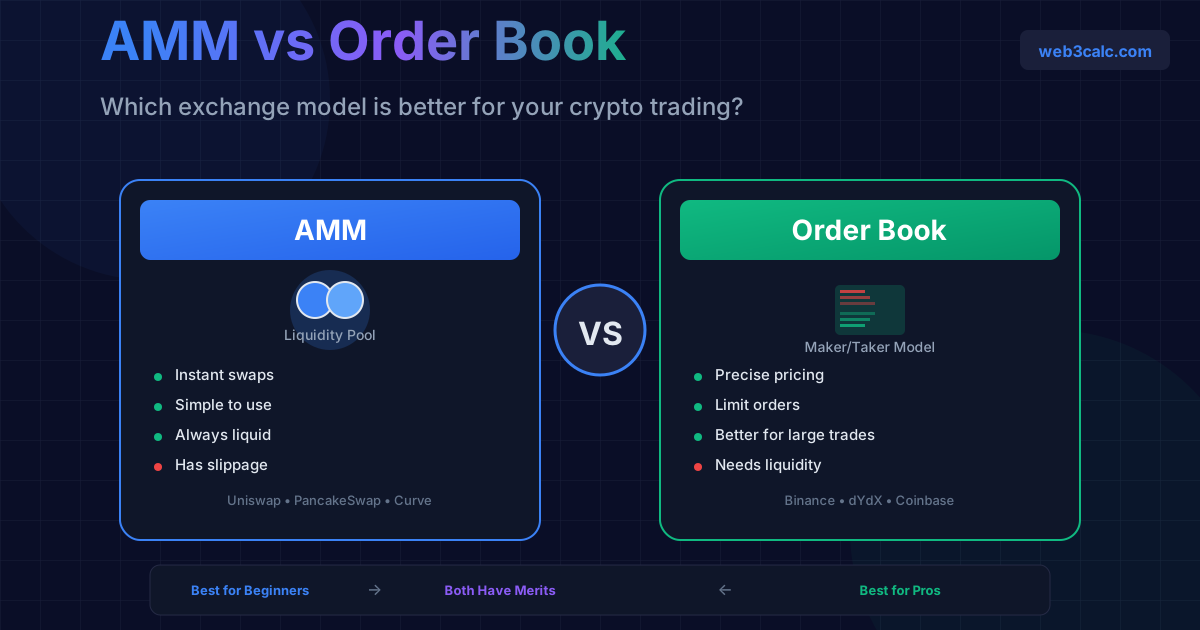
AMM vs Order Book: Which is Better for Crypto Trading?
Understand the key differences between Automated Market Makers (AMMs) and Order Book exchanges. Learn which model suits your trading style and why both matter in DeFi.
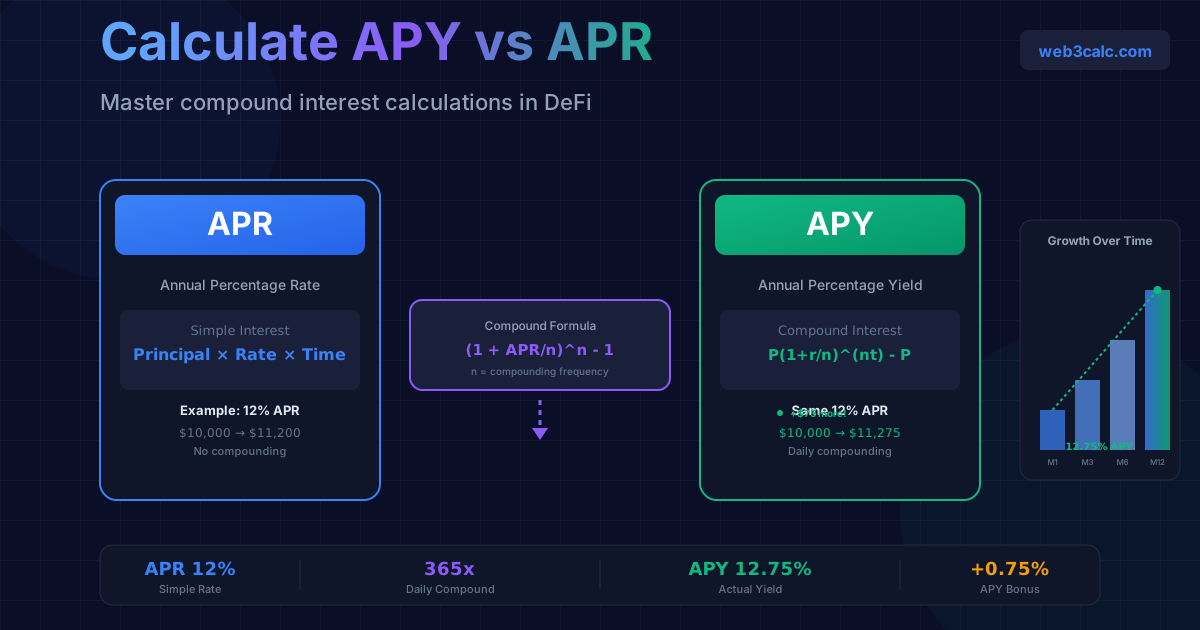
How to Calculate APY vs APR in DeFi: Complete Guide with Examples
Master the difference between APY and APR in DeFi. Learn calculation formulas, understand compound interest, and discover how to maximize your crypto yields.
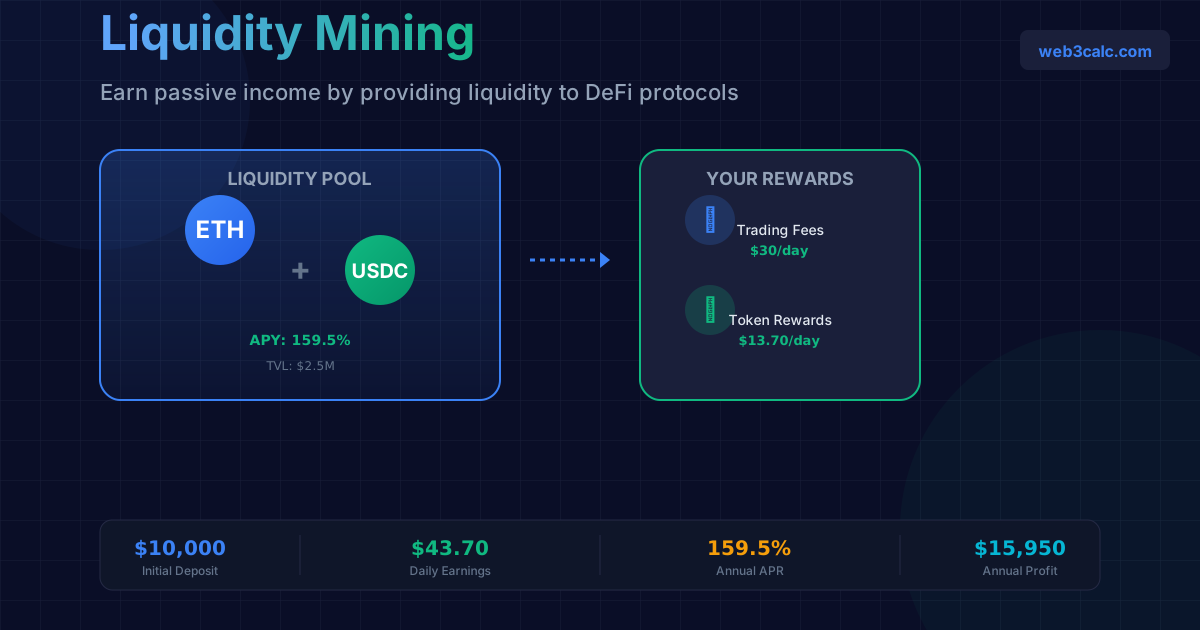
What is Liquidity Mining? Complete Guide to Earning Passive Income in DeFi
Discover how liquidity mining works, learn strategies to maximize your returns, and understand the risks involved in providing liquidity to DeFi protocols.