Portfolio Rebalancing Calculator Guide: Optimize Your Crypto Asset Allocation
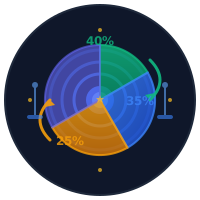
Portfolio Rebalancing Calculator Guide: Optimize Your Crypto Asset Allocation
Portfolio rebalancing is one of the most important yet often overlooked aspects of crypto investing. As market prices fluctuate, your carefully planned asset allocation drifts away from your targets, potentially exposing you to more risk than intended. This comprehensive guide will teach you everything about portfolio rebalancing and how to use our free calculator to optimize your strategy.
What is Portfolio Rebalancing?
Portfolio rebalancing is the process of realigning the weightings of assets in your investment portfolio back to your target allocation. Over time, some assets grow faster than others, causing your portfolio to become unbalanced.
Simple Example
You start with:
- 50% Bitcoin ($50,000)
- 30% Ethereum ($30,000)
- 20% Stablecoins ($20,000)
After 6 months, Bitcoin 2x while ETH stays flat:
- 66.7% Bitcoin ($100,000) ⚠️ Overweight
- 20% Ethereum ($30,000) ⚠️ Underweight
- 13.3% Stablecoins ($20,000) ⚠️ Underweight
Your portfolio is now much riskier than planned! Rebalancing would mean selling some Bitcoin and buying ETH/stablecoins to restore the 50/30/20 split.
Why Rebalance Your Crypto Portfolio?
1. Risk Management 🛡️
Without rebalancing, winning assets dominate your portfolio, increasing concentration risk. If Bitcoin crashes in the example above, you lose 67% of your portfolio value instead of the planned 50%.
2. Disciplined Selling 📉
Rebalancing forces you to "sell high" by trimming winners, preventing emotional attachment to pumping assets.
3. Disciplined Buying 📈
You automatically "buy low" by adding to underperforming assets at cheaper prices.
4. Consistent Returns 📊
Studies show rebalanced portfolios often outperform over long periods due to mean reversion and volatility harvesting.
5. Tax-Loss Harvesting 💰
Strategic rebalancing can create tax-loss harvesting opportunities to offset capital gains.
Rebalancing Strategies Explained
1. Time-Based Rebalancing ⏰
Rebalance on a fixed schedule regardless of portfolio drift.
Common Intervals:
- Daily: Only for algo traders with automated systems
- Weekly: For active traders with large portfolios
- Monthly: Sweet spot for most crypto investors
- Quarterly: Good for long-term holders
- Yearly: Minimum frequency recommended
Pros: ✅ Simple and disciplined ✅ Predictable transaction costs ✅ Easy to automate ✅ Removes emotion from decision
Cons: ❌ May rebalance unnecessarily if drift is small ❌ May miss critical opportunities between intervals ❌ Not responsive to market conditions
Best For: Beginners, hands-off investors, tax-advantaged accounts
2. Threshold-Based Rebalancing 🎯
Rebalance only when asset allocations drift beyond a set threshold.
Example Thresholds:
- Conservative: 3% drift (rebalance more often)
- Moderate: 5% drift (balanced approach)
- Aggressive: 10% drift (fewer rebalances)
If target is 40% Bitcoin and it drifts to 46%, a 5% threshold triggers rebalancing.
Pros: ✅ More responsive to market volatility ✅ Minimizes unnecessary trades ✅ Cost-effective for volatile markets ✅ Flexible and adaptive
Cons: ❌ Requires monitoring ❌ Less predictable costs ❌ More complex to implement
Best For: Active investors, volatile portfolios, cost-conscious traders
3. Hybrid Approach (Recommended) 🔄
Combine time and threshold: check monthly but only rebalance if drift exceeds 5%.
How it Works:
- Set calendar reminder (e.g., 1st of each month)
- Check portfolio allocations
- If any asset drifted > 5%, rebalance
- If all within 5%, do nothing
Pros: ✅ Best of both strategies ✅ Cost-effective ✅ Disciplined yet flexible ✅ Optimal for most investors
Cons: ❌ Requires manual checking (unless automated) ❌ Slightly more complex
Best For: Most crypto investors seeking optimal balance
How to Use Our Portfolio Rebalancing Calculator
Step 1: Add Your Assets
Click "Add Asset" to include all tokens in your portfolio (minimum 2 required).
For each asset, enter:
- Symbol: BTC, ETH, SOL, etc.
- Current Value: Current USD value of holdings
- Target Allocation: Desired percentage (must total 100%)
Example Portfolio:
BTC:  $40,000 → Target: 40%
ETH:  $30,000 → Target: 30%
SOL:  $15,000 → Target: 15%
USDC: $15,000 → Target: 15%
Step 2: Choose Rebalancing Frequency
Select from:
- Daily (high-frequency traders)
- Weekly (active management)
- Monthly (recommended for most)
- Quarterly (long-term holders)
- Yearly (minimum viable)
- Threshold (trigger-based)
If you choose "Threshold", set the drift percentage (typically 5%).
Step 3: Input Costs
Gas Cost per Transaction ($): Average cost to execute one swap/trade. On Ethereum mainnet, this might be $10-50. On L2s like Arbitrum, $1-5.
Tax Rate (%): Your capital gains tax rate (0-37% in US, varies by country and holding period).
Consider Tax-Loss Harvesting: Check this box to include potential tax savings from selling losing positions.
Step 4: Analyze Results
The calculator shows:
Key Metrics:
- Total Portfolio Value: Sum of all assets
- Allocation Drift: Average % difference from targets
- Rebalance Cost: Total gas + tax costs
- Net Benefit: Drift reduction value minus costs
Recommendation: ✅ Should Rebalance: Net benefit is positive ❌ Don't Rebalance: Costs exceed benefits
Asset Table:
- Current vs target allocation for each asset
- BUY/SELL/HOLD action needed
- Amount to trade in USD
Risk Score (0-100):
- 0-30: Low risk (well diversified)
- 30-60: Medium risk
- 60-100: High risk (concentrated)
Real-World Rebalancing Scenarios
Scenario 1: Bull Market Run 🚀
Starting Portfolio (Jan 2024):
BTC:  $50,000 (50%)
ETH:  $30,000 (30%)
USDC: $20,000 (20%)
After 3 Months (Apr 2024):
BTC:  $120,000 (66.7%) ⚠️ +16.7% drift
ETH:  $45,000  (25%)   ⚠️ -5% drift
USDC: $15,000  (8.3%)  ⚠️ -11.7% drift
Total: $180,000 (+80% gain!)
Calculator Recommendation: 🚨 High Drift Detected - Rebalance Recommended
Actions:
- SELL $30,000 BTC (bring to $90,000 = 50%)
- BUY $9,000 ETH (bring to $54,000 = 30%)
- BUY $21,000 USDC (bring to $36,000 = 20%)
Why Rebalance? Even though BTC is winning, you're now overexposed. A sudden 50% BTC crash would wipe out most gains. Rebalancing locks in profits and reduces risk.
Scenario 2: Bear Market Decline 📉
Starting Portfolio (Nov 2021):
BTC:  $100,000 (50%)
ETH:  $60,000  (30%)
USDC: $40,000  (20%)
After 12 Months (Nov 2022):
BTC:  $35,000  (40.7%) ✅ -9.3% drift
ETH:  $18,000  (20.9%) ⚠️ -9.1% drift
USDC: $33,000  (38.4%) ⚠️ +18.4% drift
Total: $86,000 (-57% loss)
Calculator Recommendation: ⚠️ Moderate Drift - Consider Rebalancing
Actions with Tax-Loss Harvesting:
- SELL $10,000 USDC
- BUY $4,000 BTC (harvest $65k tax loss)
- BUY $6,000 ETH (harvest $42k tax loss)
Benefits:
- Restore target allocation
- Harvest tax losses to offset future gains
- Buy discounted BTC/ETH for recovery
Scenario 3: Small Portfolio (<$10k) 💼
Portfolio Value: $8,000 Monthly Gas Cost: $40 (5 trades × $8) Quarterly Rebalancing: $40 × 4 = $160/year Annual Cost as % of Portfolio: 2% 😱
Calculator Recommendation: 💡 Small Portfolio - Quarterly or Threshold-Based
For portfolios under $10,000, monthly rebalancing is too expensive. Better strategies:
- Rebalance quarterly (0.5% cost)
- Use threshold-based (5-10% drift)
- Rebalance with new deposits instead of trades
Rebalancing Frequency Guidelines
Portfolio Size: Less than $10,000
- Recommended Frequency: Quarterly or Yearly
- Threshold: 10%
- Why: High percentage costs relative to portfolio size
Portfolio Size: $10,000 - $50,000
- Recommended Frequency: Monthly or Threshold-based
- Threshold: 5-7%
- Why: Balanced approach between cost and effectiveness
Portfolio Size: $50,000 - $100,000
- Recommended Frequency: Monthly
- Threshold: 5%
- Why: Affordable costs, optimal rebalancing
Portfolio Size: $100,000 - $500,000
- Recommended Frequency: Weekly or Threshold-based
- Threshold: 3-5%
- Why: High priority, significant portfolio value
Portfolio Size: Greater than $500,000
- Recommended Frequency: Daily or Threshold-based
- Threshold: 2-3%
- Why: Professional management required
Advanced Rebalancing Tips
1. Rebalance with New Deposits 💵
Instead of selling winners, add new capital to underweight assets. Avoids taxes and fees!
Example:
- BTC overweight by $5,000
- ETH underweight by $5,000
- Instead of swapping, deposit $5,000 new money into ETH
2. Tax-Loss Harvesting Strategy 📋
Strategically sell losing positions during rebalancing to:
- Offset capital gains
- Reduce taxable income ($3k/year limit in US)
- Carry forward losses to future years
Important: Avoid wash sales! Don't buy back within 30 days.
3. Consider Correlation 🔗
Assets that move together (BTC/ETH) need less frequent rebalancing than uncorrelated pairs (BTC/stablecoins).
4. Use DeFi Automation 🤖
Protocols that auto-rebalance:
- Balancer: Automated portfolio balancing
- Indexed Finance: Self-rebalancing index tokens
- Enzyme: Managed portfolio automation
- TokenSets: Rebalancing strategies
5. Layer 2 for Lower Costs ⚡
Rebalance on Arbitrum, Optimism, or Base to save 90%+ on gas.
Common Rebalancing Mistakes to Avoid
❌ Mistake 1: Over-Rebalancing
Problem: Trading too frequently erodes returns through fees Solution: Use threshold-based approach
❌ Mistake 2: Ignoring Costs
Problem: $50 rebalancing cost on $5,000 portfolio = 1% loss Solution: Calculate net benefit before rebalancing
❌ Mistake 3: Emotional Rebalancing
Problem: Selling winners too early or holding losers too long Solution: Stick to mechanical strategy
❌ Mistake 4: Not Rebalancing at All
Problem: Portfolio drifts to 90% in one asset Solution: Set calendar reminders
❌ Mistake 5: Ignoring Taxes
Problem: Triggering short-term capital gains (37% tax) Solution: Consider holding period, use tax-loss harvesting
Rebalancing Calculator FAQ
Q: How often should I rebalance my crypto portfolio?
A: It depends on portfolio size:
- Small (<$10k): Quarterly or yearly
- Medium ($10k-$100k): Monthly
- Large (>$100k): Weekly or threshold-based
Use our calculator to find your optimal frequency!
Q: What's a good rebalancing threshold?
A: 5% drift is the sweet spot for most investors. Conservative investors use 3%, while cost-conscious traders use 7-10%.
Q: Should I rebalance during a bull or bear market?
A: Yes, in both!
- Bull market: Lock in profits by trimming winners
- Bear market: Buy discounted assets and harvest tax losses
Q: Does rebalancing improve returns?
A: Studies show rebalancing can improve risk-adjusted returns over long periods. The S&P 500 rebalanced portfolio beat buy-and-hold by 0.5-1% annually with 20% less volatility.
Q: What if gas fees are too high?
A: Consider:
- Using Layer 2 networks (Arbitrum, Optimism)
- Rebalancing less frequently
- Using DEX aggregators for best rates
- Rebalancing with new deposits instead of swaps
Q: Can I automate rebalancing?
A: Yes! Options include:
- DeFi Protocols: Balancer, Indexed Finance, Enzyme
- Centralized Services: 3Commas, Shrimpy (discontinued), Coinrule
- Custom Bots: Use APIs to automate threshold checks
Rebalancing Tools Comparison
🆓 Our Calculator
- Cost: Free
- Customization: ✅ Full control
- Automation: ❌ Manual
- Tax Reporting: ✅ Included
- Best For: Planning
⚖️ Balancer
- Cost: 0.1-0.3% fees
- Customization: ⚠️ Limited
- Automation: ✅ Automatic
- Tax Reporting: ❌ Need 3rd party
- Best For: Passive LP
🧬 Enzyme
- Cost: 0.5-2% fees
- Customization: ✅ Full control
- Automation: ✅ Automatic
- Tax Reporting: ⚠️ Some support
- Best For: Active funds
🛠️ Manual
- Cost: Gas only
- Customization: ✅ Full control
- Automation: ❌ Manual
- Tax Reporting: ❌ Manual
- Best For: DIY investors
Real Portfolio Examples
Conservative Portfolio (Low Risk)
40% BTC
30% ETH
20% Stablecoins (USDC/USDT)
10% Layer 1s (SOL, AVAX, etc.)

Rebalancing: Quarterly or 10% threshold
Risk Score: 25/100 (Low)
Balanced Portfolio (Medium Risk)
50% BTC
25% ETH
15% Large-cap Altcoins
10% Stablecoins

Rebalancing: Monthly or 5% threshold
Risk Score: 40/100 (Medium)
Aggressive Portfolio (High Risk)
30% BTC
30% ETH
30% Mid-cap Altcoins
10% Small-cap/New projects

Rebalancing: Weekly or 3% threshold
Risk Score: 75/100 (High)
Tax Considerations for Rebalancing
US Tax Treatment
Short-term Capital Gains (held < 1 year):
- Taxed as ordinary income
- Rates: 10-37% depending on bracket
- Tip: Avoid rebalancing before 1-year holding period
Long-term Capital Gains (held > 1 year):
- Preferential tax rates
- Rates: 0%, 15%, or 20%
- Much lower than short-term!
Tax-Loss Harvesting Strategy
- Identify Losers: Assets below purchase price
- Sell Strategically: Harvest losses during rebalancing
- Offset Gains: Use losses to offset other gains
- Carry Forward: Unused losses carry to future years
- Avoid Wash Sales: Wait 30 days before repurchasing
Example:
- Sell $10,000 of losing ETH position (-$5,000 loss)
- Offset $5,000 of Bitcoin gains (save $1,000 in taxes at 20%)
- Buy back different asset or wait 31 days
Conclusion: Start Rebalancing Today
Portfolio rebalancing is a powerful yet simple strategy to:
- ✅ Manage risk by maintaining target allocations
- ✅ Improve risk-adjusted returns over time
- ✅ Enforce disciplined buying low and selling high
- ✅ Optimize tax efficiency through strategic harvesting
- ✅ Sleep better knowing your portfolio is balanced
Action Steps:
- Use Our Calculator: Input your portfolio data
- Find Your Strategy: Time-based, threshold, or hybrid
- Set Up Tracking: Calendar reminders or automated checks
- Execute First Rebalance: Follow calculator recommendations
- Review Quarterly: Adjust strategy based on results
Try Our Free Portfolio Rebalancing Calculator
Ready to optimize your crypto portfolio? Use our free calculator to:
- 📊 Analyze current allocation vs targets
- 💰 Calculate rebalancing costs (gas + taxes)
- 🎯 Get personalized recommendations
- 📈 Find optimal rebalancing frequency
- ⚡ See net benefit before executing
Try the Portfolio Rebalancing Calculator →
Related Tools
- Portfolio Tracker - Track portfolio performance across wallets
- Crypto Tax Calculator - Calculate capital gains taxes
- Gas Fee Calculator - Compare transaction costs across chains
- DCA Calculator - Plan dollar-cost averaging strategy
- Diamond Hands Calculator - Compare HODL vs trading returns
Disclaimer: This guide is for educational purposes only. Not financial advice. Always do your own research (DYOR) and consider consulting with a financial advisor before making investment decisions.
Share this article:
Related Articles
Uniswap V3 Liquidity Mining Guide: Advanced ROI Simulator & Strategy Calculator
# Uniswap V3 Liquidity Mining Guide: Advanced ROI Simulator & Strategy Calculator Uniswap V3 revolutionized DeFi liquidity provision by introducing concentrated liquidity, allowing LPs to earn 4,000...
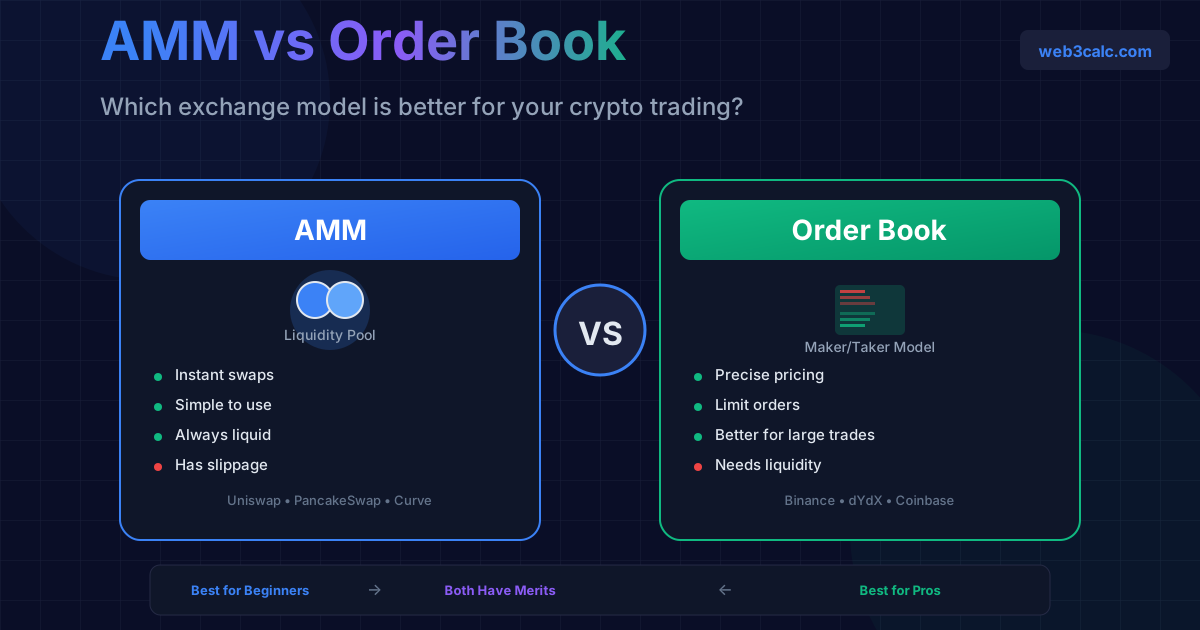
AMM vs Order Book: Which is Better for Crypto Trading?
Understand the key differences between Automated Market Makers (AMMs) and Order Book exchanges. Learn which model suits your trading style and why both matter in DeFi.
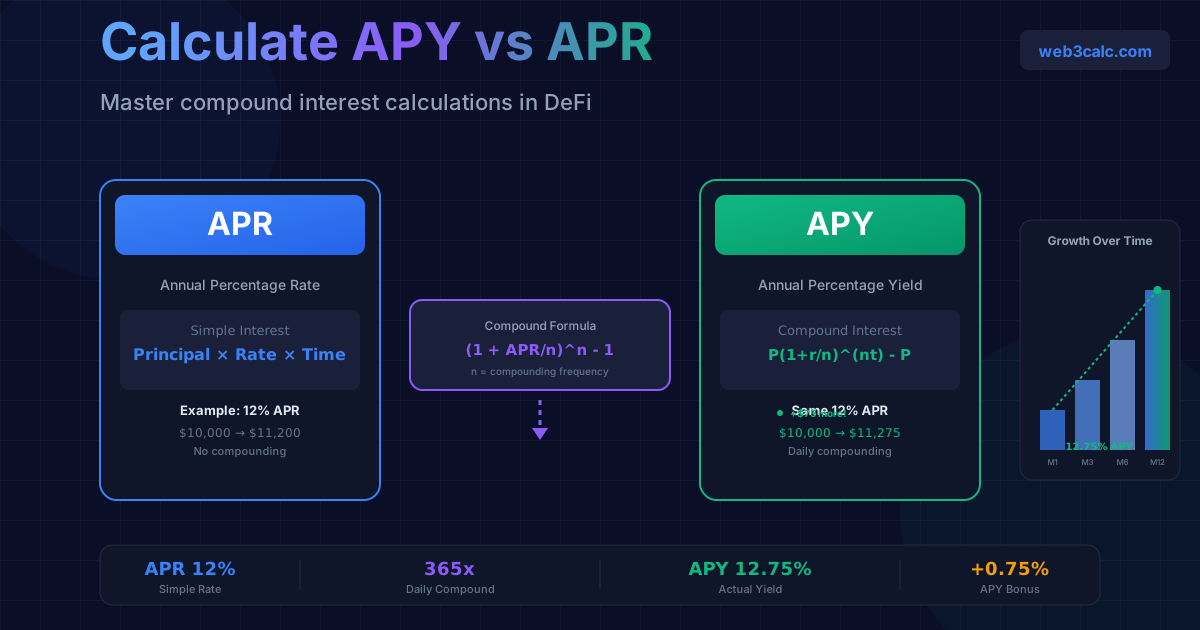
How to Calculate APY vs APR in DeFi: Complete Guide with Examples
Master the difference between APY and APR in DeFi. Learn calculation formulas, understand compound interest, and discover how to maximize your crypto yields.