Ethereum vs BSC vs Arbitrum for DeFi: Complete Chain Comparison 2025
Compare Ethereum, Binance Smart Chain, and Arbitrum for DeFi. Detailed analysis of gas fees, speed, security, TVL, ecosystem, and which blockchain is best for your DeFi strategy.
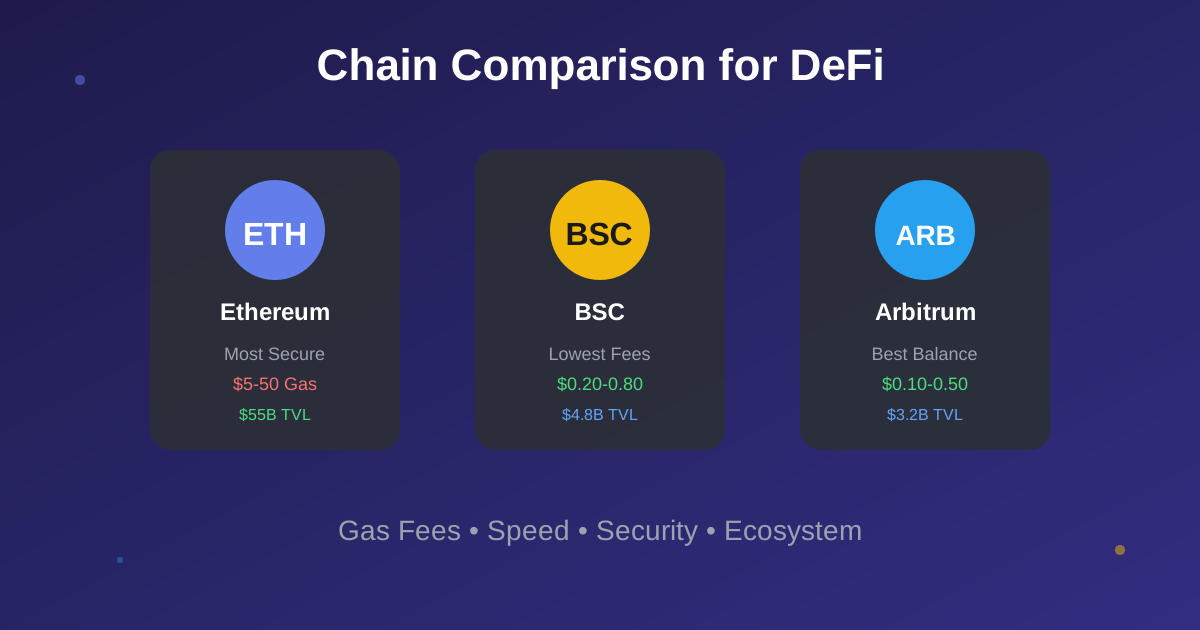
Ethereum vs BSC vs Arbitrum for DeFi: Complete Chain Comparison 2025
Choosing the right blockchain for DeFi can dramatically impact your trading costs, security, and available opportunities. Ethereum remains the king of DeFi, but Binance Smart Chain (BSC) and Arbitrum offer compelling alternatives with lower fees and faster transactions.
This comprehensive guide compares these three major chains across all critical dimensions to help you make informed decisions.
TL;DR - Quick Comparison
| Feature | Ethereum | Binance Smart Chain (BSC) | Arbitrum | |---------|----------|---------------------------|----------| | Type | Layer 1 | Layer 1 (EVM fork) | Layer 2 (Rollup) | | Total Value Locked | $55B | $4.8B | $3.2B | | Transaction Speed | 15 seconds | 3 seconds | 0.25 seconds | | Average Gas Fee | $5-50 | $0.20-0.80 | $0.10-0.50 | | Security Model | Highest | Medium (21 validators) | High (Ethereum-based) | | Decentralization | Highest | Low | Medium-High | | Major DEXs | Uniswap, Curve, Balancer | PancakeSwap, Venus | Uniswap, GMX, Camelot | | Best For | Large positions, security | Low fees, beginners | Balance of all factors | | Ethereum Compatibility | Native | Fork (near-identical) | 100% compatible | | Bridge Time | N/A | Instant (centralized) | 7 days (withdrawal) | | MEV Risk | High | Medium | Lower |
Detailed Chain Comparisons
1. Ethereum - The Original and Most Secure
Overview
Ethereum is the birthplace of DeFi and remains the most secure, decentralized, and trusted blockchain for financial applications. Since "The Merge" in September 2022, Ethereum uses Proof of Stake consensus.
Technical Specifications
Consensus Mechanism: Proof of Stake (PoS)
- Validators: 1,000,000+
- Block time: ~12 seconds
- Finality: ~15 minutes (2 epochs)
- TPS: 15-30 transactions per second
Network Statistics (Dec 2025):
- Total Value Locked: $55 billion
- Daily Active Users: 500,000+
- Smart Contracts: 50M+
- Daily Transactions: 1.2 million
Strengths
✅ Unmatched Security
- Largest validator set
- Most battle-tested smart contracts
- 10+ years of operation
- $55B+ in TVL demonstrates trust
✅ Strongest Ecosystem
- Most DeFi protocols built here first
- Deepest liquidity
- Most innovation happens first on ETH
- Best developer tools and documentation
✅ True Decentralization
- No single entity controls network
- Censorship resistant
- Credibly neutral
- Permissionless innovation
✅ Network Effects
- Most users, developers, capital
- Institutional adoption
- Brand recognition
- Interoperability standard
✅ Composability
- Protocols integrate seamlessly
- "Money legos" work best here
- Deepest primitive protocols
- Most robust oracle networks
Weaknesses
❌ High Gas Fees
- Simple swap: $5-20
- Complex interaction: $20-100
- NFT minting: $50-200
- During congestion: Can exceed $500
❌ Slower Transactions
- 12-15 second block times
- Can feel sluggish compared to alternatives
- Network congestion causes delays
❌ Scaling Limitations
- 15-30 TPS not enough for global adoption
- Rollups needed for scaling
- Gas price volatility
Gas Fee Breakdown (Typical)
| Action | Gas Units | Cost @ 30 gwei | Cost @ 50 gwei | Cost @ 100 gwei | |--------|-----------|----------------|----------------|-----------------| | ETH Transfer | 21,000 | $1.50 | $2.50 | $5.00 | | ERC20 Transfer | 65,000 | $4.70 | $7.80 | $15.60 | | Uniswap Swap | 150,000 | $10.80 | $18.00 | $36.00 | | Add Liquidity | 200,000 | $14.40 | $24.00 | $48.00 | | Complex DeFi | 500,000 | $36.00 | $60.00 | $120.00 |
ETH price assumed at $2,400
Best Use Cases for Ethereum
✅ Optimal for:
- Large transactions ($10,000+)
- Long-term DeFi positions
- Maximum security requirements
- Protocol treasuries
- Institutional users
- Blue-chip DeFi protocols
- When you need deepest liquidity
❌ Not optimal for:
- Small trades (<$1,000)
- High-frequency trading
- Beginners learning DeFi
- Users with limited capital
- Testing and experimentation
Major DeFi Protocols
DEXs:
- Uniswap (largest)
- Curve Finance
- Balancer
- SushiSwap
Lending:
- Aave
- Compound
- MakerDAO
Derivatives:
- dYdX (migrating)
- Synthetix
Yield:
- Yearn Finance
- Convex Finance
- Lido
2. Binance Smart Chain (BSC) - The Low-Cost Alternative
Overview
Binance Smart Chain is an independent blockchain created by Binance, designed as an EVM-compatible alternative with much lower fees. It sacrifices some decentralization for speed and cost efficiency.
Technical Specifications
Consensus Mechanism: Proof of Staked Authority (PoSA)
- Validators: 21 active (29 total)
- Block time: ~3 seconds
- Finality: Instant (single-block)
- TPS: 100+ transactions per second
Network Statistics (Dec 2025):
- Total Value Locked: $4.8 billion
- Daily Active Users: 1.2 million
- Smart Contracts: 10M+
- Daily Transactions: 3-5 million
Strengths
✅ Very Low Transaction Costs
- Simple transfer: $0.10-0.20
- Token swap: $0.30-0.80
- Complex DeFi: $1-3
- Predictable and stable fees
✅ Fast Transactions
- 3-second blocks
- Near-instant confirmation
- Great UX for trading
- No waiting for swaps
✅ High Throughput
- 100+ TPS capacity
- Network rarely congested
- Smooth during peak times
- Scales better than Ethereum L1
✅ EVM Compatible
- Same tooling as Ethereum
- Easy to port contracts
- MetaMask support
- Familiar developer experience
✅ Active Ecosystem
- PancakeSwap (large DEX)
- Venus Protocol (lending)
- Many projects
- Strong community
✅ Beginner Friendly
- Low cost = low risk for learning
- Fast transactions feel responsive
- Good for small position sizes
- Abundant educational content
Weaknesses
❌ Centralization Concerns
- Only 21 active validators
- Binance controls validator selection
- Single point of failure risk
- Not censorship resistant
❌ Lower Security Guarantees
- Smaller validator set
- Less battle-tested than Ethereum
- Centralized entity influence
- History of outages (9-hour halt in 2022)
❌ Scam Token Risk
- Easy token creation attracts scammers
- Many rug pulls
- Less vetted projects
- Need to be extra careful
❌ Bridge Risks
- BSC Bridge hacked for $566M (2022)
- Centralized bridge architecture
- Trust required
❌ Institutional Hesitancy
- Regulatory concerns with Binance
- Less institutional adoption
- Perceived as "Binance's chain"
❌ Shallower Liquidity
- Less TVL than Ethereum
- Higher slippage on large trades
- Fewer sophisticated protocols
Gas Fee Comparison
| Action | BSC Cost | Ethereum Cost (50 gwei) | Savings | |--------|----------|------------------------|---------| | BNB/Token Transfer | $0.15 | $2.50 | 94% | | DEX Swap | $0.40 | $18.00 | 98% | | Add Liquidity | $0.60 | $24.00 | 97% | | Harvest Rewards | $0.30 | $10.00 | 97% | | NFT Mint | $0.80 | $60.00 | 99% |
Best Use Cases for BSC
✅ Optimal for:
- Small trades ($100-5,000)
- High-frequency trading
- Yield farming with daily/weekly compounding
- Beginners learning DeFi
- Cost-sensitive users
- Testing strategies
- Gaming/NFT with many transactions
❌ Not optimal for:
- Large treasuries needing maximum security
- Long-term storage of significant value
- Projects requiring true decentralization
- Institutional custody
- Regulatory-sensitive applications
Major DeFi Protocols
DEXs:
- PancakeSwap (dominant)
- Biswap
- THENA
- ApeSwap
Lending:
- Venus Protocol
- Radiant Capital
- Alpaca Finance
Yield Aggregators:
- Beefy Finance
- Autofarm
- Belt Finance
Derivatives:
- Apollox
- Level Finance
3. Arbitrum - The Balanced Layer 2
Overview
Arbitrum is an Optimistic Rollup Layer 2 solution built on Ethereum. It bundles transactions off-chain and posts them to Ethereum, providing low fees while inheriting Ethereum's security.
Technical Specifications
Technology: Optimistic Rollup
- Validators: Decentralized sequencer (planned)
- Block time: ~0.25 seconds
- Finality: 7 days (for withdrawals to L1)
- TPS: 4,000+ transactions per second (theoretical)
Network Statistics (Dec 2025):
- Total Value Locked: $3.2 billion
- Daily Active Users: 400,000+
- Smart Contracts: 5M+
- Daily Transactions: 2-3 million
Strengths
✅ Ethereum Security
- All transactions ultimately secured by Ethereum
- Inherits full Ethereum decentralization
- Smart contract security unchanged
- No trust assumptions for funds
✅ Low Fees (Near BSC Level)
- Simple transfer: $0.10-0.20
- Token swap: $0.30-1.50
- Complex DeFi: $1-5
- 95%+ cheaper than Ethereum L1
✅ Very Fast Transactions
- 0.25 second blocks
- Near-instant confirmation
- Excellent trading experience
- No noticeable delays
✅ 100% EVM Compatible
- Exact same as Ethereum development
- Zero changes needed to port contracts
- All Ethereum tools work
- Seamless migration
✅ Growing Ecosystem
- Major protocols deployed
- GMX (leading perps DEX)
- Unique Arbitrum-native projects
- Governance via ARB token
✅ Best of Both Worlds
- Ethereum security
- L1-like low fees
- No compromises on decentralization (roadmap)
- Professional users migrating here
Weaknesses
❌ 7-Day Withdrawal Period
- Withdrawing to Ethereum L1 takes 7 days
- Due to fraud proof challenge period
- Can use fast bridges (but adds trust)
- Not an issue if staying on Arbitrum
❌ Centralized Sequencer (Currently)
- Arbitrum controls transaction ordering
- Decentralization in roadmap
- Can be censored theoretically
- Improving over time
❌ Bridge Complexity
- Bridging adds friction
- Multiple bridge options confusing
- Gas costs to bridge
- Learning curve for new users
❌ Smaller Ecosystem vs Ethereum
- Fewer protocols than L1
- Some major protocols not deployed
- Less liquidity than Ethereum
- Still growing
❌ Smart Contract Risk
- Additional layer of complexity
- Rollup bridge risk
- Novel technology (though audited)
- Less time-tested than Ethereum L1
Gas Fee Comparison
| Action | Arbitrum Cost | Ethereum Cost | Savings | |--------|---------------|---------------|---------| | ETH Transfer | $0.10 | $2.50 | 96% | | Token Swap | $0.50 | $18.00 | 97% | | Add Liquidity | $1.20 | $24.00 | 95% | | Complex DeFi | $2.50 | $60.00 | 96% | | NFT Mint | $1.00 | $60.00 | 98% |
Bridging Costs & Time
Native Arbitrum Bridge:
- L1 → L2: ~10 minutes, $10-30 gas on L1
- L2 → L1: 7 days, $1-5 on L2
Third-Party Bridges (Faster):
- Hop Protocol: ~5 minutes, 0.1-0.3% fee
- Synapse: ~10 minutes, 0.05% fee
- Across: ~2 minutes, 0.05% fee
Best Use Cases for Arbitrum
✅ Optimal for:
- Medium to large DeFi positions ($1,000+)
- Users wanting Ethereum security with low fees
- DeFi power users
- Protocols needing composability + low cost
- Leveraged trading (GMX, etc.)
- Long-term DeFi users (not withdrawing often)
- NFT trading and gaming
❌ Not optimal for:
- Users needing frequent L1 withdrawals
- Absolute beginners (bridging adds complexity)
- Maximum decentralization purists (sequencer)
- Projects requiring immediate L1 settlement
Major DeFi Protocols
DEXs:
- Uniswap V3
- Camelot
- SushiSwap
- TraderJoe
Derivatives:
- GMX (largest)
- Gains Network
- Vertex Protocol
- Vela Exchange
Lending:
- Radiant Capital
- Aave V3
- Compound (planned)
Yield:
- Pendle Finance
- Jones DAO
- Vaultka
Detailed Feature Comparison
1. Transaction Costs (Real-World Examples)
Example 1: Small Trader ($500 DCA Monthly)
Monthly activity:
- 4 weekly buys ($125 each)
- 4 token swaps
Total monthly gas costs:
- Ethereum: 4 swaps × $15 = $60 (12% of capital)
- BSC: 4 swaps × $0.40 = $1.60 (0.3% of capital)
- Arbitrum: 4 swaps × $0.50 = $2 (0.4% of capital)
Winner: BSC (but Arbitrum close)
Example 2: Yield Farmer ($10,000 Position)
Monthly activity:
- Add liquidity once
- Harvest/compound 4x
- Remove liquidity once
Total monthly gas costs:
- Ethereum: $24 + (4×$10) + $24 = $88
- BSC: $0.60 + (4×$0.30) + $0.60 = $2.40
- Arbitrum: $1.20 + (4×$0.80) + $1.20 = $5.60
Winner: BSC, but all are reasonable at this size
Example 3: Large Trader ($50,000 Position)
One-time activity:
- Bridge/transfer: $2,000
- Add liquidity
- Monthly: 1 rebalance
Gas significance:
- Ethereum: $50 total monthly = 0.1% of capital
- BSC: $2 total monthly = 0.004% of capital
- Arbitrum: $5 total monthly = 0.01% of capital
Winner: All are negligible at this scale; Ethereum security wins
2. Transaction Speed & User Experience
| Scenario | Ethereum | BSC | Arbitrum | |----------|----------|-----|----------| | Simple Swap | 15-30 sec | 3-6 sec | 1-3 sec | | During Congestion | 30-120 sec | 3-6 sec | 1-3 sec | | Failed Transaction | Lose gas fee | Lose gas fee | Lose gas fee | | Transaction Certainty | 12 blocks (~3 min) | 1 block (3 sec) | Instant | | Peak Performance | Degraded | Stable | Stable |
User Experience Winner: Arbitrum (speed + reliability)
3. Security & Decentralization
Ethereum: Maximum Security
Validators: 1,000,000+
- Impossible to coordinate attack
- Geographically distributed
- Many independent operators
Track Record:
- Never been down (except planned upgrades)
- No successful attacks since 2016
- $55B TVL demonstrates trust
- Most scrutinized blockchain
Decentralization Score: 10/10
BSC: Centralization Trade-off
Validators: 21 active
- Binance controls selection
- Could collude theoretically
- Single company influence
Track Record:
- 9-hour halt in June 2022
- Bridge hack $566M (2022)
- Some centralized decisions
- Faster iteration due to centralization
Decentralization Score: 3/10
Arbitrum: Ethereum Security Inherited
Security Model:
- All funds secured by Ethereum L1
- Optimistic fraud proofs
- Anyone can challenge invalid state
Current Limitations:
- Centralized sequencer (temporary)
- Upgradeable contracts (Security Council)
- Decentralization roadmap in progress
Track Record:
- No major security incidents
- Audited by top firms
- Growing trust
Decentralization Score: 7/10 (improving to 9/10)
4. Liquidity & Ecosystem Depth
Total Value Locked Distribution
Ethereum: $55B
- Uniswap: $5.2B
- Aave: $10B
- Lido: $25B
- MakerDAO: $8B
- Curve: $3.8B
BSC: $4.8B
- PancakeSwap: $2.1B
- Venus: $1.2B
- Others: $1.5B
Arbitrum: $3.2B
- GMX: $780M
- Uniswap: $450M
- Radiant: $280M
- Camelot: $240M
- Others: $1.45B
Liquidity Impact on Trading
$10K ETH/USDC Swap Slippage:
- Ethereum Uniswap: 0.02%
- BSC PancakeSwap: 0.08%
- Arbitrum Uniswap: 0.05%
$100K ETH/USDC Swap Slippage:
- Ethereum: 0.08%
- BSC: 0.35%
- Arbitrum: 0.18%
Winner: Ethereum for large trades
5. Developer Experience
| Aspect | Ethereum | BSC | Arbitrum | |--------|----------|-----|----------| | Documentation | ⭐⭐⭐⭐⭐ | ⭐⭐⭐⭐ | ⭐⭐⭐⭐⭐ | | Tooling | Best | Good | Identical to ETH | | Learning Resources | Most abundant | Good | Growing | | Deploy Difficulty | Easy | Easy | Easiest | | Debugging | Mature tools | Same as ETH | Same as ETH | | Testing | Hardhat, Foundry | Same | Same | | Auditing Costs | High | Medium | High |
Winner: Tie (all EVM compatible)
6. Network Reliability
Uptime History (2023-2025)
Ethereum:
- Uptime: 99.99%
- Planned upgrades only
- No unplanned outages
BSC:
- Uptime: 99.96%
- Several short outages
- 9-hour halt (June 2022)
- Centralized control = faster fixes
Arbitrum:
- Uptime: 99.98%
- Minor sequencer issues
- Quick resolution
- Improving infrastructure
Congestion Handling
Ethereum:
- Gas prices spike
- Transactions slow down
- Can become very expensive
- Priority fee auction
BSC:
- Rarely congested
- Higher TPS capacity
- Centralized = better management
- Stable performance
Arbitrum:
- Handles congestion well
- Fees increase slightly
- Much higher capacity
- Rarely an issue
Use Case Recommendations
For Different User Personas
1. Complete Beginner (First Time in DeFi)
Recommended: BSC
- Low cost = low risk to learn
- Fast transactions feel responsive
- Many tutorials available
- Mistakes are cheap
Getting Started:
- Set up MetaMask for BSC
- Buy BNB on Binance
- Try PancakeSwap with $50-100
- Learn the basics risk-free
Expected costs: <$5 to learn extensively
2. Intermediate User ($1K-10K Portfolio)
Recommended: Arbitrum
- Best balance of fees and security
- Growing ecosystem
- Ethereum-level security
- Professional-grade protocols
Strategy:
- Use for main DeFi positions
- Keep some BSC for experiments
- Understand bridging process
- Diversify across protocols
Expected costs: $10-30/month in gas
3. Advanced Trader (>$10K Portfolio)
Recommended: Ethereum + Arbitrum
- Large positions on Ethereum L1
- Active trading on Arbitrum
- Best liquidity
- Maximum security
Strategy:
- Blue-chip positions on L1
- Trading and farming on L2
- Use all three chains opportunistically
- Optimize for tax efficiency
Expected costs: Gas becomes negligible vs position size
4. Yield Farmer (Daily Compounding)
Recommended: BSC or Arbitrum
- BSC: If compounding >1x daily
- Arbitrum: If compounding weekly
Key Consideration: Break-even analysis for compounding frequency:
Daily compounding gas costs:
- Ethereum: $300/month (30 harvests)
- BSC: $9/month
- Arbitrum: $24/month
Need high enough APY to justify costs.
5. NFT Trader (Frequent Minting/Trading)
Recommended: Arbitrum or BSC
- Many transactions
- Low fees crucial
- Fast confirmation important
Arbitrum advantages:
- Better NFT infrastructure
- Ethereum compatibility
- Growing collections
BSC advantages:
- Absolute lowest cost
- Fast transactions
6. Protocol/DAO Treasury
Recommended: Ethereum
- Maximum security required
- Decentralization critical
- Deep liquidity needed
- Gas costs negligible for size
No compromise on security.
Strategic Multi-Chain Approach
Optimal Portfolio Allocation
Many sophisticated users deploy across multiple chains:
Example: $50K DeFi Portfolio
Ethereum (60% = $30K):
- Core holdings
- Large LP positions
- Maximum security assets
- Long-term positions
Arbitrum (30% = $15K):
- Active trading
- Medium-sized positions
- Leveraged strategies
- Yield farming
BSC (10% = $5K):
- High APY farms (higher risk)
- Experiments
- New opportunities
- Quick trades
Chain Selection Framework
Use this decision tree:
Position Size?
├─ < $1,000 → BSC or Arbitrum
├─ $1,000 - $10,000 → Arbitrum (default)
├─ $10,000 - $50,000 → Ethereum or Arbitrum
└─ > $50,000 → Ethereum (security priority)

Security Needs?
├─ Maximum → Ethereum
├─ High → Arbitrum
└─ Moderate → BSC

Transaction Frequency?
├─ High (>1/day) → BSC or Arbitrum
├─ Medium → Arbitrum
└─ Low → Ethereum acceptable

Gas Budget?
├─ <$10/month → BSC
├─ $10-50/month → Arbitrum
└─ >$50/month → Any chain works
Bridging Between Chains
Ethereum ↔ Arbitrum
Official Arbitrum Bridge:
- Most secure
- L1 → L2: 10-15 minutes
- L2 → L1: 7 days
- L1 gas: $10-30
Fast Bridges:
- Hop Protocol
- Synapse Bridge
- Across
- Time: Minutes
- Fee: ~0.1-0.3%
Ethereum ↔ BSC
Binance Bridge (Centralized):
- Fast (5-10 minutes)
- Trust Binance
- Low fees
Multi-Chain Bridges:
- cBridge
- Multichain (use caution - security concerns)
- Stargate Finance
BSC ↔ Arbitrum
Multi-Hop Bridges:
- Route through Ethereum
- More expensive
- Use aggregators
Direct Routes:
- Stargate Finance
- Synapse Bridge
Bridge Safety Tips
✅ Always:
- Use official bridges first
- Start with small amounts
- Verify contract addresses
- Check bridge TVL and reputation
- Understand risks
❌ Never:
- Use unknown bridges
- Rush large transfers
- Ignore warnings
- Trust unaudited bridges
Cost Calculators & Examples
Real Portfolio Scenarios
Scenario 1: Conservative LP ($20K in Stablecoin Pool)
Strategy: Provide liquidity to USDC/USDT pool
- Entry: 1 time
- Harvest: Weekly
- Exit: After 6 months
Total 6-month costs:
- Ethereum: $24 (entry) + 26×$10 (harvest) + $24 (exit) = $308
- BSC: $0.60 + 26×$0.30 + $0.60 = $9
- Arbitrum: $1.20 + 26×$0.80 + $1.20 = $23
ROI Impact: If earning 10% APY:
- Returns: $1,000
- Ethereum: Net $692 (Gas ate 30.8%)
- BSC: Net $991 (0.9%)
- Arbitrum: Net $977 (2.3%)
Winner: BSC or Arbitrum
Scenario 2: Active Trader (50 Trades/Month)
Strategy: Frequent trading, position size $5K
- 50 swaps per month
- Average trade size: $500-1,000
Monthly gas costs:
- Ethereum: 50 × $15 = $750
- BSC: 50 × $0.40 = $20
- Arbitrum: 50 × $0.50 = $25
Annual gas costs:
- Ethereum: $9,000 (180% of capital!)
- BSC: $240 (4.8%)
- Arbitrum: $300 (6%)
Winner: BSC or Arbitrum (Ethereum prohibitive)
Scenario 3: Large Whale ($1M Position)
Strategy: Long-term hold in major protocols
- Large single LP position
- Quarterly rebalancing
- Security paramount
Annual gas costs:
- Ethereum: ~$500 (negligible)
- BSC: ~$20 (negligible)
- Arbitrum: ~$50 (negligible)
Key Factor: Security and liquidity depth Winner: Ethereum (gas irrelevant at this scale)
Security Incidents & Lessons
Major Incidents by Chain
Ethereum Incidents
- The DAO (2016): $50M hack, led to ETH/ETC split
- Parity Multisig (2017): $150M frozen
- Individual protocols: Various DeFi hacks
Lessons:
- Smart contract risk exists regardless
- Audits essential
- Time-tested protocols safest
BSC Incidents
- BSC Bridge Hack (2022): $566M stolen
- Many rug pulls: Easy token creation
- PancakeSwap DNS (2023): Phishing attack
Lessons:
- Centralized bridges are vulnerable
- More scam tokens on BSC
- Bridge security critical
Arbitrum Incidents
- No major protocol hacks to date
- Minor sequencer issues
- Individual protocol exploits (not Arbitrum's fault)
Lessons:
- Layer 2 security holding up
- Still relatively new
- Continued monitoring needed
Security Best Practices by Chain
All Chains: ✅ Use hardware wallets for large amounts ✅ Revoke approvals regularly ✅ Verify contract addresses ✅ Start small with new protocols ✅ Use official frontends only
BSC Specific: ✅ Extra caution with new tokens ✅ Check contract audits ✅ Avoid too-good-to-be-true APYs ✅ Verify project teams
Arbitrum Specific: ✅ Understand bridge risks ✅ Use official or well-known bridges ✅ Wait for protocol maturity ✅ Monitor governance decisions
Future Outlook & Developments
Ethereum Roadmap
The Surge (2024-2025):
- 100,000+ TPS via rollups
- Better Layer 2 interoperability
- Proto-danksharding (EIP-4844)
- Lower L2 costs
The Scourge:
- MEV mitigation
- Better censorship resistance
- Validator improvements
Impact: L2s become extremely cheap while maintaining security
BSC Evolution
Planned Improvements:
- More validators
- Better decentralization
- zkBNB (Layer 2) rollout
- Cross-chain improvements
Challenges:
- Regulatory scrutiny of Binance
- Decentralization perception
- Competition from L2s
Arbitrum Developments
Upcoming:
- Decentralized sequencer
- Stylus (multiple languages)
- Orbit chains (app-specific L3s)
- Better governance
Impact: Even better positioning as Ethereum L2
Tools & Resources
Essential Tools for Each Chain
Ethereum:
- Etherscan - Block explorer
- ETH Gas Station - Gas tracker
- L2Beat - L2 comparison
BSC:
Arbitrum:
- Arbiscan - Block explorer
- Arbitrum Bridge - Official bridge
- L2Fees - Fee comparison
Multi-Chain:
- DefiLlama - TVL tracking
- Token Price Calculator - Compare prices across chains
- Portfolio Tracker - Track all your positions
- Gas Fee Calculator - Estimate transaction costs
Conclusion: Which Chain Should You Choose?
Quick Decision Guide
Choose Ethereum if:
- Position >$50K
- Maximum security required
- Large trades needing deep liquidity
- Institution or DAO treasury
- Long-term hold (years)
Choose BSC if:
- Position <$2K
- Learning DeFi
- High-frequency trading
- Daily compounding farms
- Cost extremely sensitive
Choose Arbitrum if:
- Position $2K-50K
- Want Ethereum security + low fees
- Active DeFi user
- Medium-term positions (months)
- Best overall balance
The Optimal Strategy: Use All Three
Most sophisticated users deploy across chains:
Core Holdings (60-70%): Ethereum
- Security paramount
- Large positions
- Long-term holds
Active Strategies (20-30%): Arbitrum
- Trading and farming
- Medium positions
- Regular interaction
High Risk/Experimentation (5-10%): BSC
- New opportunities
- High APY farms
- Testing strategies
Getting Started Guide
For New Users
Week 1: Start with BSC
- Set up MetaMask
- Add BSC network
- Buy small amount ($100-200)
- Try PancakeSwap
- Learn the basics
Week 2-3: Move to Arbitrum
- Bridge from BSC or Ethereum
- Try Uniswap on Arbitrum
- Experiment with GMX
- Understand L2 benefits
Week 4+: Graduate to Ethereum
- When comfortable with larger amounts
- Use for serious positions
- Accept gas costs for security
Essential Setup
MetaMask Networks:
Arbitrum:
- Network Name: Arbitrum One
- RPC: https://arb1.arbitrum.io/rpc
- Chain ID: 42161
- Symbol: ETH
- Explorer: https://arbiscan.io
BSC:
- Network Name: BNB Smart Chain
- RPC: https://bsc-dataseed.binance.org
- Chain ID: 56
- Symbol: BNB
- Explorer: https://bscscan.com
Frequently Asked Questions
Q: Which chain is safest? Ethereum has the strongest security guarantees, followed by Arbitrum, then BSC.
Q: Where are gas fees lowest? BSC has the absolute lowest fees ($0.20-0.80), Arbitrum is close ($0.30-1.50), Ethereum is highest ($5-50).
Q: Can I lose money bridging between chains? Yes - bridge hacks, smart contract risks, and user errors can cause losses. Use reputable bridges only.
Q: Which chain has the best DEXs? Ethereum has the most established (Uniswap, Curve). Arbitrum has GMX for perps. BSC has PancakeSwap.
Q: Is BSC safe despite centralization? It has acceptable security for smaller amounts, but shouldn't be used for large treasuries or maximum security needs.
Q: How long to bridge to Arbitrum? L1→L2: 10 minutes. L2→L1: 7 days (use fast bridges for minutes).
Q: Which chain for a beginner? Start with BSC to learn (cheap mistakes), then graduate to Arbitrum or Ethereum.
Related Tools & Guides
- Impermanent Loss Calculator - Works across all chains
- Token Price Checker - Compare prices across chains
- Gas Fee Calculator - Estimate costs
- Portfolio Tracker - Track multi-chain positions
- Best DEX Platforms Comparison
- Layer 2 Solutions Explained
Data updated December 2025. Blockchain metrics change rapidly - always verify current data before making decisions.
Disclaimer: This comparison is for educational purposes. All blockchains carry risks including smart contract vulnerabilities, market volatility, and potential loss of funds. Always do your own research and never invest more than you can afford to lose.
Share this article:
Related Articles
Best DEX Platforms: Complete Comparison 2025
Compare the top 10 decentralized exchanges (DEX) for trading and liquidity provision. In-depth analysis of Uniswap, PancakeSwap, Curve, dYdX, and more with TVL, fees, and feature comparisons.
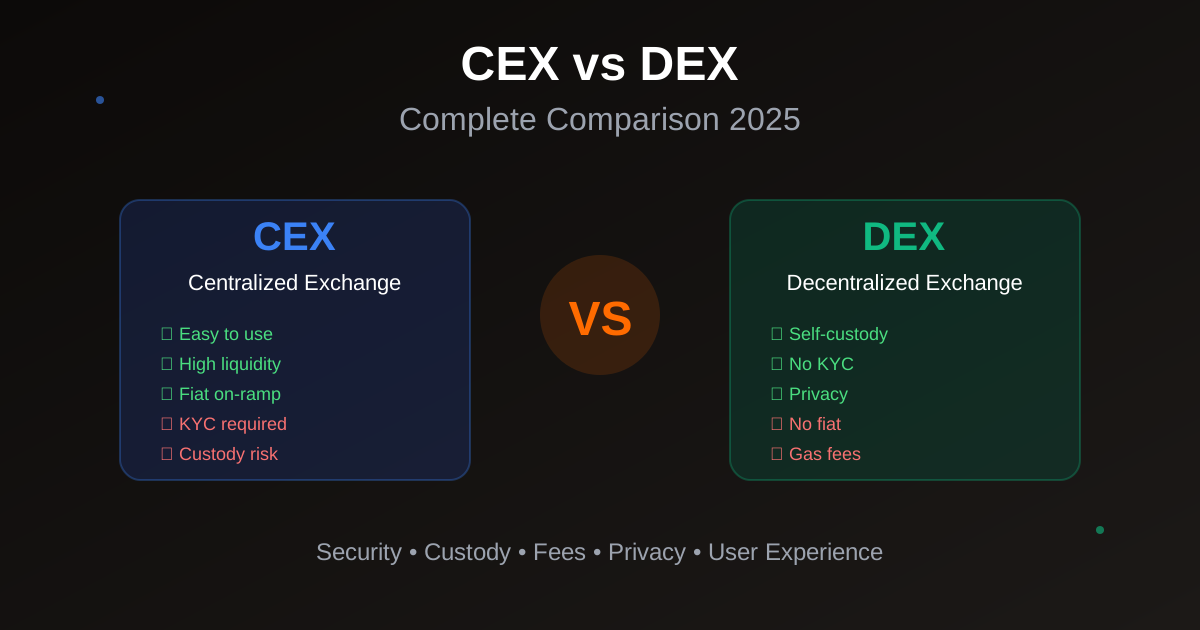
Centralized vs Decentralized Exchanges: Complete Comparison 2025
Comprehensive comparison of CEX vs DEX. Compare security, custody, fees, liquidity, user experience, regulations, privacy, and learn when to use centralized or decentralized exchanges.
Top Impermanent Loss Calculators Compared: Which is Best in 2025?
Compare the best impermanent loss calculators available. Detailed review of features, accuracy, ease of use, and recommendations to help you choose the right IL calculator for your needs.