Best DEX Platforms: Complete Comparison 2025
Compare the top 10 decentralized exchanges (DEX) for trading and liquidity provision. In-depth analysis of Uniswap, PancakeSwap, Curve, dYdX, and more with TVL, fees, and feature comparisons.
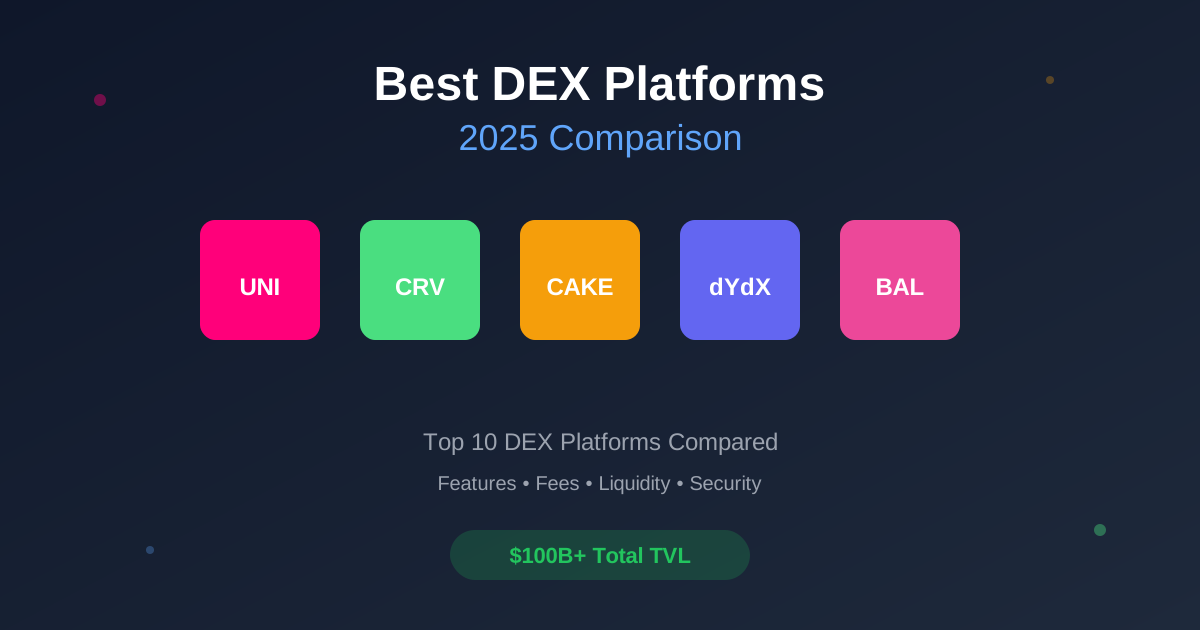
Best DEX Platforms: Complete Comparison 2025
The decentralized exchange (DEX) landscape has exploded in 2025, with over $100 billion in total value locked across dozens of platforms. But which DEX is best for your needs? This comprehensive guide compares the top 10 DEX platforms to help you make an informed choice.
TL;DR - Quick Comparison Table
| DEX | Chains | TVL | Daily Volume | Fee Structure | Best For | |-----|--------|-----|--------------|---------------|----------| | Uniswap | Ethereum, Polygon, Arbitrum, Optimism, Base | $5.2B | $1.8B | 0.01%-1% | General trading, LP | | Curve | Multi-chain | $3.8B | $800M | 0.04% | Stablecoins, low slippage | | PancakeSwap | BSC, Ethereum, Aptos | $2.1B | $650M | 0.25% | BSC ecosystem, low fees | | dYdX | Ethereum, own chain | $900M | $2.5B | 0.02%-0.05% | Perpetuals trading | | Balancer | Multi-chain | $1.2B | $300M | Variable | Custom pools, portfolio | | SushiSwap | 30+ chains | $850M | $280M | 0.3% | Multi-chain, variety | | GMX | Arbitrum, Avalanche | $780M | $450M | 0.1% | Leveraged trading | | Trader Joe | Avalanche, Arbitrum, BSC | $320M | $180M | 0.3% | Avalanche ecosystem | | Osmosis | Cosmos | $280M | $120M | Variable | Cosmos ecosystem | | Camelot | Arbitrum | $240M | $150M | 0.3% | Arbitrum native, launchpad |
Data as of December 2025
Detailed Platform Comparisons
1. Uniswap - The Market Leader
Overview
Uniswap is the largest and most influential DEX, pioneering the automated market maker (AMM) model. With versions V2 and V3 both active, it offers flexibility for traders and liquidity providers.
Key Features
Strengths:
- ✅ Highest liquidity for most pairs
- ✅ Best price execution for large trades
- ✅ Concentrated liquidity (V3)
- ✅ Multiple fee tiers (0.01%, 0.05%, 0.3%, 1%)
- ✅ Strong security track record
- ✅ No KYC required
- ✅ Multi-chain support
Weaknesses:
- ❌ High gas fees on Ethereum mainnet
- ❌ Complex for beginners (V3)
- ❌ Active management needed for V3 LP
- ❌ No native token utility (UNI is governance-only)
Metrics
- Total Value Locked: $5.2 billion
- Daily Volume: $1.8 billion
- Number of Tokens: 5,000+
- Supported Chains: 8
- Average Slippage (ETH/USDC): 0.02% on $100K
Fee Structure
V3 Four-tier system:
- 0.01%: Stablecoin pairs
- 0.05%: Correlated assets
- 0.3%: Standard pairs
- 1%: Exotic pairs
V2 Single tier:
- 0.3% on all pairs
Best For
- Large volume traders needing best execution
- Experienced LPs seeking high yields
- Projects launching new tokens
- Multi-chain DeFi users
Learn More
2. Curve Finance - The Stablecoin King
Overview
Curve specializes in stablecoin and pegged asset trading, using custom bonding curves that minimize slippage and impermanent loss for similar-value assets.
Key Features
Strengths:
- ✅ Best rates for stablecoin swaps
- ✅ Extremely low slippage
- ✅ Minimal impermanent loss for stable pairs
- ✅ CRV token rewards for LPs
- ✅ Vote-escrowed tokenomics (veCRV)
- ✅ Factory pools allow anyone to create
- ✅ Multi-chain deployment
Weaknesses:
- ❌ Complex tokenomics
- ❌ Limited to similar-value assets
- ❌ High gas costs for small trades
- ❌ Steep learning curve for voting
Metrics
- Total Value Locked: $3.8 billion
- Daily Volume: $800 million
- Number of Pools: 200+
- Supported Chains: 10+
- Average Slippage (USDC/USDT): 0.001% on $1M
Fee Structure
- Base fee: 0.04% (one of the lowest)
- Admin fee: 50% to veCRV holders
- LP receives: 0.02% per swap
Best For
- Stablecoin arbitrage traders
- Large stablecoin swaps
- LPs seeking stable, low-IL returns
- DeFi protocols integrating stablecoin swaps
APY Examples
USDC/USDT/DAI 3pool:
- Base APY: 2-4%
- CRV rewards: 3-8%
- Total APY: 5-12%
stETH/ETH pool:
- Base APY: 3-5%
- CRV rewards: 5-12%
- LDO rewards: 2-4%
- Total APY: 10-21%
3. PancakeSwap - BSC's Dominant DEX
Overview
PancakeSwap is Binance Smart Chain's largest DEX, offering low fees and fast transactions. Recently expanded to Ethereum and Aptos chains.
Key Features
Strengths:
- ✅ Very low transaction fees (<$0.50)
- ✅ Fast confirmations (3 seconds)
- ✅ V3 with concentrated liquidity
- ✅ Extensive BSC token coverage
- ✅ Additional features (lottery, NFTs, predictions)
- ✅ CAKE staking rewards
- ✅ Cross-chain bridge integrated
Weaknesses:
- ❌ Lower security than Ethereum
- ❌ BSC centralization concerns
- ❌ Less liquidity than Ethereum DEXs
- ❌ More scam tokens on BSC
Metrics
- Total Value Locked: $2.1 billion
- Daily Volume: $650 million
- Number of Tokens: 3,000+
- Supported Chains: 3 (BSC, Ethereum, Aptos)
- Average Gas Fee: $0.30-0.80
Fee Structure
V2:
- Trading fee: 0.25%
- LP receives: 0.17%
- Treasury: 0.08%
V3:
- Multiple tiers: 0.01%, 0.05%, 0.25%, 1%
- 100% to LPs
Best For
- BSC ecosystem users
- High-frequency traders (low fees)
- Retail traders with smaller positions
- Yield farmers seeking CAKE rewards
4. dYdX - Perpetuals Trading Leader
Overview
dYdX is the leading decentralized derivatives exchange, offering perpetual contracts with up to 20x leverage. Recently migrated to its own Cosmos-based chain.
Key Features
Strengths:
- ✅ Highest leveraged trading volume
- ✅ Professional trading interface
- ✅ Order book model (not AMM)
- ✅ No gas fees on v4 (own chain)
- ✅ Cross-margin trading
- ✅ Advanced order types
- ✅ Mobile app available
Weaknesses:
- ❌ Not true DEX (centralized order matching)
- ❌ Geographic restrictions (KYC for US)
- ❌ Complex for beginners
- ❌ Limited to perpetuals (no spot)
- ❌ Liquidation risks
Metrics
- Total Value Locked: $900 million
- Daily Volume: $2.5 billion (highest for derivatives)
- Available Markets: 50+ perpetuals
- Maximum Leverage: 20x
- Maker Fee: 0.02%
- Taker Fee: 0.05%
Best For
- Experienced traders
- Leveraged position trading
- Professional market makers
- Those seeking advanced trading features
5. Balancer - Customizable Liquidity Pools
Overview
Balancer allows creation of custom liquidity pools with up to 8 tokens and custom weightings, making it unique among DEXs. Think of it as a programmable index fund.
Key Features
Strengths:
- ✅ Custom pool ratios (not just 50/50)
- ✅ Multi-token pools (up to 8 assets)
- ✅ Lower impermanent loss potential
- ✅ Portfolio management through pools
- ✅ Boosted pools with gauges
- ✅ BAL governance token
- ✅ Concentrated liquidity pools
Weaknesses:
- ❌ Lower volumes than competitors
- ❌ Complex pool creation
- ❌ Higher gas costs for multi-token swaps
- ❌ Smaller token selection
Metrics
- Total Value Locked: $1.2 billion
- Daily Volume: $300 million
- Number of Pools: 1,500+
- Supported Chains: 8
- Pool Types: Weighted, Stable, Boosted, Managed
Fee Structure
- Variable fees: Set by pool creator (typically 0.1%-1%)
- Protocol fee: 50% of swap fees
- LP receives: 50% of swap fees
Use Cases
80/20 Pools:
- 80% project token, 20% WETH
- Less impermanent loss than 50/50
- Popular for new token launches
Stable Pools:
- Similar to Curve for stablecoins
- Low slippage for pegged assets
Managed Pools:
- Dynamic weights
- Portfolio rebalancing
- Index funds
Best For
- Projects launching tokens
- Portfolio managers
- LPs seeking reduced IL
- Custom liquidity strategies
6. SushiSwap - The Multi-Chain Pioneer
Overview
SushiSwap started as a Uniswap fork but has evolved into a comprehensive DeFi platform across 30+ chains, offering DEX, lending, and more.
Key Features
Strengths:
- ✅ Deployed on 30+ chains
- ✅ Consistent UX across chains
- ✅ Additional DeFi features (Kashi lending)
- ✅ SUSHI rewards for LPs
- ✅ xSUSHI staking
- ✅ Onsen incentive programs
- ✅ Active community
Weaknesses:
- ❌ Lower liquidity than top DEXs
- ❌ Governance disputes
- ❌ Treasury management concerns
- ❌ Diluted focus across many chains
Metrics
- Total Value Locked: $850 million
- Daily Volume: $280 million
- Supported Chains: 30+
- Number of Tokens: 4,000+
- Fee: 0.3% per swap
Fee Distribution
- LP receives: 0.25%
- xSUSHI stakers: 0.05%
Best For
- Multi-chain users
- LPs seeking SUSHI rewards
- Projects needing multi-chain liquidity
- Explorers of new chains
7. GMX - Decentralized Perpetuals
Overview
GMX offers spot and perpetual trading with up to 50x leverage, using a unique multi-asset pool (GLP) to provide liquidity.
Key Features
Strengths:
- ✅ Up to 50x leverage
- ✅ Zero price impact trades
- ✅ No slippage for most trades
- ✅ GLP staking yields (30-50% APY)
- ✅ Real-time Chainlink pricing
- ✅ No counterparty risk
- ✅ Minimal fees (0.1%)
Weaknesses:
- ❌ GLP holders take on trader risk
- ❌ Limited to Arbitrum and Avalanche
- ❌ Smaller market than centralized exchanges
- ❌ No limit orders (only market)
Metrics
- Total Value Locked: $780 million
- Daily Volume: $450 million
- Available Markets: 10+ perpetuals
- Maximum Leverage: 50x
- Trading Fee: 0.1%
GLP Pool
Composition:
- ETH, BTC, LINK, UNI (crypto assets)
- USDC, USDT, DAI (stablecoins)
- Dynamic rebalancing
Returns for GLP Holders:
- Base APY: 20-30%
- Escrowed GMX rewards: 10-20%
- Total APY: 30-50%
Best For
- Leveraged traders
- GLP liquidity providers
- Arbitrum users
- Those seeking real yield (not inflationary rewards)
8. Trader Joe - Avalanche's Native DEX
Overview
Trader Joe is Avalanche's leading DEX, now expanded to Arbitrum and BSC. Features liquidity book for concentrated liquidity and reduced impermanent loss.
Key Features
Strengths:
- ✅ Liquidity Book innovation
- ✅ Very low fees on Avalanche
- ✅ Fast transactions (sub-second)
- ✅ Launch pad for new projects
- ✅ Lending markets
- ✅ JOE token rewards
- ✅ Clean, modern interface
Weaknesses:
- ❌ Smaller than Ethereum DEXs
- ❌ Limited to 3 chains
- ❌ Lower liquidity for exotic pairs
- ❌ Avalanche ecosystem concentration risk
Metrics
- Total Value Locked: $320 million
- Daily Volume: $180 million
- Supported Chains: 3 (Avalanche, Arbitrum, BSC)
- Trading Fee: 0.3%
- Average Gas: $0.10-0.50
Liquidity Book
Unique features:
- Fungible liquidity bins
- Customizable liquidity distribution
- Zero slippage within bins
- Reduced impermanent loss
Best For
- Avalanche ecosystem users
- Traders seeking low fees
- LPs using liquidity book
- New project launches
9. Osmosis - Cosmos Ecosystem DEX
Overview
Osmosis is the leading DEX in the Cosmos ecosystem, featuring customizable AMMs and IBC (Inter-Blockchain Communication) integration.
Key Features
Strengths:
- ✅ Built specifically for Cosmos
- ✅ IBC enables cross-chain swaps
- ✅ Superfluid staking (LP + stake simultaneously)
- ✅ Low fees ($0.01-0.05)
- ✅ Fast finality
- ✅ Custom AMM parameters
- ✅ OSMO incentives
Weaknesses:
- ❌ Limited to Cosmos ecosystem
- ❌ Smaller user base
- ❌ Less liquidity than Ethereum DEXs
- ❌ Requires Keplr wallet
Metrics
- Total Value Locked: $280 million
- Daily Volume: $120 million
- Number of Pools: 800+
- Supported Chains: 50+ (via IBC)
- Average Fee: Variable (0.1%-1%)
Unique Features
Superfluid Staking:
- LP tokens used for staking
- Earn trading fees + staking rewards
- Increased capital efficiency
Best For
- Cosmos ecosystem users
- Those seeking low-fee trading
- ATOM holders
- Cross-chain Cosmos swaps
10. Camelot - Arbitrum's Native DEX
Overview
Camelot is Arbitrum's community-driven DEX, featuring a unique tokenomics model and launchpad for new projects.
Key Features
Strengths:
- ✅ Arbitrum native with low fees
- ✅ Unique ve(3,3) tokenomics
- ✅ Launchpad for new projects
- ✅ Nitro pools for focused incentives
- ✅ NFT marketplace integration
- ✅ Strong community
Weaknesses:
- ❌ Single chain only
- ❌ Smaller than established DEXs
- ❌ Complex tokenomics
- ❌ Newer platform (higher risk)
Metrics
- Total Value Locked: $240 million
- Daily Volume: $150 million
- Number of Pairs: 300+
- Trading Fee: 0.3%
- Average Gas: $0.20-0.60
Best For
- Arbitrum ecosystem users
- Early supporters of new projects
- Yield farmers seeking high APY
- NFT collectors (integrated marketplace)
Feature Comparison Matrix
Trading Experience
| Feature | Uniswap | Curve | PancakeSwap | dYdX | Balancer | SushiSwap | GMX | Trader Joe | Osmosis | Camelot | |---------|---------|-------|-------------|------|----------|-----------|-----|------------|---------|---------| | Ease of Use | ⭐⭐⭐⭐ | ⭐⭐⭐ | ⭐⭐⭐⭐⭐ | ⭐⭐ | ⭐⭐⭐ | ⭐⭐⭐⭐ | ⭐⭐⭐ | ⭐⭐⭐⭐ | ⭐⭐⭐ | ⭐⭐⭐⭐ | | Mobile App | ✅ | ❌ | ✅ | ✅ | ❌ | ❌ | ✅ | ❌ | ✅ | ❌ | | Advanced Orders | ❌ | ❌ | ❌ | ✅ | ❌ | ❌ | ❌ | ❌ | ❌ | ❌ | | Price Charts | ✅ | ✅ | ✅ | ✅ | ✅ | ✅ | ✅ | ✅ | ✅ | ✅ | | Limit Orders | ✅ | ❌ | ✅ | ✅ | ❌ | ✅ | ❌ | ✅ | ❌ | ❌ | | Slippage Control | ✅ | ✅ | ✅ | N/A | ✅ | ✅ | ✅ | ✅ | ✅ | ✅ |
Liquidity Provider Features
| Feature | Uniswap | Curve | PancakeSwap | dYdX | Balancer | SushiSwap | GMX | Trader Joe | Osmosis | Camelot | |---------|---------|-------|-------------|------|----------|-----------|-----|------------|---------|---------| | Concentrated Liquidity | ✅ (V3) | ❌ | ✅ (V3) | N/A | ✅ | ❌ | N/A | ✅ | ❌ | ❌ | | Multiple Fee Tiers | ✅ | ❌ | ✅ | N/A | ✅ | ❌ | N/A | ❌ | ✅ | ❌ | | Yield Farming | ❌ | ✅ | ✅ | ✅ | ✅ | ✅ | ✅ | ✅ | ✅ | ✅ | | Impermanent Loss Protection | ❌ | Low (stable) | ❌ | N/A | Medium | ❌ | ✅ (GLP) | Medium | ❌ | ❌ | | Auto-compound | ❌ | ✅ | ✅ | N/A | ❌ | ❌ | ❌ | ❌ | ❌ | ❌ |
Cost Comparison (Typical Trade)
| Platform | Network | $100 Trade | $1,000 Trade | $10,000 Trade | |----------|---------|------------|--------------|---------------| | Uniswap | Ethereum | $15-30 | $15-30 | $20-40 | | Uniswap | Arbitrum | $0.50-2 | $0.50-2 | $0.80-3 | | Curve | Ethereum | $20-40 | $20-40 | $25-50 | | PancakeSwap | BSC | $0.30-0.80 | $0.30-0.80 | $0.40-1 | | dYdX | Own chain | $0 | $0 | $0 | | Balancer | Ethereum | $18-35 | $18-35 | $22-45 | | SushiSwap | Arbitrum | $0.40-1.50 | $0.40-1.50 | $0.60-2 | | GMX | Arbitrum | $0.50-2 | $0.50-2 | $0.80-3 | | Trader Joe | Avalanche | $0.10-0.50 | $0.10-0.50 | $0.20-0.80 | | Osmosis | Cosmos | $0.01-0.05 | $0.01-0.05 | $0.02-0.10 | | Camelot | Arbitrum | $0.40-1.50 | $0.40-1.50 | $0.60-2 |
Gas fees are estimated and vary with network congestion
Security Comparison
Audit History
| Platform | Auditors | Last Audit | Security Incidents | |----------|----------|------------|-------------------| | Uniswap | Trail of Bits, ABDK, others | 2023 | None (V2/V3) | | Curve | Trail of Bits, MixBytes | 2024 | Front-end exploit 2023 (resolved) | | PancakeSwap | CertiK, Peckshield | 2024 | DNS hijack 2023 (resolved) | | dYdX | Trail of Bits, Peckshield | 2024 | Insurance fund deficit 2022 | | Balancer | Trail of Bits, OpenZeppelin | 2024 | V1 exploit 2020 (V2 secure) | | SushiSwap | Peckshield, QuantStamp | 2023 | MISO exploit 2021 | | GMX | Peckshield, ABDK | 2024 | None | | Trader Joe | Paladin, Solidity Finance | 2024 | None | | Osmosis | Informal Systems, Oak Security | 2024 | None | | Camelot | Peckshield, Solidity Finance | 2024 | None |
Security Best Practices
✅ All platforms:
- Use hardware wallets for large amounts
- Verify contract addresses
- Check token approvals regularly
- Enable 2FA where available
- Beware of phishing sites
Use Case Recommendations
For Beginners
Recommended: PancakeSwap, SushiSwap, Camelot
- Simple interfaces
- Low fees for learning
- Good documentation
For Large Traders ($10K+)
Recommended: Uniswap, Curve, dYdX
- Best liquidity
- Minimal slippage
- Professional features
For Stablecoin Swaps
Recommended: Curve, Balancer (stable pools)
- Lowest slippage
- Minimal impermanent loss
- Best rates
For Leveraged Trading
Recommended: dYdX, GMX
- High leverage options
- Advanced order types
- Professional interfaces
For Yield Farming
Recommended: PancakeSwap, SushiSwap, Trader Joe
- High APY opportunities
- Token incentives
- Multiple pools
For Multi-Chain Users
Recommended: SushiSwap, Balancer, Uniswap
- Consistent UX across chains
- Wide chain support
- Established security
For Low-Fee Trading
Recommended: Osmosis, Trader Joe, PancakeSwap
- Sub-$1 transaction costs
- Fast confirmation
- Good for frequent trading
How to Choose the Right DEX
Step 1: Identify Your Primary Need
Trading:
- High frequency → Low-fee chains (BSC, Avalanche, Arbitrum)
- Large positions → High liquidity (Uniswap, Curve)
- Leverage → Perpetuals platforms (dYdX, GMX)
Liquidity Providing:
- Passive income → Stable pairs (Curve, Balancer stable pools)
- Active management → Concentrated liquidity (Uniswap V3)
- High yield → Incentivized pools (PancakeSwap, Trader Joe)
Step 2: Consider Your Chain Preference
Ethereum:
- Most secure, highest liquidity
- High gas fees
- Best for large positions
BSC:
- Very low fees
- Fast transactions
- More scam risk
Arbitrum/Optimism:
- Ethereum security
- Lower fees
- Good middle ground
Avalanche:
- Very fast
- Low fees
- Growing ecosystem
Cosmos:
- Lowest fees
- IBC cross-chain
- Smaller ecosystem
Step 3: Evaluate Costs
Calculate total costs:
- Gas fees
- Trading fees
- Slippage
- Opportunity cost
Example: $5,000 position
Ethereum Uniswap:
- Gas: $30
- Trading fee: $15 (0.3%)
- Total: $45
Arbitrum Uniswap:
- Gas: $1
- Trading fee: $15 (0.3%)
- Total: $16
BSC PancakeSwap:
- Gas: $0.50
- Trading fee: $12.50 (0.25%)
- Total: $13
Step 4: Check Liquidity
For your specific trading pair:
- Check TVL in the pool
- Test with small amount first
- Monitor slippage
Liquidity indicators:
- $1M+ TVL: Good for trades up to $10K
- $10M+ TVL: Good for trades up to $100K
- $100M+ TVL: Good for trades up to $1M
Step 5: Assess Risk Tolerance
Low risk:
- Established platforms (Uniswap, Curve)
- Audited contracts
- Ethereum network
Medium risk:
- Newer platforms with audits
- Layer 2 networks
- Reputable teams
High risk:
- New platforms (<6 months)
- Unaudited contracts
- High APY promises (>100%)
Advanced Strategies
Strategy 1: Multi-DEX Arbitrage
Monitor price differences across DEXs:
Example:
- ETH on Uniswap: $2,000
- ETH on SushiSwap: $2,005
- Profit: $5 per ETH (minus gas)
Tools:
- DEX aggregators (1inch, Paraswap)
- Price monitoring bots
- Flashloan arbitrage
Strategy 2: DEX Aggregation
Use aggregators to find best prices:
Benefits:
- Compare multiple DEXs simultaneously
- Split orders across platforms
- Minimize slippage
Top aggregators:
- 1inch
- Paraswap
- Matcha
- CowSwap
Strategy 3: Cross-DEX Liquidity Providing
Diversify LP positions across platforms:
Example portfolio:
- 40% Uniswap V3 (ETH/USDC, tight range)
- 30% Curve (stablecoin pool)
- 20% PancakeSwap (low-risk farming)
- 10% New platform (high yield, high risk)
Strategy 4: Yield Optimization
Maximize returns through:
- Compounding rewards
- Yield aggregators (Yearn, Beefy)
- Reward token selling strategy
- Tax-loss harvesting
Common Mistakes to Avoid
❌ Mistake 1: Ignoring Gas Fees
Problem: Gas costs eat profits on small trades Solution: Use L2s or alternative chains for <$1K trades
❌ Mistake 2: Not Checking Liquidity
Problem: High slippage on illiquid pairs Solution: Check TVL before trading, use aggregators
❌ Mistake 3: Forgetting Impermanent Loss
Problem: LP positions lose value despite fees Solution: Use IL calculator before providing liquidity
❌ Mistake 4: Using Wrong DEX for Use Case
Problem: Trading stablecoins on Uniswap instead of Curve Solution: Match DEX to asset type
❌ Mistake 5: Not Revoking Token Approvals
Problem: Unlimited approvals are security risk Solution: Regularly check and revoke at revoke.cash
❌ Mistake 6: FOMO into High APY
Problem: Unsustainable yields collapse Solution: Research tokenomics, diversify
❌ Mistake 7: Neglecting Security
Problem: Phishing, fake sites, unaudited contracts Solution: Verify URLs, use bookmarks, check audits
Future Trends in DEX Evolution
1. Intent-Based Trading
New protocols allowing users to express intents rather than specific routes:
- CoWSwap already implementing
- Better MEV protection
- Simplified UX
2. Cross-Chain Atomic Swaps
True cross-chain trading without bridges:
- Lower friction
- Reduced bridge risks
- Better capital efficiency
3. AI-Powered Routing
Machine learning optimizing trade routes:
- Dynamic fee optimization
- MEV protection
- Predictive slippage
4. On-Chain Order Books
Combining CEX efficiency with DEX security:
- Lower gas costs
- Better price discovery
- Professional trading features
5. Regulatory Compliance
DEXs adapting to regulations:
- Optional KYC tiers
- Geo-restrictions
- Compliance-friendly features
Tools and Resources
Essential DEX Tools
Price Comparison:
- Token Price Calculator - Compare prices across chains
- DeFi Llama - TVL and volume tracking
- GeckoTerminal - DEX charts and analytics
Liquidity Management:
- Impermanent Loss Calculator
- APY.vision - LP position tracking
- Revert Finance - Uniswap V3 management
Security:
- Revoke.cash - Manage token approvals
- Wallet Guard - Phishing protection
- De.Fi Scanner - Approval management
Portfolio Tracking:
- Portfolio Tracker
- DeBank - Multi-chain portfolio
- Zapper - Position management
Conclusion: Best DEX for Different Users
🏆 Overall Winner: Uniswap
Best combination of liquidity, security, and features
💰 Best for Low Fees: Osmosis
Consistently lowest transaction costs
📊 Best for Stablecoins: Curve
Unmatched slippage and rates for stable assets
🎯 Best for Beginners: PancakeSwap
Simple interface, low costs, good documentation
📈 Best for Advanced Trading: dYdX
Professional features and leverage
🌐 Best for Multi-Chain: SushiSwap
Most chains with consistent experience
💎 Best for Yield: GMX
Sustainable real yield for GLP holders
⚡ Best for Speed: Trader Joe (Avalanche)
Sub-second transactions
Take Action
For Traders:
-
Start with test trades
- Try $100-200 first
- Compare fees and execution
- Find your preferred platform
-
Use price comparison tools
- Check token prices across chains
- Use DEX aggregators
- Monitor gas fees
-
Learn platform-specific features
- Each DEX has unique advantages
- Understand fee structures
- Master the interface
For Liquidity Providers:
-
Calculate your potential returns
- Use IL Calculator
- Compare APYs across platforms
- Factor in gas costs
-
Start with stable pairs
- Lower impermanent loss
- Learn LP mechanics
- Build confidence
-
Diversify across platforms
- Reduce platform risk
- Optimize for different pairs
- Balance active/passive strategies
Frequently Asked Questions
Q: Which DEX has the lowest fees? Osmosis has the lowest transaction fees ($0.01-0.05). For trading fees, Curve is lowest at 0.04%.
Q: Is it safe to use DEXs? Established DEXs like Uniswap and Curve are generally safe, but always verify contract addresses and be aware of smart contract risks.
Q: Can I lose money providing liquidity? Yes, through impermanent loss. Use our IL calculator to estimate risk.
Q: Which DEX is best for beginners? PancakeSwap or SushiSwap due to simple interfaces and low fees for learning.
Q: Do I need to pay gas fees on all DEXs? Gas fees vary by blockchain. Ethereum is highest ($5-50), while BSC/Avalanche are very low ($0.10-1).
Q: Can I use DEXs anonymously? Most DEXs require no KYC, but some (like dYdX) have restrictions. Always check terms.
Q: How do I know if a DEX is legitimate? Check for audits, TVL, daily volume, time in operation, and team transparency.
Related Tools & Guides
- Impermanent Loss Calculator
- Token Price Checker
- APY vs APR Calculator
- Portfolio Tracker
- Uniswap V2 vs V3 Comparison
- Understanding Impermanent Loss
Data and rankings updated December 2025. DEX metrics change rapidly - always verify current data before making decisions.
Disclaimer: This comparison is for educational purposes only. Always do your own research before trading or providing liquidity. DeFi involves risks including smart contract vulnerabilities, impermanent loss, and market volatility.
Share this article:
Related Articles
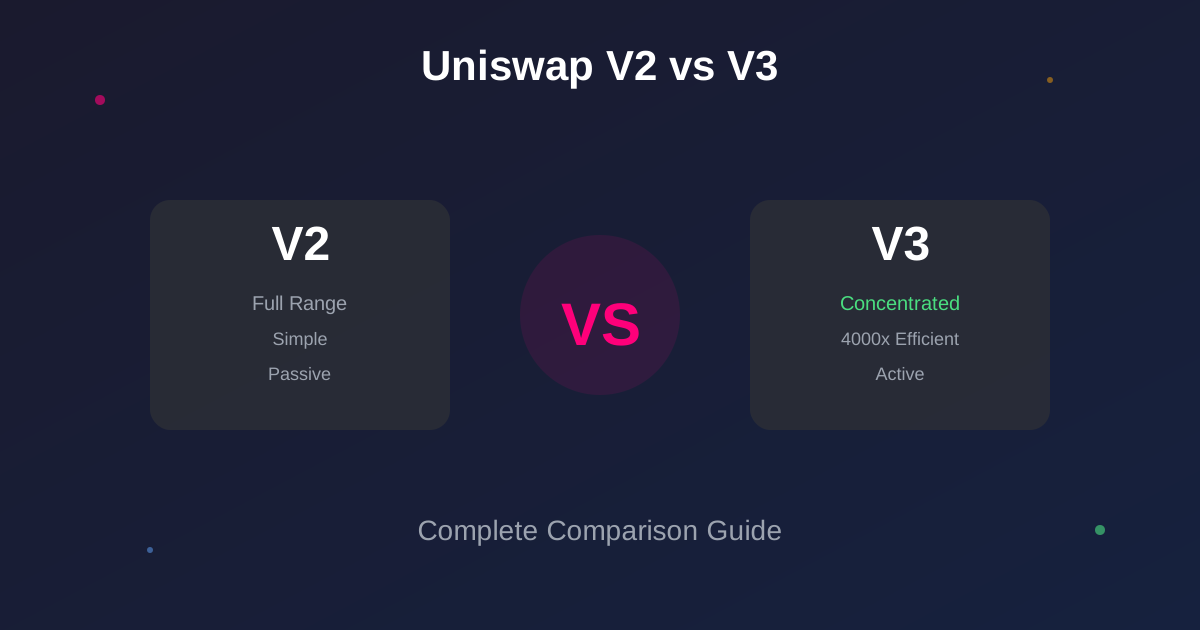
Uniswap V2 vs V3: Complete Comparison for Liquidity Providers
Comprehensive comparison of Uniswap V2 and V3 protocols. Learn the key differences in capital efficiency, impermanent loss, fees, and which version is best for your liquidity strategy.
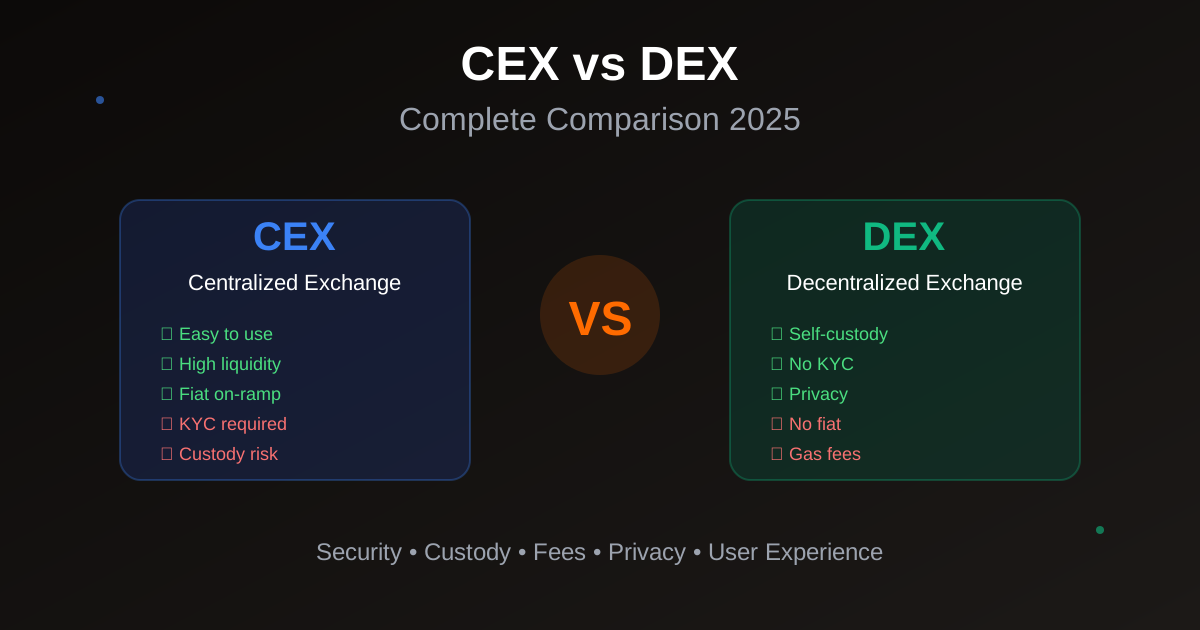
Centralized vs Decentralized Exchanges: Complete Comparison 2025
Comprehensive comparison of CEX vs DEX. Compare security, custody, fees, liquidity, user experience, regulations, privacy, and learn when to use centralized or decentralized exchanges.
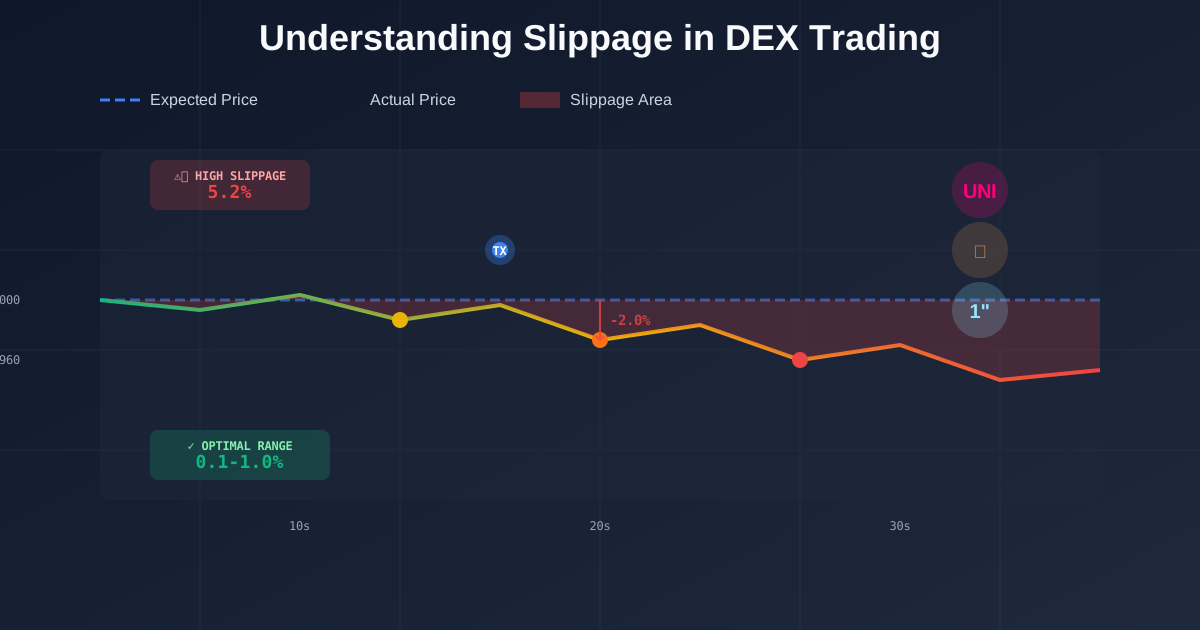
Understanding Slippage in DEX Trading: Complete Guide 2025
# Understanding Slippage in DEX Trading: Complete Guide 2025 If you've ever traded on a decentralized exchange (DEX) like Uniswap or PancakeSwap, you've likely encountered **slippage**—the differenc...