Crypto Portfolio Tracking Guide: How to Monitor Your Investments Like a Pro in 2025
Complete guide to crypto portfolio tracking. Learn how to monitor holdings, calculate profits, optimize allocation, and use portfolio management strategies.
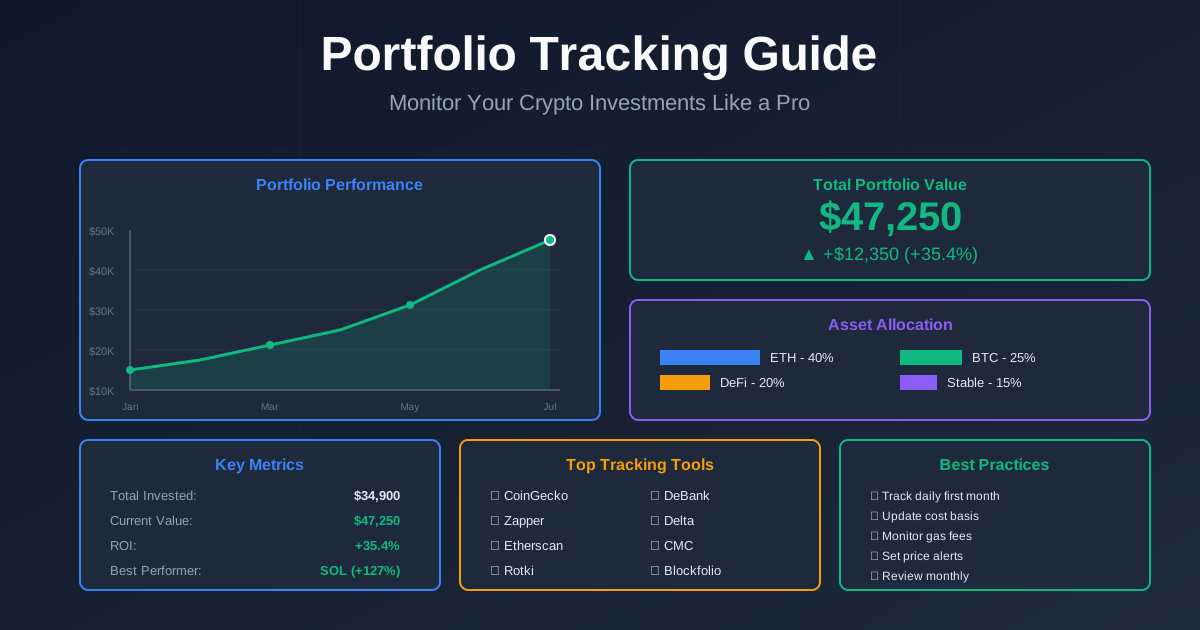
Crypto Portfolio Tracking Guide: How to Monitor Your Investments Like a Pro
Managing a crypto portfolio can be overwhelming with prices changing 24/7, hundreds of coins, and assets spread across multiple wallets and exchanges. Proper portfolio tracking is essential for making informed investment decisions and maximizing returns.
This comprehensive guide will teach you everything about crypto portfolio management, from basic tracking to advanced strategies used by professional traders.
Why Track Your Crypto Portfolio?
1. Know Your True Position
Without tracking, you're flying blind. You need to know:
- Total portfolio value
- Profit/loss on each asset
- Overall return on investment (ROI)
- Asset allocation percentages
2. Make Better Decisions
Data-driven decisions beat emotional trading:
- When to rebalance
- Which assets are underperforming
- Tax loss harvesting opportunities
- Risk exposure levels
3. Tax Compliance
In most countries, crypto gains are taxable:
- Track cost basis for each purchase
- Calculate capital gains/losses
- Generate reports for tax filing
- Avoid IRS audits
4. Performance Analysis
Compare your results to:
- Bitcoin's performance
- Market indices
- Your investment goals
- Other investment options
Essential Portfolio Metrics
1. Total Portfolio Value
What it is: Current market value of all holdings
Formula: Sum of (Amount × Current Price) for all assets
Example:
- 0.5 BTC @ $43,500 = $21,750
- 10 ETH @ $2,280 = $22,800
- 100 SOL @ $98 = $9,800
- Total Value: $54,350
2. Cost Basis
What it is: Total amount invested (excluding fees)
Why it matters: Determines your actual profit/loss
Example:
- Bought 0.5 BTC @ $40,000 = $20,000
- Bought 10 ETH @ $2,000 = $20,000
- Bought 100 SOL @ $80 = $8,000
- Total Cost: $48,000
3. Profit/Loss (P/L)
Formula: Total Value - Cost Basis
Unrealized P/L: Profit if you sold now (paper gains) Realized P/L: Actual profit from sold positions
Example: $54,350 - $48,000 = +$6,350 unrealized profit
4. Return on Investment (ROI)
Formula: ((Current Value - Cost) / Cost) × 100
Example: ((54,350 - 48,000) / 48,000) × 100 = 13.23% ROI
Interpretation:
- 0% = Break even
- Positive = Profit
- Negative = Loss
5. Asset Allocation
What it is: Percentage of portfolio in each asset
Example:
- BTC: $21,750 = 40%
- ETH: $22,800 = 42%
- SOL: $9,800 = 18%
Why it matters: Manages risk and diversification
How to Track Your Portfolio
Method 1: Manual Spreadsheet ✏️
Pros:
- Full control and customization
- Privacy (no account needed)
- Free
- Learn by doing
Cons:
- Time-consuming to update
- Manual price updates
- No automation
- Error-prone
Setup:
- Create columns: Asset, Amount, Buy Price, Current Price, Value, P/L, ROI, Allocation
- Enter your holdings
- Update prices manually or use Google Sheets formulas
- Calculate totals
Google Sheets Formula for Live Prices:
=GOOGLEFINANCE("CURRENCY:BTCUSD")
Method 2: Portfolio Tracking Apps 📱
Popular Apps:
CoinGecko (Free)
- Track 10,000+ coins
- Portfolio sync across devices
- Price alerts
- News and updates
- Limited to manual entry
Delta (Freemium)
- Beautiful UI
- Exchange API integration
- Price alerts
- Portfolio insights
- Free: 2 portfolios, Paid: Unlimited
CoinStats (Freemium)
- Connect wallets & exchanges
- DeFi portfolio tracking
- Tax reports
- NFT support
- Free: Basic features, Paid: $9.99/month
Blockfolio (now FTX App) (Free)
- Simple interface
- Price tracking
- News feed
- Community features
- Exchange integration
Method 3: Use Our Portfolio Tracker 🚀
Features:
- ✅ Real-time price updates
- ✅ Profit/loss calculation
- ✅ Allocation visualization
- ✅ CSV export
- ✅ Browser-based (privacy first)
- ✅ No account required
- ✅ Completely free
Method 4: Wallet Integration 🔗
Direct Wallet Tracking:
- DeBank: View all DeFi positions
- Zapper: Track across chains
- Zerion: Portfolio dashboard
- MetaMask Portfolio: Native tracking
Pros:
- Automatic balance updates
- No manual entry
- See all holdings in one place
Cons:
- Requires wallet connection
- Privacy concerns
- Doesn't track exchange holdings
- May miss some tokens
Portfolio Allocation Strategies
Conservative Portfolio (Low Risk)
Allocation:
- 70% Bitcoin (BTC)
- 20% Ethereum (ETH)
- 10% Stablecoins (USDC, USDT)
Characteristics:
- Lower volatility
- Slower growth
- Best for: Risk-averse investors, retirees
Expected Annual Return: 20-50% (based on historical data)
Moderate Portfolio (Medium Risk)
Allocation:
- 50% Bitcoin (BTC)
- 30% Ethereum (ETH)
- 15% Top 10 Altcoins (SOL, BNB, AVAX, etc.)
- 5% Stablecoins
Characteristics:
- Balanced risk/reward
- Some diversification
- Best for: Most investors
Expected Annual Return: 50-100%
Aggressive Portfolio (High Risk)
Allocation:
- 30% Bitcoin (BTC)
- 25% Ethereum (ETH)
- 35% Top 50 Altcoins
- 10% Small-cap gems
Characteristics:
- High volatility
- Higher potential returns
- Best for: Risk-tolerant traders
Expected Annual Return: 100-500% (or -50%)
DeFi-Focused Portfolio
Allocation:
- 20% BTC/ETH
- 30% Layer 1s (SOL, AVAX, NEAR)
- 30% DeFi Tokens (UNI, AAVE, CRV, COMP)
- 20% Stablecoins (for yield farming)
Best for: Active DeFi participants
Portfolio Rebalancing
What is Rebalancing?
Adjusting your holdings to return to target allocation when percentages drift due to price changes.
Example:
Target Allocation:
- 60% BTC
- 40% ETH
After BTC pumps:
- 75% BTC (+15%)
- 25% ETH (-15%)
Rebalancing Action:
- Sell 15% of BTC
- Buy ETH with proceeds
- Return to 60/40 split
Rebalancing Strategies
1. Time-Based Rebalancing
- Monthly: High activity, better for volatile markets
- Quarterly: Good balance, recommended for most
- Annually: Low effort, for long-term holders
2. Threshold-Based Rebalancing
- Rebalance when allocation drifts >5% from target
- Example: If BTC target is 50%, rebalance at 55% or 45%
- More responsive to market movements
3. Hybrid Approach
- Check quarterly
- Rebalance only if drift >10%
- Best of both worlds
Tax Implications of Rebalancing
⚠️ Important: Rebalancing = selling = taxable event
Strategies to minimize taxes:
- Rebalance in IRA/401k (tax-advantaged accounts)
- Use new capital to buy underweight assets
- Time rebalancing for low-income years
- Harvest losses to offset gains
Advanced Portfolio Management
1. Dollar-Cost Averaging (DCA)
What it is: Investing fixed amount regularly regardless of price
Example:
- Invest $500 every Monday
- Automatically buy BTC, ETH, SOL
- Average out market volatility
Benefits:
- Removes emotion from buying
- Averages entry price
- Builds position over time
Use DCA Calculator to see returns
2. Target-Date Rebalancing
Strategy: Set future date to reach target allocation
Example:
- Current: 50% BTC, 50% ETH
- Target (1 year): 70% BTC, 30% ETH
- Gradually sell ETH, buy BTC over 12 months
3. Portfolio Hedging
Protect against downside:
- Hold 10-20% stablecoins
- Buy put options (advanced)
- Short positions (very advanced)
- Inverse correlation assets
4. Yield Optimization
Make your assets work:
- Stake ETH, SOL, ATOM (5-15% APY)
- Provide liquidity on Uniswap
- Lend on Aave, Compound
- Yield farming in DeFi
Caution: Adds smart contract risk
Common Portfolio Mistakes
1. ❌ Over-Diversification
Problem: Owning 50+ random altcoins Why it's bad: Can't track all, dilutes gains, high gas fees Solution: Focus on 5-15 quality projects
2. ❌ Checking Too Often
Problem: Looking at portfolio every hour Why it's bad: Emotional decisions, stress, overtrading Solution: Check weekly or monthly
3. ❌ Ignoring Small Balances
Problem: Forgetting about $50 here, $100 there Why it's bad: These add up over time Solution: Track everything, consolidate when profitable
4. ❌ Not Taking Profits
Problem: "Diamond hands" through entire bull market Why it's bad: Unrealized gains = $0 in your bank account Solution: Take 10-20% profits at milestones
5. ❌ Panic Selling
Problem: Selling at bottom during crashes Why it's bad: Locks in losses, misses recovery Solution: Have strategy, stick to it
6. ❌ Forgetting About Taxes
Problem: Not tracking cost basis Why it's bad: Huge tax bill surprise, overpay taxes Solution: Track from day 1, use tax software
7. ❌ No Risk Management
Problem: 100% allocation to crypto, no diversification Why it's bad: One bad trade = portfolio wrecked Solution: Traditional assets, emergency fund, insurance
Portfolio Performance Benchmarks
Compare Your Returns To:
Bitcoin (BTC) Performance
- 2020: +301%
- 2021: +60%
- 2022: -64%
- 2023: +155%
- 2024 (est): +85%
If you beat Bitcoin's returns, you're doing great!
Ethereum (ETH) Performance
- 2020: +465%
- 2021: +396%
- 2022: -68%
- 2023: +91%
- 2024 (est): +95%
S&P 500 (Traditional Market)
- Average: ~10% per year
- 2023: +24%
Top Crypto Funds
- Grayscale Bitcoin Trust (GBTC): Tracks BTC
- Bitwise 10 Crypto Index: Top 10 coins
- Pantera Bitcoin Fund: Active management
Your Goal: Beat Bitcoin while managing risk
Tax Reporting for Portfolio
What's Taxable?
Taxable Events:
- ✅ Selling crypto for USD
- ✅ Trading one crypto for another
- ✅ Using crypto to buy goods/services
- ✅ Receiving crypto from mining/staking
Not Taxable:
- ❌ Buying crypto with USD
- ❌ Transferring between your own wallets
- ❌ Holding crypto (unrealized gains)
Calculate Your Taxes
Methods:
- FIFO (First In, First Out): Default IRS method
- LIFO (Last In, First Out): Sometimes beneficial
- HIFO (Highest In, First Out): Minimize taxes
- Specific Identification: Choose which coins to sell
Example (FIFO):
- Bought 1 BTC @ $30,000
- Bought 1 BTC @ $40,000
- Sold 1 BTC @ $45,000
- Capital Gain: $45,000 - $30,000 = $15,000 (taxable)
Use Crypto Tax Calculator for full analysis
Tax Software Recommendations
- CoinTracker: Best overall, $59-$2,999/year
- Koinly: Good for international, $49-$999/year
- TokenTax: CPA support, $65-$1,999/year
- CryptoTrader.Tax: Budget option, $49-$299/year
Portfolio Security Best Practices
1. Use Hardware Wallets
- Ledger Nano X: $149
- Trezor Model T: $219
- Store 80%+ of holdings offline
2. Enable 2FA Everywhere
- Use Google Authenticator or Authy
- Never SMS-based 2FA (SIM swap risk)
- Backup 2FA codes securely
3. Diversify Custodians
- Don't keep everything on one exchange
- Split between: Hardware wallet, Exchange 1, Exchange 2
- Reduces single point of failure
4. Use Separate Wallets
- Cold Wallet: Long-term holdings
- Hot Wallet: Active trading
- DeFi Wallet: Smart contract interactions
5. Never Share
- ❌ Private keys
- ❌ Seed phrases
- ❌ API keys with withdrawal access
- ❌ Portfolio size publicly
Tools & Resources
Portfolio Trackers
- Web3Calc Portfolio Tracker - Free, browser-based
- CoinGecko - Mobile app, free
- Delta - Premium features
- CoinStats - DeFi integration
Price APIs
- CoinGecko API - Free, 50 calls/min
- CoinMarketCap API - Free tier available
- CryptoCompare API - Historical data
Analytics Platforms
- DeBank: DeFi portfolio visualization
- Nansen: On-chain analytics (premium)
- Dune Analytics: Custom dashboards
- Messari: Research and data
Tax Software
- CoinTracker
- Koinly
- TokenTax
- CryptoTrader.Tax
News & Research
- CoinDesk
- The Block
- Messari Research
- DeFi Pulse
Real Portfolio Examples
Example 1: Conservative $50K Portfolio
Allocation:
- $35,000 BTC (70%)
- $10,000 ETH (20%)
- $5,000 USDC (10%)
Strategy:
- Hold BTC/ETH long-term
- Earn yield on USDC (5% APY)
- Rebalance quarterly
- DCA $500/month
Expected Annual Return: 30-60%
Example 2: Aggressive $50K Portfolio
Allocation:
- $15,000 BTC (30%)
- $12,500 ETH (25%)
- $12,500 Top 10 alts (25%)
- $10,000 Small caps (20%)
Strategy:
- Active management
- Take profits at 2x
- Cut losses at -30%
- Rotate into trending narratives
Expected Annual Return: 100-300% (or -30%)
Example 3: DeFi Degen $50K Portfolio
Allocation:
- $10,000 ETH (20%)
- $15,000 DeFi blue chips (30%)
- $15,000 Yield farming (30%)
- $10,000 Stablecoins (20%)
Strategy:
- Farm yields 50-200% APY
- Compound rewards weekly
- Provide liquidity
- High risk tolerance
Expected Annual Return: 50-500% (high risk)
Action Plan: Start Tracking Today
Week 1: Setup
- Choose tracking method (spreadsheet or app)
- List all crypto holdings
- Record purchase prices and dates
- Calculate current value
Week 2: Analyze
- Calculate total ROI
- Review asset allocation
- Identify winners and losers
- Check risk level
Week 3: Optimize
- Set target allocation
- Plan rebalancing if needed
- Consider tax implications
- Automate tracking
Week 4: Maintain
- Update portfolio weekly
- Track new purchases
- Review performance vs BTC
- Adjust strategy as needed
Frequently Asked Questions
How often should I check my portfolio?
Recommendation: Weekly or monthly. Checking daily leads to emotional decisions. Set a schedule and stick to it.
Should I use percentage or dollar targets?
Percentage targets are better for:
- Portfolio allocation
- Risk management
- Comparing performance
Dollar targets work for:
- Profit-taking milestones
- Loss limits
How many cryptocurrencies should I own?
Ideal range: 5-15 assets
- Below 5: Concentrated risk
- Above 20: Over-diversified, hard to track
When should I rebalance?
Options:
- Quarterly (every 3 months)
- When allocation drifts >10%
- After major market moves
- When adding new capital
Is it safe to connect my wallet to tracking apps?
Yes, if:
- Using read-only access (no signing)
- Reputable apps (CoinGecko, Zapper, DeBank)
- Not sharing private keys
No, if:
- App asks for private keys
- Unknown/sketchy service
- Allows transactions without approval
How do I handle airdrops in my portfolio?
Steps:
- Add airdrop tokens with $0 cost basis
- Current value = 100% profit
- Track separately for tax reporting
- Report as income at receipt value
Should I track NFTs separately?
Yes. NFTs are illiquid and harder to value. Track in separate portfolio or category.
Conclusion
Effective portfolio tracking is essential for crypto success. It helps you:
- ✅ Make data-driven decisions
- ✅ Optimize returns
- ✅ Manage risk
- ✅ Stay tax compliant
- ✅ Reduce emotional trading
Start tracking today with our free tools and take control of your crypto investments.
Ready to Track Your Portfolio?
Use our free Portfolio Tracker to:
- Monitor real-time portfolio value
- Calculate profits and losses
- Analyze asset allocation
- Export data for taxes
- No signup required
Related Tools:
- Crypto Tax Calculator - Calculate capital gains
- DCA Calculator - Plan investment schedule
- Staking Rewards Calculator - Estimate yields
- Airdrop Checker - Find eligible airdrops
Disclaimer: This is not financial advice. Cryptocurrency investments are risky. Only invest what you can afford to lose. Always do your own research (DYOR).
Share this article:
Related Articles
What is Total Value Locked (TVL)? Complete Guide to DeFi's Most Important Metric
Learn everything about Total Value Locked (TVL) in DeFi. Understand how TVL works, why it matters, and how to use it to evaluate DeFi protocols safely.
Uniswap V3 Liquidity Mining Guide: Advanced ROI Simulator & Strategy Calculator
# Uniswap V3 Liquidity Mining Guide: Advanced ROI Simulator & Strategy Calculator Uniswap V3 revolutionized DeFi liquidity provision by introducing concentrated liquidity, allowing LPs to earn 4,000...
Portfolio Rebalancing Calculator Guide: Optimize Your Crypto Asset Allocation
# Portfolio Rebalancing Calculator Guide: Optimize Your Crypto Asset Allocation Portfolio rebalancing is one of the most important yet often overlooked aspects of crypto investing. As market prices...