How to Check Token Prices Across Multiple Chains: Complete Guide 2025
Learn how to track cryptocurrency token prices across Ethereum, BSC, Polygon, Arbitrum, and more. Compare prices, find arbitrage opportunities, and never overpay for tokens again.
How to Check Token Prices Across Multiple Chains: Complete Guide 2025
In the multi-chain world of DeFi, the same token can have drastically different prices across different blockchains. Whether you're looking for the best deal, hunting for arbitrage opportunities, or simply want to track your portfolio accurately, knowing how to check token prices across multiple chains is essential.
This comprehensive guide will show you exactly how to track token prices across Ethereum, Binance Smart Chain, Polygon, Arbitrum, Optimism, Avalanche, and more—all in one place.
Why Multi-Chain Price Checking Matters
The Multi-Chain Reality
As of 2025, DeFi exists across dozens of blockchains:
- Ethereum: The original, highest liquidity
- Layer 2s: Arbitrum, Optimism, Base (lower fees)
- BSC: Popular in Asia, lower gas costs
- Polygon: Fast and cheap transactions
- Avalanche: High-speed DeFi ecosystem
- Solana: Ultra-fast, different ecosystem
The same token can exist on all these chains with different prices.
Real-World Price Differences
Example: USDC Price Variations (December 2025)
Ethereum:     $1.0000
Arbitrum:     $0.9998
Polygon:      $0.9985
BSC:          $1.0012
Avalanche:    $0.9992
While USDC differences are minimal, other tokens show larger gaps:
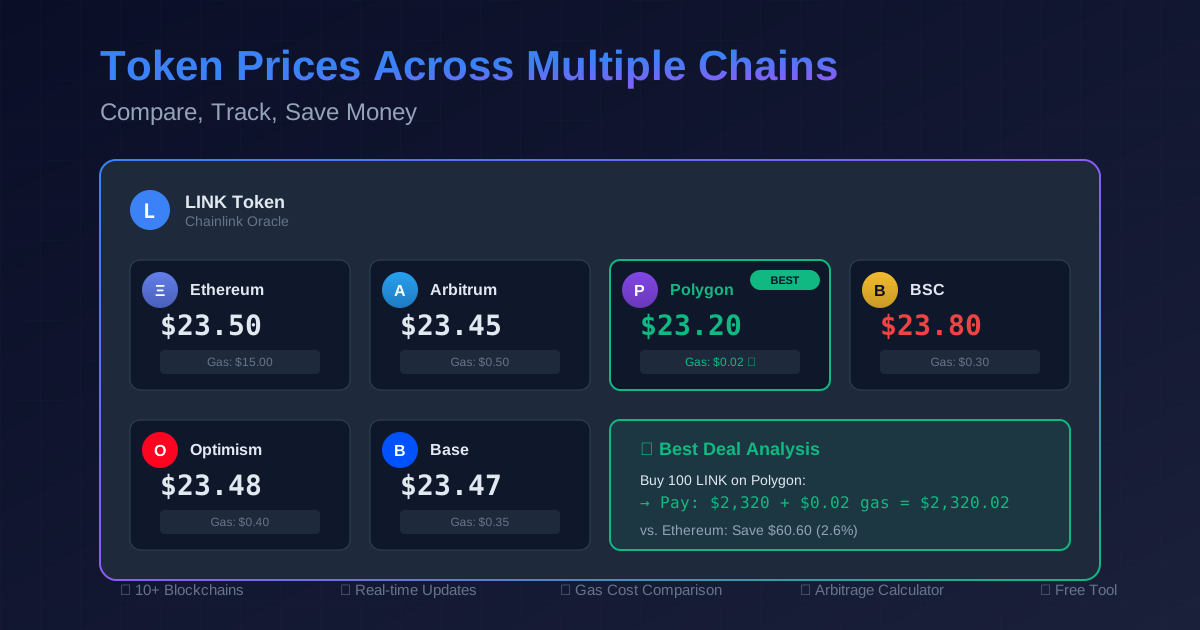
LINK Token Example:
Ethereum:     $23.50
Arbitrum:     $23.45
Polygon:      $23.20 (1.3% cheaper!)
BSC:          $23.80 (1.3% more expensive!)
Arbitrage opportunity: Buy on Polygon at $23.20, sell on BSC at $23.80 = 2.6% profit (minus bridge fees).
Understanding Why Prices Differ
1. Liquidity Fragmentation
Each chain has its own liquidity pools:
- High liquidity chains (Ethereum): Tighter spreads, accurate prices
- Low liquidity chains (smaller networks): Wider spreads, price slippage
Example:
- Uniswap on Ethereum: $10M TVL → tight price
- Same pair on small DEX: $100K TVL → 2-3% price difference
2. Bridge Delays
Tokens must be bridged between chains:
- Bridge time: 10 minutes to 7 days
- During bridge, prices can move
- Creates temporary arbitrage windows
3. Different DEX Algorithms
Not all DEXs use the same pricing:
- Uniswap V2: Constant product (x*y=k)
- Uniswap V3: Concentrated liquidity
- Curve: Stableswap algorithm
- Balancer: Weighted pools
Each algorithm produces slightly different prices.
4. Local Market Dynamics
Some chains have regional preferences:
- BSC: Popular in Asia → different trading hours
- Ethereum: Global → 24/7 uniform demand
- Polygon: Gaming/NFT focus → specific token demand
Method 1: Using Token Price Aggregators
Best Multi-Chain Price Trackers
1. Web3 Calculator Token Price Tool ⭐ (Recommended)
Features:
- Supports 10+ blockchains
- Real-time price updates
- Side-by-side comparison
- Arbitrage calculator built-in
- No wallet connection required
- Free to use
How to use:
Step 1: Enter token symbol (e.g., "LINK")
Step 2: Select chains to compare
Step 3: View prices across all chains
Step 4: Identify best price
Step 5: Click to trade on that chain
Example output:
LINK Token Prices:
━━━━━━━━━━━━━━━━━━━━━━━━━━━━━
Ethereum:     $23.50  [Trade →]
Arbitrum:     $23.45  [Trade →]
Polygon:      $23.20  ✅ BEST
BSC:          $23.80  ⚠️ EXPENSIVE
Optimism:     $23.48  [Trade →]
━━━━━━━━━━━━━━━━━━━━━━━━━━━━━
Best Deal: Polygon (-1.3%)
Most Expensive: BSC (+1.3%)
2. CoinGecko Multi-Chain View
Access: coingecko.com → Search token → "Exchanges" tab
Pros:
- Shows all trading pairs
- Includes centralized exchanges
- Historical price charts
- API available
Cons:
- Doesn't show DEX prices directly
- Need to navigate to each chain manually
- Can be overwhelming with too much data
Best for: Researching token availability across chains
3. DeFi Llama
Access: defillama.com → "Tokens" section
Pros:
- TVL data by chain
- DEX-specific prices
- Chain comparison charts
- Free and open-source
Cons:
- UI not beginner-friendly
- Mainly for DeFi power users
- No direct trading links
Best for: Analyzing liquidity distribution
4. DexScreener
Access: dexscreener.com
Pros:
- Real-time DEX data
- Multi-chain support (20+ chains)
- Trading view charts
- Smart alerts
Cons:
- Only DEX prices (no CEX)
- Can lag during high volatility
- Some chains missing
Best for: Active traders hunting opportunities
Method 2: Checking Individual DEXs
Sometimes you need to go directly to the source.
Ethereum: Uniswap
How to check:
- Go to app.uniswap.org
- Click "Swap"
- Select token pair (e.g., ETH → LINK)
- Enter amount (e.g., 1 ETH)
- View exchange rate
Reading the output:
You pay: 1 ETH
You receive: 15.23 LINK
Rate: 1 ETH = 15.23 LINK
Price per LINK: $23.45
Pro tip: Change input amount to see price impact. If price changes significantly, liquidity is low.
Arbitrum: Uniswap V3 / Camelot
Uniswap on Arbitrum:
- Same interface as Ethereum
- URL: app.uniswap.org (auto-detects Arbitrum)
- Lower fees (~$0.50 vs $15 on Ethereum)
Camelot DEX:
- Native Arbitrum DEX
- URL: app.camelot.exchange
- Often better prices for smaller tokens
Polygon: QuickSwap
Access: quickswap.exchange
Advantages:
- Very low gas fees ($0.01)
- Large token selection
- Fast transactions (2 seconds)
How to check price:
- Switch wallet to Polygon network
- Search token
- View exchange rate
- Compare with Ethereum price
BSC: PancakeSwap
Access: pancakeswap.finance
Popular pairs:
- BNB/USDT
- CAKE/BNB
- ETH/BNB
Key difference: Many tokens on BSC are bridged versions (e.g., "LINK-BEP20"). Verify you're checking the correct token contract.
Optimism: Velodrome
Access: app.velodrome.finance
Unique feature: Vote-escrowed model affects prices
Best for: Native Optimism tokens (OP, VELO)
Avalanche: Trader Joe
Access: traderjoexyz.com
Advantages:
- Largest DEX on Avalanche
- Good liquidity for AVAX pairs
- Fast confirmation
Method 3: Using DEX Aggregators
DEX aggregators automatically find the best price across multiple DEXs on the same chain.
1inch Network
Supports:
- Ethereum, BSC, Polygon, Arbitrum, Optimism, Avalanche
- 10+ chains total
- 100+ DEX sources
How it works:
You want: 1 ETH → LINK
1inch checks:
- Uniswap: 15.20 LINK
- SushiSwap: 15.18 LINK
- Curve: 15.22 LINK (best!)
Result: Routes through Curve
To use:
- Visit app.1inch.io
- Connect wallet
- Select chain (top right)
- Enter token pair
- See best price across all DEXs
Matcha (by 0x Protocol)
Access: matcha.xyz
Unique feature: Professional trading interface
Best for:
- Large trades (better routing)
- Advanced traders
- Limit orders
Paraswap
Access: app.paraswap.io
Advantages:
- Multi-path swaps (splits across DEXs)
- Gas optimization
- Price alerts
Method 4: Building Your Own Tracker
For power users and developers:
Using APIs
CoinGecko API (Free):
// Get LINK price across chains
fetch('https://api.coingecko.com/api/v3/coins/chainlink')
  .then(res => res.json())
  .then(data => {
    console.log('ETH price:', data.market_data.current_price.eth);
    // Process multi-chain data
  });
Moralis API:
// Get token price on specific chain
const options = {
  chain: 'polygon',
  address: '0x53e0bca35ec356bd5dddfebbd1fc0fd03fabad39' // LINK
};
const price = await Moralis.EvmApi.token.getTokenPrice(options);
The Graph Protocol:
Query DEX subgraphs directly:
{
  token(id: "0x514910771af9ca656af840dff83e8264ecf986ca") {
    derivedETH
  }
}
Spreadsheet Tracking
Create a Google Sheets tracker:
Columns:
- Token name
- Ethereum price
- Arbitrum price
- Polygon price
- BSC price
- Best price
- Worst price
- Arbitrage opportunity %
Update: Use ImportJSON add-on with CoinGecko API
Step-by-Step: Finding Best Token Price
Let's walk through a real example.
Goal: Buy 100 USDC worth of LINK token at best price
Step 1: Check Web3 Calculator
Visit: Token Price Tool
Enter: "LINK"
Result:
Ethereum:   $23.50 (100 USDC = 4.255 LINK)
Arbitrum:   $23.45 (100 USDC = 4.265 LINK)
Polygon:    $23.20 (100 USDC = 4.310 LINK) ✅
BSC:        $23.80 (100 USDC = 4.202 LINK)
Winner: Polygon (get 0.055 more LINK)
Step 2: Verify on DEX
Go to QuickSwap (Polygon)
Input: 100 USDC
Output: 4.308 LINK (close to estimate!)
Step 3: Check Gas Costs
Ethereum:   $15 gas
Arbitrum:   $0.50 gas
Polygon:    $0.02 gas ✅
BSC:        $0.30 gas
Step 4: Calculate Total Cost
Polygon:
- Token cost: 100 USDC
- Gas cost: $0.02
- Total: $100.02
- Receive: 4.308 LINK

Ethereum (comparison):
- Token cost: 100 USDC
- Gas cost: $15
- Total: $115
- Receive: 4.255 LINK

Savings: $14.98 + 0.053 extra LINK!
Decision: Buy on Polygon
Understanding Price Impact
When checking prices, always check price impact.
What is Price Impact?
Price impact = how much the price moves when YOU trade.
Example:
Small trade (1 ETH → LINK):
- Expected: 15.23 LINK
- Price impact: 0.01%
- Actually get: 15.229 LINK

Large trade (100 ETH → LINK):
- Expected: 1,523 LINK
- Price impact: 5.2%
- Actually get: 1,443 LINK (80 LINK less!)
How to Check Price Impact
On Uniswap:
- Enter trade amount
- Look for "Price impact" warning
- If >1%, consider splitting across chains
On 1inch:
- Shows price impact automatically
- Suggests better routes if high impact
Rule of thumb:
- <0.1%: Excellent liquidity
- 0.1-1%: Good for most trades
- 1-3%: Acceptable for smaller tokens
-
3%: Consider splitting trade or different chain
Advanced: Arbitrage Opportunities
Spotting Real Opportunities
Example scenario (December 2025):
Token: ARB
Ethereum: $1.50
Arbitrum: $1.48
Difference: 1.3%

Bridge cost: $2 (fixed)
Trade amount needed: $2 / 0.013 = $154

Profitable if trading >$154
Arbitrage Calculator
Step-by-step:
- Price difference: $1.50 - $1.48 = $0.02 (1.3%)
- Bridge fee: $2 (Arbitrum → Ethereum)
- Gas costs: $15 (Ethereum sell) + $0.50 (Arbitrum buy) = $15.50
- Total costs: $2 + $15.50 = $17.50
Breakeven calculation:
- Need profit > $17.50
- At 1.3% edge, need: $17.50 / 0.013 = $1,346 trade size
Reality check:
- Price impact on $1,346 trade: ~0.5%
- Reduces edge from 1.3% to 0.8%
- New breakeven: $2,187
Conclusion: Only profitable for trades >$2,200
Automated Arbitrage (Advanced)
Tools:
- Hummingbot (open-source bot)
- DeFi Pulse Farmer
- Custom scripts with Web3.js
Warning: Requires technical knowledge and capital.
Common Mistakes to Avoid
❌ Mistake #1: Ignoring Contract Addresses
Problem: Multiple tokens with same name on different chains.
Example:
- LINK on Ethereum: 0x514910771af9ca656af840dff83e8264ecf986ca
- LINK on BSC: 0xF8A0BF9cF54Bb92F17374d9e9A321E6a111a51bD
Different contracts = different tokens!
Solution: Always verify contract address on official docs.
❌ Mistake #2: Forgetting Bridge Fees
Scenario:
Token 5% cheaper on Polygon
Bridge fee: $10
Trade amount: $100

Savings: $5
Cost: $10
Net loss: $5
Solution: Calculate breakeven point before bridging.
❌ Mistake #3: Not Accounting for Slippage
What you see: $23.50 per token
What you get: $23.85 per token (1.5% slippage)
Solution:
- Set slippage tolerance
- Check price impact
- Use limit orders for large trades
❌ Mistake #4: Using Stale Prices
Problem: Prices on aggregators can be 10-60 seconds old.
In volatile markets:
- Listed: $100
- Actual: $105 (5% difference!)
Solution: Always check timestamp on price data.
❌ Mistake #5: Overlooking Gas Optimization
Scenario:
Save $2 on token price
Pay $15 extra in gas on Ethereum

Net loss: $13
Solution: Factor gas into total cost calculation.
Tools Comparison Table
| Tool | Chains | Real-time | Free | DEX Support | Best For | |------|--------|-----------|------|-------------|----------| | Web3 Calculator | 10+ | ✅ | ✅ | ✅ | Quick comparison | | CoinGecko | All | ⚠️ 10min | ✅ | Partial | Research | | DexScreener | 20+ | ✅ | ✅ | ✅ | Trading | | 1inch | 10+ | ✅ | ✅ | ✅ | Best execution | | Uniswap | 8 | ✅ | ✅ | ❌ | Uniswap only | | DeFi Llama | All | ⚠️ 5min | ✅ | ✅ | Analytics |
Mobile Apps for Price Tracking
CoinGecko App (iOS/Android)
Features:
- Price alerts
- Multi-chain support
- Portfolio tracking
- News integration
Best for: Casual monitoring
DexGuru Mobile
Features:
- Real-time DEX prices
- Trading directly from app
- Wallet integration
Best for: Active traders
Zerion
Features:
- Portfolio tracker
- Shows all tokens across chains
- Transaction history
- DeFi positions
Best for: Managing multi-chain portfolio
Creating Price Alerts
CoinGecko Alerts
Setup:
- Search token
- Click star icon
- Set alert: "Notify if price <$23"
- Select chains to monitor
Free tier: 5 alerts
DexScreener Alerts
Setup:
- Find trading pair
- Click bell icon
- Set conditions:
- Price above/below
- Volume change
- Liquidity change
Advantage: More granular than CoinGecko
Custom Alerts with IFTTT
Example webhook:
IF CoinGecko price < $23
THEN Send Telegram message
Best Practices for Multi-Chain Trading
1. Maintain Multi-Chain Portfolio
Strategy: Keep funds on multiple chains:
40% on Ethereum (main liquidity)
30% on Arbitrum (lower fees)
20% on Polygon (very low fees)
10% on BSC (alternative options)
Benefit: Can take advantage of any chain's best price.
2. Know Bridge Times
Fast bridges (<5 min):
- Hop Protocol
- Across Protocol
- Stargate
Slow bridges (30min - 7 days):
- Official bridges
- Cheaper but slower
Plan: For time-sensitive trades, use fast bridges despite higher cost.
3. Bookmark Favorite Tools
Essential bookmarks:
- Token Price Checker - Compare prices
- app.uniswap.org - Trade on Ethereum/L2s
- app.1inch.io - Best execution
- dexscreener.com - Research
4. Check Multiple Sources
Never rely on single source:
Source 1 (Web3Calc): $23.50
Source 2 (Uniswap): $23.48
Source 3 (DexScreener): $23.52

Average: $23.50
Confidence: HIGH
If one source shows very different price, investigate why.
Tax Implications
Multi-Chain Trading & Taxes
Important: Each trade is taxable event.
Example tax situation:
1. Buy LINK on Polygon: $23.20
2. Bridge to Ethereum: Cost basis $23.20
3. Price on Ethereum: $23.50
4. Taxable gain: $0.30 per token

5. Later sell on Ethereum: $25
6. Taxable gain: $25 - $23.20 = $1.80
Track:
- Purchase price
- Purchase chain
- Bridge costs (increases basis)
- Sale price
- Sale chain
Tools:
- Crypto Tax Calculator
- Koinly
- CoinTracker
Conclusion: Mastering Multi-Chain Price Checking
Checking token prices across multiple chains isn't just about finding the cheapest option—it's about understanding the entire multi-chain DeFi landscape.
Key takeaways:
✅ Always compare: Prices vary 1-5% across chains ✅ Factor in costs: Gas + bridge fees matter ✅ Check liquidity: Low liquidity = high slippage ✅ Verify contracts: Same symbol ≠ same token ✅ Use tools: Don't manually check each chain
Your action plan:
- Bookmark Token Price Tool for quick checks
- Set up price alerts for tokens you trade frequently
- Learn bridge costs for chains you use
- Track your multi-chain portfolio
- Calculate total costs, not just token prices
Start Comparing Prices Now
Ready to find the best token prices across all chains?
👉 Use Our Free Token Price Checker
Features:
- 10+ blockchain networks
- Real-time price updates
- Side-by-side comparison
- Arbitrage calculator
- Gas cost estimator
- No registration required
Next Steps:
- Calculate Impermanent Loss before providing liquidity
- Check Gas Fees to optimize transaction timing
- Learn about DeFi Risk Management
Pro tip: Set a routine to check prices across chains every time before making a trade. The 30 seconds invested can save you hundreds of dollars, especially on large transactions.
Have questions? Drop a comment below or join our community to discuss multi-chain trading strategies with other DeFi users.
Disclaimer: Cryptocurrency prices are volatile. This guide is for educational purposes only. Always do your own research and never invest more than you can afford to lose. Be aware of smart contract risks, bridge vulnerabilities, and regulatory implications in your jurisdiction.
Share this article:
Related Articles
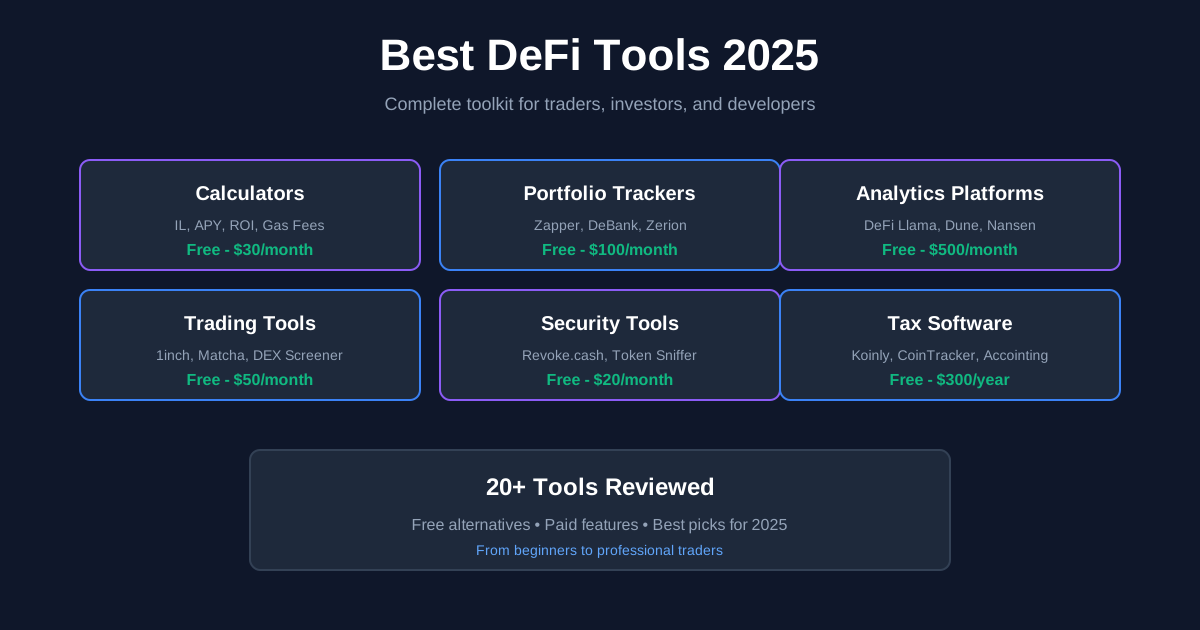
Best Tools for DeFi Traders in 2025: Complete Toolkit Guide
Discover the essential DeFi trading tools every trader needs in 2025. From calculators to analytics platforms, portfolio trackers to security tools - your complete guide to trading DeFi like a pro.
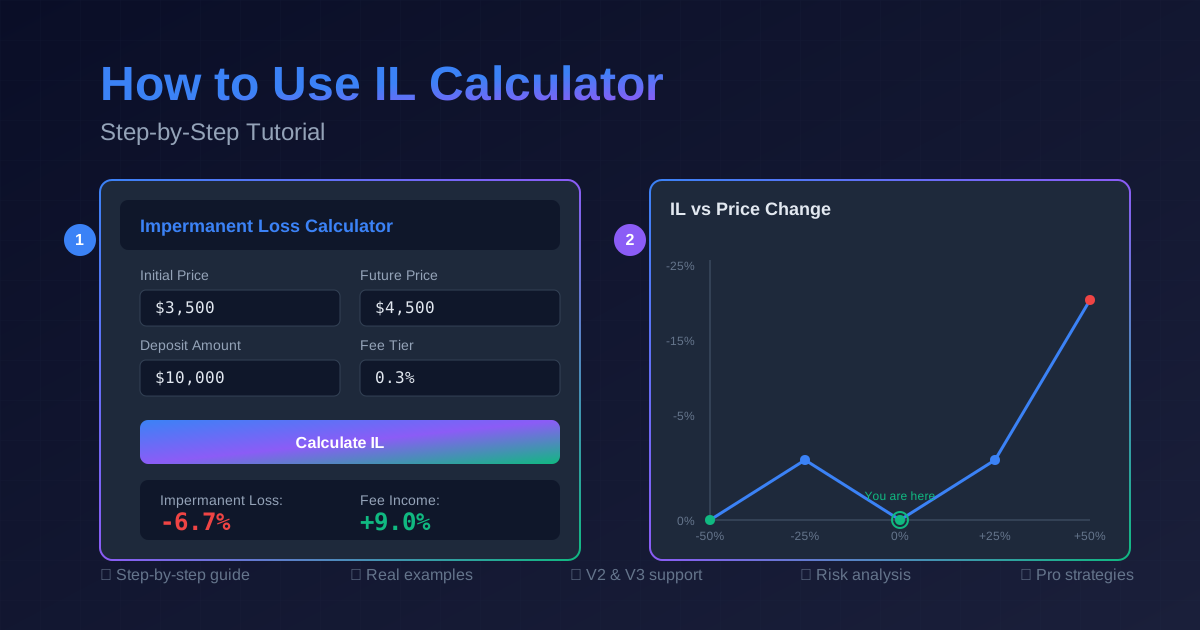
How to Use an Impermanent Loss Calculator: Step-by-Step Guide
Master the art of calculating impermanent loss with our comprehensive guide. Learn to evaluate liquidity pool risks, optimize returns, and make informed DeFi investment decisions.
GameFi ROI Calculator: Calculate Play-to-Earn Returns & Break-Even Time
Complete guide to GameFi and Play-to-Earn ROI calculation. Learn how to analyze Axie Infinity, STEPN, Illuvium earnings, NFT breeding costs, scholarship programs, and break-even scenarios with our free P2E calculator.