Multi-Sig Wallet Calculator Guide: Optimize Your DAO Treasury Gas Costs
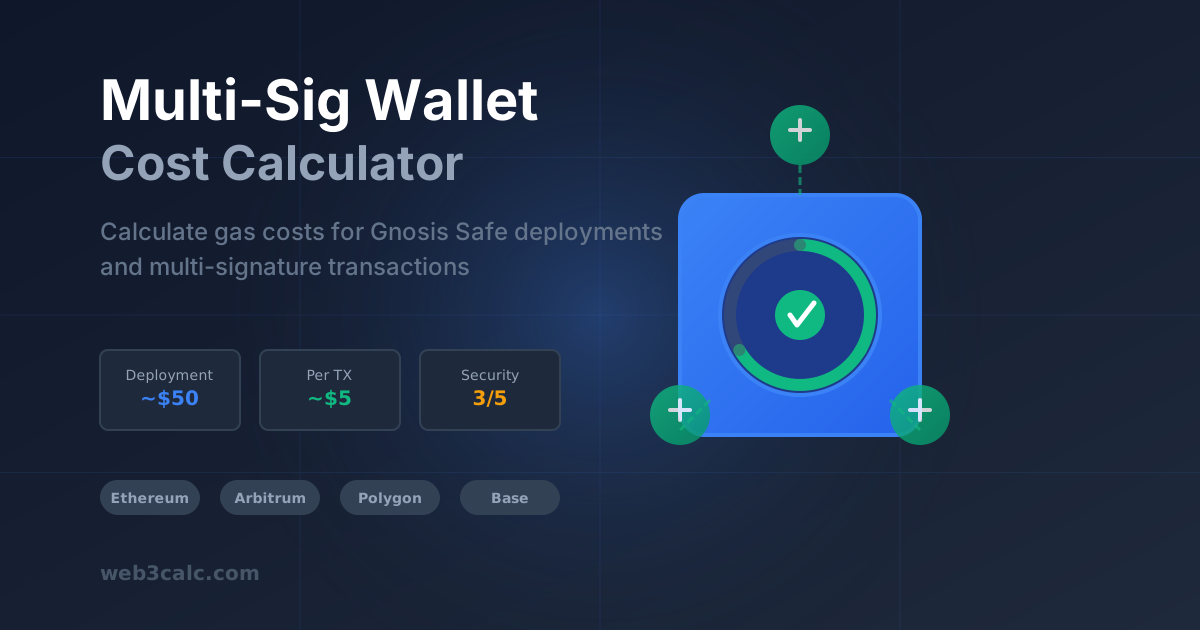
Multi-Sig Wallet Calculator Guide: Optimize Your DAO Treasury Gas Costs
Managing a DAO treasury or corporate crypto holdings? Multi-signature wallets are essential for security, but understanding their costs is crucial for efficient operations. This comprehensive guide will help you calculate, understand, and optimize multi-sig wallet gas fees.
What is a Multi-Signature Wallet?
A multi-signature (multi-sig) wallet is a cryptocurrency wallet that requires multiple private keys to authorize transactions. Instead of a single person controlling all funds, a multi-sig wallet distributes control among multiple parties.
Key Characteristics
Threshold Requirements: A multi-sig wallet operates with an M-of-N configuration:
- M = Required signatures to execute a transaction
- N = Total number of signers
Common configurations:
- 2/3: Requires 2 signatures out of 3 signers (66% consensus)
- 3/5: Requires 3 signatures out of 5 signers (60% consensus)
- 5/7: Requires 5 signatures out of 7 signers (71% consensus)
Security Benefits:
- No single point of failure
- Protection against compromised keys
- Built-in redundancy for key loss
- Transparent approval process
- Flexible access control
Understanding Multi-Sig Costs
Multi-sig wallets have two primary cost components:
1. Deployment Cost
This is the one-time cost to deploy the multi-sig smart contract on the blockchain.
Factors Affecting Deployment Cost:
- Network: Ethereum mainnet costs $50-200, L2s cost under $1
- Number of Signers: More signers = more storage = higher cost
- Gas Price: Network congestion affects deployment timing
- Contract Complexity: Custom implementations may cost more
Typical Deployment Costs:
Ethereum Mainnet: $50-200 (280,000 gas)
Arbitrum: $0.50-2 (280,000 gas at 0.1 Gwei)
Optimism: $0.30-1 (280,000 gas at 0.001 Gwei)
Polygon: $0.10-0.50 (280,000 gas at 30 Gwei)
Base: $0.30-1 (280,000 gas at 0.001 Gwei)
BNB Chain: $2-5 (280,000 gas at 3 Gwei)
2. Transaction Cost
This is the recurring cost for each transaction execution.
Cost Components:
- Base Transaction: ~60,000 gas
- Signature Verification: ~5,000 gas per signature
- State Updates: ~1,000 gas per signer
- Batch Operations: Additional 40,000 gas overhead
Example Transaction Costs (3/5 configuration):
Ethereum Mainnet: $5-20 per transaction
Arbitrum: $0.05-0.20 per transaction
Optimism: $0.03-0.10 per transaction
Polygon: $0.02-0.08 per transaction
Base: $0.03-0.10 per transaction
Security Threshold Analysis
Choosing the right threshold is critical for balancing security and operational efficiency.
Threshold Recommendations
Low Threshold (40-50%):
- Configuration: 2/5, 3/7
- Security Level: Medium
- Use Case: Small teams, frequent operations
- Risk: Easier for attackers if multiple keys compromised
- Benefit: Faster execution, less coordination needed
Medium Threshold (50-66%):
- Configuration: 2/3, 3/5
- Security Level: High
- Use Case: Standard DAO operations, corporate treasuries
- Risk: Balanced risk profile
- Benefit: Industry standard, good security/usability balance
High Threshold (67-80%):
- Configuration: 3/4, 5/7, 7/9
- Security Level: Very High
- Use Case: Large organizations, critical operations
- Risk: May delay operations if signers unavailable
- Benefit: Maximum security, requires broad consensus
Very High Threshold (>80%):
- Configuration: 4/5, 6/7
- Security Level: Maximum
- Use Case: Ultra-sensitive operations only
- Risk: High operational friction, potential for deadlock
- Benefit: Nearly unanimous approval required
Security Best Practices
- Geographic Distribution: Spread signers across time zones and locations
- Key Diversity: Use different wallet types (hardware, software, institutional)
- Backup Plans: Document recovery procedures for lost keys
- Regular Audits: Review signer list quarterly
- Test Transactions: Practice signing before high-value operations
Network Comparison
Different blockchain networks offer vastly different cost structures:
Ethereum Mainnet
Pros:
- Highest security and decentralization
- Maximum liquidity
- Most battle-tested multi-sig contracts
Cons:
- Expensive gas fees ($5-50 per transaction)
- Slower confirmation times during congestion
- High deployment costs
Best For: Large DAOs with infrequent, high-value transactions
Layer 2 Solutions (Arbitrum, Optimism, Base)
Pros:
- 90-95% lower fees than Ethereum
- Fast confirmations (seconds)
- Ethereum-level security inheritance
- Growing ecosystem
Cons:
- Slightly less liquidity than mainnet
- Additional bridging steps may be needed
- Newer, less battle-tested
Best For: Most DAO operations, frequent transactions, cost-sensitive organizations
Polygon
Pros:
- Very low fees ($0.02-0.10 per transaction)
- Fast confirmations (2 seconds)
- Mature DeFi ecosystem
- Good token support
Cons:
- Separate security model from Ethereum
- Requires MATIC for gas
- Less secure than Ethereum or L2s
Best For: High-frequency operations, testing, smaller treasuries
BNB Smart Chain
Pros:
- Low to moderate fees
- Fast transactions
- Large user base
- Good DEX support
Cons:
- More centralized
- Different ecosystem from Ethereum
- Requires BNB for gas
Best For: Teams already using BNB ecosystem
Cost Optimization Strategies
1. Transaction Batching
Combine multiple operations into a single transaction:
Savings: 50-70% reduction in per-operation costs
Example:
- 5 separate transactions: 5 × 80,000 gas = 400,000 gas
- 1 batched transaction: 120,000 gas
- Savings: 280,000 gas (70%)
When to Use:
- Multiple token transfers
- Several approval operations
- Routine administrative tasks
2. Network Selection
Choose the right network for your operation frequency:
Break-Even Analysis:
For a 3/5 multi-sig with 50 transactions/month:
Ethereum:
- Deployment: $100
- Monthly: 50 × $10 = $500
- Annual: $6,100

Arbitrum:
- Deployment: $1
- Monthly: 50 × $0.10 = $5
- Annual: $61

Savings: $6,039/year (99% reduction)
3. Gas Price Optimization
Monitor and execute during optimal times:
Tools:
- ETH Gas Station
- Gas Now
- Gnosis Safe's built-in gas estimator
Timing Strategies:
- Avoid weekdays 8am-6pm UTC (peak DeFi hours)
- Execute on weekends for lower fees
- Use pending transactions feature to queue at low gas prices
4. Signer Optimization
Keep signer count reasonable:
Gas Impact per Additional Signer:
- Deployment: +20,000 gas (~$0.50-2 on Ethereum)
- Per Transaction: +1,000 gas (~$0.03-0.10 on Ethereum)
Recommendations:
- 3-7 signers is optimal for most organizations
- Above 10 signers, consider hierarchical structures
- Remove inactive signers regularly
5. Smart Configuration
Choose threshold wisely:
Gas Cost by Threshold (5 signers, 80,000 gas base):
- 2/5: 90,000 gas (2 signatures)
- 3/5: 95,000 gas (3 signatures)
- 4/5: 100,000 gas (4 signatures)
- 5/5: 105,000 gas (5 signatures)
Optimization: Balance security needs with operational costs
Real-World Examples
Example 1: Small DAO Treasury
Setup:
- Signers: 3
- Threshold: 2/3 (66%)
- Network: Arbitrum
- Monthly Transactions: 10
Costs:
Deployment: $1
Per Transaction: $0.08
Monthly: $0.80
Annual: $10.60
Analysis: Excellent cost structure for small operations. Using Arbitrum saves 99% compared to Ethereum mainnet.
Example 2: Medium DAO Treasury
Setup:
- Signers: 5
- Threshold: 3/5 (60%)
- Network: Ethereum Mainnet
- Monthly Transactions: 5
Costs:
Deployment: $120
Per Transaction: $12
Monthly: $60
Annual: $840
Analysis: Higher costs but necessary for security with large treasury ($10M+). Gas represents <0.1% of typical transaction values.
Example 3: Enterprise Treasury
Setup:
- Signers: 7
- Threshold: 5/7 (71%)
- Network: Ethereum Mainnet
- Monthly Transactions: 20
Costs:
Deployment: $150
Per Transaction: $18
Monthly: $360
Annual: $4,470
Analysis: Premium security for critical operations. Consider L2 for routine operations, mainnet for large transfers.
Example 4: High-Frequency Operations
Setup:
- Signers: 5
- Threshold: 3/5
- Network: Polygon
- Monthly Transactions: 200
Costs:
Deployment: $0.30
Per Transaction: $0.04
Monthly: $8
Annual: $96
Analysis: Perfect for operational wallets with frequent transactions. Batch operations for additional savings.
Popular Multi-Sig Implementations
Gnosis Safe (Safe)
Overview: Most popular and trusted multi-sig solution
Features:
- Support for all EVM chains
- Extensive DApp integrations
- Mobile and web interfaces
- Transaction simulation
- Spending limits
- Recovery mechanisms
Gas Efficiency: Optimized contract, ~80,000 gas per transaction
Best For: Professional DAOs, serious projects
Deployment:
- Visit safe.global
- Connect wallet
- Select network
- Add signers
- Set threshold
- Deploy (single transaction)
Custom Multi-Sig Contracts
When to Build Custom:
- Unique business logic required
- Special authorization rules
- Integration with existing systems
- Cost optimization for specific use cases
Considerations:
- Security audits are essential
- Higher development costs
- Maintenance overhead
- May have less tooling support
Typical Use Cases:
- Corporate treasuries with complex approval chains
- Projects with specialized governance
- Integration with other smart contract systems
Security Considerations
Key Management
Hardware Wallets:
- Use Ledger or Trezor for signer keys
- Keep firmware updated
- Store in secure locations
- Test signing before deploying
Geographic Distribution:
- Spread signers across continents
- Avoid single points of failure
- Consider time zone coverage
- Plan for emergency access
Backup Procedures:
- Document recovery seed phrases
- Use secure, offline storage
- Split backups geographically
- Test recovery procedures annually
Access Control
Role Definition:
- Primary signers: Regular access
- Backup signers: Emergency only
- Removed signers: Revoke access immediately
Review Schedule:
- Quarterly signer list review
- Annual threshold assessment
- Regular access audits
- Document all changes
Emergency Procedures
Lost Key Protocol:
- Identify which key is lost
- Verify threshold still met
- Create new multi-sig if needed
- Transfer funds
- Update documentation
Compromised Key Protocol:
- Immediately remove compromised signer
- Create new multi-sig
- Transfer all funds
- Investigate breach
- Update security procedures
Calculator Usage Guide
Our Multi-Sig Wallet Calculator helps you estimate costs and analyze security:
Step 1: Basic Configuration
Wallet Type: Choose your implementation
- Gnosis Safe: Standard choice
- Safe Wallet: Same as Gnosis Safe (rebranded)
- Custom: For specialized implementations
Network: Select blockchain
- Consider gas costs vs security needs
- Match with your main operations network
- Check Safe deployment availability
Step 2: Multi-Sig Parameters
Number of Signers:
- Minimum: 2 (basic multi-sig)
- Optimal: 3-7 (balance of security and usability)
- Maximum: 20 (supported but not recommended)
Required Signatures (Threshold):
- Must be ≤ number of signers
- Affects security level
- Impacts operational speed
- Consider availability of signers
Step 3: Transaction Estimates
Estimated Transactions per Month:
- Count regular operational transactions
- Include emergency fund movements
- Add governance actions
- Consider seasonal variations
Average Transaction Value:
- Used to calculate gas cost percentage
- Important for ROI analysis
- Helps assess network choice
Step 4: Gas Price (Optional)
When to Specify:
- Expecting specific market conditions
- Planning for worst-case scenarios
- Testing different gas price points
When to Leave Empty:
- Default estimates work for most cases
- Calculator uses current network averages
Step 5: Analyze Results
Key Metrics:
- Deployment Cost: One-time setup expense
- Transaction Costs: Per-operation expenses
- Monthly Projection: Budget planning
- Security Analysis: Threshold assessment
- Optimization Recommendations: Cost-saving suggestions
Network Comparison:
- Click "Compare Across Networks"
- See side-by-side cost analysis
- Identify optimal network
- Calculate break-even points
Advanced Features
Transaction Batching
How It Works:
// Instead of 3 separate transactions:
safe.execTransaction(transfer1)  // 80,000 gas
safe.execTransaction(transfer2)  // 80,000 gas
safe.execTransaction(transfer3)  // 80,000 gas
// Total: 240,000 gas

// Use batching:
safe.multiSend([transfer1, transfer2, transfer3])  // 120,000 gas
// Savings: 120,000 gas (50%)
Best Practices:
- Batch 3-10 operations for optimal savings
- Test batched transactions on testnet
- Use Safe's Transaction Builder
- Verify all operations before signing
Delegate Calls
Enable Safe modules for advanced functionality:
Common Modules:
- Spending Limits: Allow small transactions without full signatures
- Recovery Modules: Automated recovery procedures
- Time Locks: Enforce waiting periods
- Whitelists: Pre-approve certain operations
Gas Implications:
- Module deployment: +150,000 gas one-time
- Per-operation overhead: +10,000-30,000 gas
- Evaluate if savings justify added complexity
Off-Chain Signatures
Reduce gas costs by collecting signatures off-chain:
Process:
- Create transaction in Safe interface
- Share signing link with other signers
- Each signer approves off-chain (no gas)
- Final signer executes with all signatures
- On-chain verification happens once
Benefits:
- Only one on-chain transaction
- Signature collection is free
- No network congestion delays
- Better privacy during approval process
Troubleshooting Common Issues
High Gas Costs
Problem: Transaction costs exceed expectations
Solutions:
- Check current gas prices
- Wait for lower congestion
- Consider L2 migration
- Use transaction batching
- Optimize signer count
Stuck Transactions
Problem: Transaction not confirming
Solutions:
- Check nonce conflicts
- Increase gas price (replace transaction)
- Wait for network clearing
- Use Safe's transaction queue
- Contact support if multi-day delay
Signer Unavailable
Problem: Can't reach threshold due to absent signer
Solutions:
- Use backup signers if configured
- Wait for signer availability
- Consider threshold reduction (requires new Safe)
- Plan ahead for key personnel absences
Wrong Network
Problem: Deployed on wrong blockchain
Solutions:
- Deploy new Safe on correct network
- Bridge funds if possible
- Transfer funds to new Safe
- Update documentation
- Learn from mistake for future deployments
Future of Multi-Sig Wallets
Emerging Trends
Account Abstraction:
- Social recovery mechanisms
- Gasless transactions
- Flexible authentication
- Better UX for non-technical users
ZK-Rollups:
- Even lower costs than current L2s
- Stronger security guarantees
- Privacy features
- Scalable signature verification
Cross-Chain Multi-Sigs:
- Unified control across networks
- Single deployment, multiple chains
- Reduced operational complexity
- Better capital efficiency
Roadmap Considerations
Near Term (2024):
- Expect more L2 deployments
- Account abstraction adoption
- Better tooling and interfaces
- Reduced gas costs overall
Medium Term (2025-2026):
- Cross-chain multi-sigs become standard
- Zero-knowledge proof integration
- AI-assisted security monitoring
- Automated compliance features
Conclusion
Multi-signature wallets are essential for secure crypto treasury management, but understanding their costs is crucial for efficient operations. Key takeaways:
- Choose the Right Network: L2 solutions offer 90-95% cost savings with good security
- Optimize Threshold: Balance security (60-75% is optimal) with operational efficiency
- Use Batching: Combine operations to save 50-70% on gas
- Plan for Growth: Start with appropriate signer count, review quarterly
- Monitor Costs: Use our calculator to project expenses and identify savings
Use our Multi-Sig Wallet Calculator to:
- Calculate exact deployment and transaction costs
- Compare networks side-by-side
- Analyze security thresholds
- Get optimization recommendations
- Plan your DAO treasury budget
Ready to optimize your multi-sig costs? Try our calculator now and see how much you can save by choosing the right configuration and network.
Additional Resources
- Gnosis Safe Documentation
- Ethereum Gas Tracker
- L2 Fee Comparison
- DAO Treasury Management Guide
- Web3 Security Best Practices
Need help with your multi-sig setup? Join our community Discord for guidance from experienced DAO operators and treasury managers.
Share this article:
Related Articles
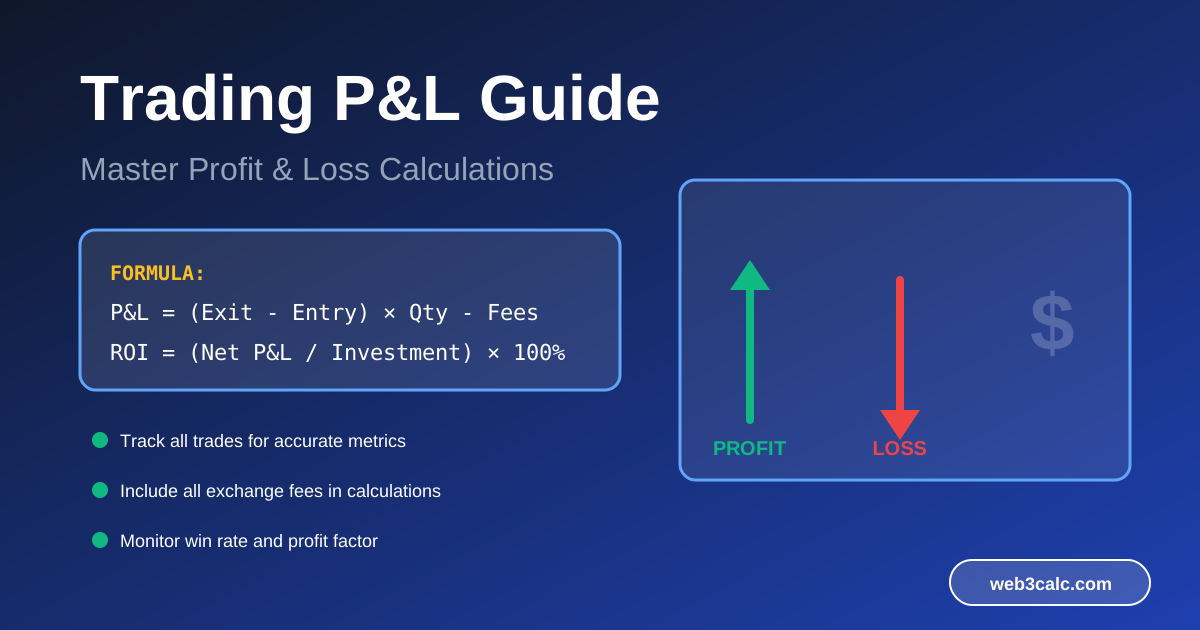
How to Calculate Crypto Trading Profit and Loss: Complete Guide
Master crypto trading P&L calculations with our comprehensive guide. Learn formulas, tax implications, fee optimization, and performance metrics for successful trading.
GameFi ROI Calculator: Calculate Play-to-Earn Returns & Break-Even Time
Complete guide to GameFi and Play-to-Earn ROI calculation. Learn how to analyze Axie Infinity, STEPN, Illuvium earnings, NFT breeding costs, scholarship programs, and break-even scenarios with our free P2E calculator.
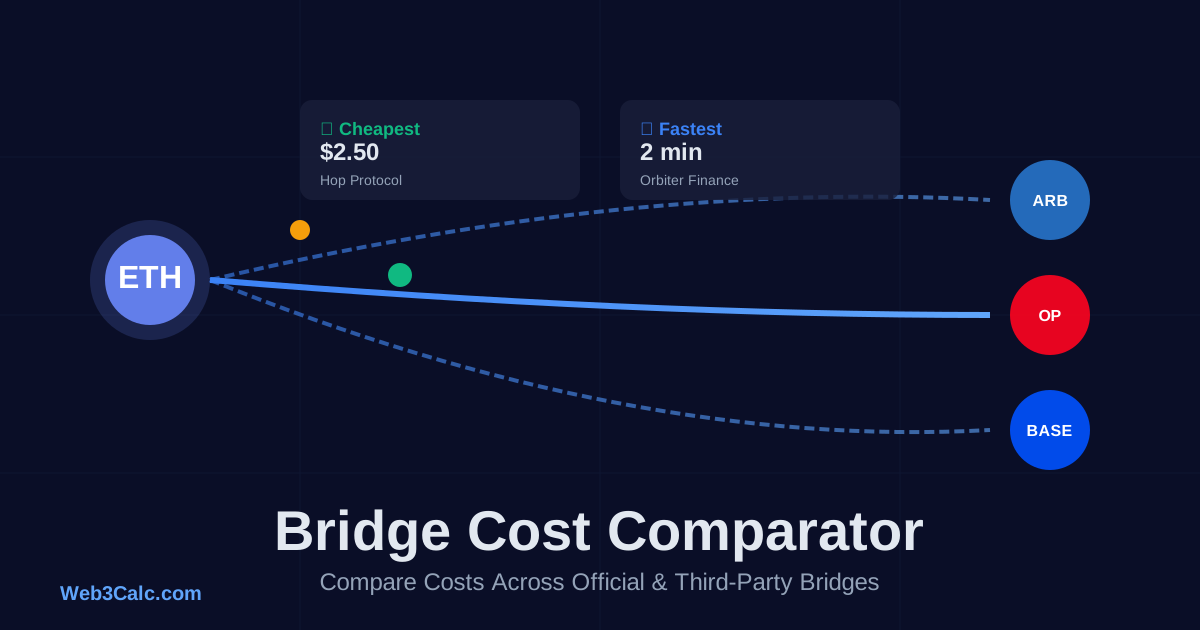
Complete Guide to Crypto Bridge Costs: Compare Fees & Find the Cheapest Route
Learn how to compare crypto bridge costs across official and third-party bridges. Compare Arbitrum, Optimism, Hop, Across, and more. Save money on your cross-chain transfers.