ENS vs Traditional Domains: Complete Comparison 2025
Comprehensive comparison of ENS domains and traditional DNS domains. Learn the differences, pros, cons, costs, and which domain system is right for your needs.
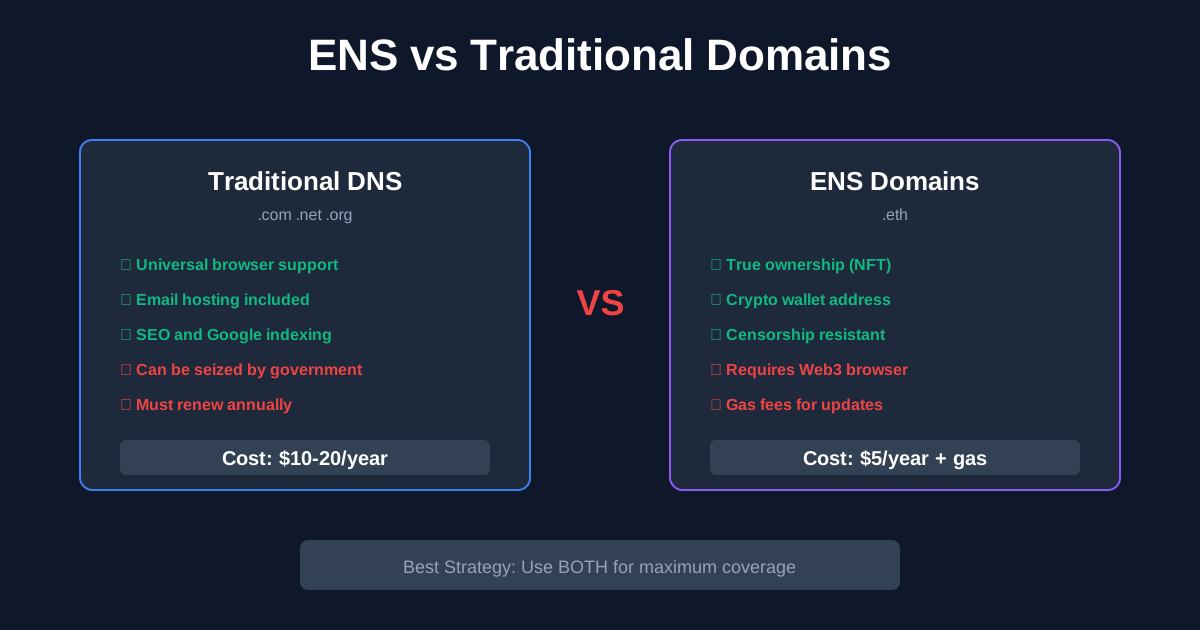
ENS vs Traditional Domains: Complete Comparison 2025
Choosing between an ENS domain and a traditional domain can be confusing. Both have their place in the modern internet, but they serve different purposes and come with distinct advantages and limitations.
In this comprehensive guide, we'll compare ENS (Ethereum Name Service) domains with traditional DNS (Domain Name System) domains across every important dimension: cost, ownership, functionality, use cases, security, and future outlook.
By the end, you'll know exactly which type of domain is right for your needs.
Quick Summary: The Key Differences
Before we dive deep, here's the essential difference:
Traditional Domains (DNS):
- Centralized system managed by registrars (GoDaddy, Namecheap, etc.)
- Annual renewal required or you lose the domain
- Points to websites and email servers
- Works everywhere on the internet
- Costs $10-20/year typically
ENS Domains (.eth):
- Decentralized system on Ethereum blockchain
- You truly own it as an NFT
- Points to crypto wallets, websites, and more
- Requires Web3 browser support for websites
- Costs vary: $5/year for 5+ character names, more for premium
Bottom Line: Traditional domains are for websites. ENS domains are primarily for crypto wallets with optional website functionality.
1. Ownership Model: Who Really Owns Your Domain?
Traditional Domains (Centralized Ownership)
When you "buy" a traditional domain, you don't actually own it. You're renting it from a registrar:
How It Works:
- ICANN (Internet Corporation for Assigned Names and Numbers) controls the root system
- Registrars like GoDaddy, Namecheap act as middlemen
- You pay annual fees to maintain access
- Domain can be seized by government, registrar, or ICANN
- Transfer requires registrar approval
Real Examples of Domain Seizures:
- 2011: U.S. seized 150+ domains for alleged copyright violations without trial
- 2023: Tornado Cash domain seized by authorities
- Ongoing: Thousands of domains suspended annually for policy violations
Risks:
- Registrar can suspend your domain anytime
- Forget to renew? Someone else can buy it
- Government can seize domains for political reasons
- Terms of Service can change without consent
ENS Domains (True Ownership)
ENS domains are NFTs (Non-Fungible Tokens) on Ethereum. You truly own them:
How It Works:
- Domain is an ERC-721 token in your Ethereum wallet
- No middleman can take it from you
- Renew for any duration (1 year to 1,000+ years)
- Transfer directly wallet-to-wallet
- Controlled by smart contracts, not corporations
Ownership Benefits:
- Censorship resistant: No government or company can seize it
- Transferable: Sell or gift directly without approval
- Collateralizable: Use as collateral in DeFi loans
- Inheritable: Pass down like any other digital asset
Example:
vitalik.eth is owned by Vitalik Buterin as an NFT. Even if Ethereum Foundation wanted to, they couldn't take it away. Only Vitalik's private key controls it.
Winner: 🏆 ENS - True ownership with no middlemen or risk of seizure.
2. Cost Comparison: Which is Cheaper?
Traditional Domain Costs
Registration:
- .com: $10-15/year
- .net: $12-18/year
- .org: $10-15/year
- Premium domains: $1,000 - millions (one-time or annual)
- Country TLDs (.us, .uk): $5-30/year
Hidden Costs:
- WHOIS privacy protection: $5-10/year
- SSL certificate: $0-100/year (Let's Encrypt is free)
- DNS hosting: Usually included
- Email hosting: $1-5/month per inbox
5-Year Cost Example (example.com):
- Registration: $15/year × 5 = $75
- Privacy protection: $10/year × 5 = $50
- SSL: Free (Let's Encrypt)
- Total: $125 for 5 years
ENS Domain Costs
Registration (Varies by Length):
- 5+ characters: $5/year
- 4 characters: $160/year
- 3 characters: $640/year
- Premium 3-character: $2,000+/year
One-Time Costs:
- Gas fees for registration: $10-50 (depends on Ethereum network)
- Gas fees for updates: $5-30 per transaction
5-Year Cost Example (yourname.eth):
- Registration (5+ chars): $5/year × 5 = $25
- Initial gas fee: ~$20 (one-time)
- Total: $45 for 5 years
Cost-Saving Strategy: Register for 10+ years at once:
yourname.ethfor 10 years: $50 + gas ($20) = $70 total- Amortized: $7/year
Cost Comparison Table
| Item | Traditional (.com) | ENS (5+ chars) | |------|-------------------|----------------| | Year 1 | $15 + $10 privacy = $25 | $5 + $20 gas = $25 | | Year 2-5 | $25/year | $5/year | | 5-Year Total | $125 | $45 | | Renewal Process | Annual email reminders | Set your own timeline | | Transfer Fees | $0-$10 | Gas fee ($5-30) |
Winner: 🏆 ENS - Significantly cheaper for 5+ character domains, especially long-term.
3. Functionality: What Can Each Domain Do?
Traditional Domain Capabilities
Primary Use: Websites
- Point to any web server via DNS records (A, CNAME, MX)
- Works in every browser (Chrome, Safari, Firefox, etc.)
- Supports subdomains:
blog.example.com,shop.example.com - Email hosting:
you@example.com
Additional Features:
- CDN integration (Cloudflare, AWS CloudFront)
- Load balancing across multiple servers
- Geographic routing (different servers per region)
- SSL/TLS certificates for HTTPS
Limitations:
- Doesn't work for crypto wallet addresses
- Can't point to decentralized storage (IPFS) natively
- Requires traditional web hosting
ENS Domain Capabilities
Primary Use: Crypto Wallet Address
Instead of sending crypto to:
0x1234567890abcdef1234567890abcdef12345678
Send to:
vitalik.eth
Supported on:
- MetaMask, Coinbase Wallet, Trust Wallet
- Uniswap, OpenSea, Rarible
- 600+ dApps and wallets
Additional Features:
- Decentralized websites: Point to IPFS hash for censorship-resistant hosting
- Subdomains:
pay.vitalik.eth,blog.vitalik.eth(you control creation) - Multi-chain addresses: One name for Ethereum, Bitcoin, Solana addresses
- Profile records: Twitter, GitHub, avatar image, email
ENS Record Example:
vitalik.eth resolves to:
- ETH address: 0xd8dA6BF26964aF9D7eEd9e03E53415D37aA96045
- BTC address: bc1qxy2kgdygjrsqtzq2n0yrf2493p83kkfjhx0wlh
- Website: ipfs://Qm...
- Twitter: @VitalikButerin
- Avatar: NFT image
Limitations:
- Websites require Web3 browser or
.limogateway - Not all services support ENS yet
- Gas fees for updates
Functionality Comparison Table
| Feature | Traditional DNS | ENS | |---------|----------------|-----| | Website hosting | ✅ Works everywhere | ⚠️ Needs Web3 browser or .limo | | Email address | ✅ Full support | ❌ Not natively supported | | Crypto wallet | ❌ Not supported | ✅ Primary use case | | Decentralized hosting | ❌ No | ✅ IPFS support | | Subdomains | ✅ Unlimited | ✅ You control creation | | Multi-chain addresses | ❌ No | ✅ ETH, BTC, SOL, etc. | | Social profiles | ❌ No | ✅ Twitter, GitHub, etc. | | Censorship resistance | ❌ Can be taken down | ✅ Immutable |
Winner: 🤝 Tie - It depends on your use case. DNS for traditional web, ENS for crypto.
4. Use Cases: When to Use Each
When to Use Traditional Domains
✅ Best for:
-
Business websites that need universal accessibility
- E-commerce stores
- Company websites
- Blogs and media sites
- Any site targeting non-crypto users
-
Professional email addresses
contact@yourcompany.com- Email marketing campaigns
- Business communications
-
SEO and discoverability
- Google indexes traditional websites
- Better for organic traffic
- Works with all marketing tools
-
Established internet infrastructure
- Compatible with all hosting providers
- Works with all CDNs and services
- No blockchain knowledge required
Real Example: A small business selling products online needs a traditional domain. Customers need to access the site from any browser, receive order confirmation emails, and find the site via Google search.
When to Use ENS Domains
✅ Best for:
-
Crypto wallet identity
- Replace long addresses with readable names
- Accept payments across multiple chains
- Build reputation in Web3
-
Decentralized applications
- Censorship-resistant websites
- Hosting content on IPFS
- Web3 projects and DAOs
-
Digital identity in Web3
- Profile in the metaverse
- NFT collections and creator identity
- Proof of identity in DeFi protocols
-
Investment/speculation
- Short names (3-4 characters) can appreciate
- Premium names like
bank.eth,defi.eth - Brandable names for future projects
Real Examples:
vitalik.eth: Vitalik Buterin's crypto identity, accepts ETH donationsuniswap.eth: Uniswap's official decentralized websitebrantly.eth: Director of ENS DAO, uses it for all crypto transactionsparadigm.eth: Venture capital firm's Web3 identity
Hybrid Approach: Use Both
Many projects use BOTH for maximum reach:
Example: Uniswap
uniswap.org- Traditional domain for main website (SEO, accessibility)uniswap.eth- ENS domain for decentralized app interface
Example: Personal Brand
yourname.com- Portfolio, blog, resumeyourname.eth- Crypto wallet, Web3 profile, NFT gallery
Winner: 🤝 Both - Use traditional for websites, ENS for crypto identity.
5. Security and Censorship Resistance
Traditional Domains: Centralized Vulnerabilities
Security Risks:
-
Domain hijacking
- Hackers can social engineer registrars
- Compromised registrar accounts = lost domain
- Famous case: Twitter's domain temporarily hijacked in 2009
-
DNS attacks
- DNS spoofing/poisoning
- Man-in-the-middle attacks
- Requires DNSSEC (not always implemented)
-
Registrar risks
- Registrar goes bankrupt (e.g., RegisterFly 2007)
- Terms of Service violations = domain suspension
- Payment disputes = domain locked
-
Government/Legal seizures
- Court orders can transfer domains
- DMCA takedowns
- Sanctions and embargoes
Real Example: In 2022, the U.S. government seized multiple domains linked to crypto mixing service Tornado Cash. Website went offline immediately.
ENS Domains: Decentralized Security
Security Benefits:
-
Blockchain immutability
- Only private key holder can modify records
- No customer support can "help" hackers
- Requires 51% attack on Ethereum (virtually impossible)
-
Censorship resistance
- No central authority can revoke your domain
- Governments can't seize ENS domains
- Content hosted on IPFS can't be taken down
-
Transparent ownership
- All transactions recorded on blockchain
- Easy to verify true owner
- Can't be secretly transferred
Risks:
-
Key management
- Lose private key = lose domain forever
- No "forgot password" option
- Requires careful security practices
-
Smart contract risk
- ENS contracts could theoretically have bugs
- Already audited extensively
- Battle-tested since 2017
Security Comparison:
| Threat | Traditional DNS | ENS | |--------|----------------|-----| | Registrar hack | High risk | Not applicable | | Government seizure | Possible | Virtually impossible | | Lost password | Recoverable | Domain lost forever | | Content censorship | Easy | Very difficult | | Ownership disputes | Subject to courts | Blockchain is truth | | Key compromise | Low risk | High risk if careless |
Winner: 🏆 ENS - Better censorship resistance, but requires careful key management.
6. Future Outlook: Which Will Matter More?
Traditional Domains: Still Dominant
Current State:
- 350+ million registered domains worldwide
- Powers the entire traditional internet
- Not going anywhere soon
Future Trajectory:
- Will remain standard for business websites
- Integration with Web3 technologies possible
- DNS-over-HTTPS improving security
- Handshake and other decentralized DNS alternatives emerging
ENS Domains: Growing Rapidly
Current State:
- 2.5+ million ENS names registered
- Integrated into 600+ apps and wallets
- $200M+ in registration fees (all on-chain)
Future Trajectory:
- More wallet and dApp integrations
- Potential for decentralized websites to mainstream
- Could become standard for crypto identity
- Speculation on premium names continues
Adoption Trends:
ENS Growth:
- 2020: 250K names
- 2022: 2M names (after .eth boom)
- 2025: 2.5M+ names and growing
Use Case Evolution:
- Early: Mostly speculators buying short names
- Now: Real adoption by protocols, DAOs, and users
- Future: Standard part of crypto UX
Integration Possibilities
The Future Might Be Hybrid:
-
Traditional domains pointing to ENS
- Use
example.combut resolve via ENS backend - Best of both worlds
- Use
-
ENS + decentralized hosting
- Censorship-resistant content delivery
- No single point of failure
-
Cross-chain identity
- ENS working on Layer 2 and cross-chain support
- One name across all blockchains
Winner: 🤝 Both - Traditional for web, ENS for crypto, with increasing integration.
7. How to Choose: Decision Framework
Choose Traditional Domain (.com) if:
✅ You're building a business website for mainstream users
✅ You need email hosting and professional communication
✅ You want SEO and Google traffic
✅ Your audience is non-crypto focused
✅ You need universal browser support
✅ You want customer support from registrar
Recommended registrars:
- Namecheap: Best value, good support
- Google Domains (now Squarespace): Reliable, simple
- Cloudflare: Cheapest renewals, great security
Choose ENS Domain (.eth) if:
✅ You want a memorable crypto wallet address
✅ You're building in Web3/DeFi/NFTs
✅ You value censorship resistance and true ownership
✅ You want decentralized hosting (IPFS)
✅ You're building crypto brand/identity
✅ You're comfortable with blockchain technology
How to register: Use our free ENS Checker Tool to check availability and register domains easily.
Hybrid Strategy: Get Both
Recommended approach for Web3 projects:
-
Primary domain: Traditional (e.g.,
project.com)- Main website for SEO and accessibility
- Marketing landing pages
- Blog and documentation
-
Secondary domain: ENS (e.g.,
project.eth)- Decentralized app interface
- Crypto wallet for donations
- Web3 community identity
- Backup in case .com is seized
Cost for both:
project.com: ~$15/yearproject.eth: ~$5/year- Total: $20/year for complete coverage
8. Step-by-Step: How to Get Started
Getting a Traditional Domain
Step 1: Choose a registrar
- Compare prices at Namecheap, Google Domains, Cloudflare
Step 2: Search for availability
- Check if your desired name is available
- Try variations if taken
Step 3: Register the domain
- Add to cart, select duration (1+ years)
- Add WHOIS privacy protection
- Complete payment ($10-30 typically)
Step 4: Set up DNS
- Point to your web host
- Configure email records (MX)
- Add SSL certificate
Time required: 10-15 minutes
Technical skill: Beginner-friendly
Getting an ENS Domain
Step 1: Set up Ethereum wallet
- Install MetaMask or similar wallet
- Fund with ETH (for domain + gas fees)
Step 2: Check availability
- Visit app.ens.domains
- Or use our ENS Checker Tool
- Search for your desired name
Step 3: Register the domain
- Click "Request to Register"
- Wait 1 minute (prevents front-running)
- Click "Register" and confirm transaction
- Pay gas fees + registration fee
Step 4: Configure records
- Add your ETH address
- Optional: Add website (IPFS hash)
- Optional: Add avatar, Twitter, etc.
Time required: 15-20 minutes
Technical skill: Intermediate (requires crypto knowledge)
Pro tip: Register for multiple years to save on gas fees. Renewing costs gas each time.
9. Common Questions Answered
Can I use an ENS domain as my main website?
Yes, but with limitations:
- Requires Web3-enabled browser (Brave, MetaMask browser)
- Or access via gateway:
yourname.eth.limooryourname.eth.link - Mainstream users may not know how to access it
- Better for decentralized apps than marketing sites
Recommendation: Use ENS for dApp interface, traditional domain for marketing.
Can I transfer ownership of ENS domains?
Yes, easily!
ENS domains are NFTs. You can:
- Transfer to another wallet (just send the NFT)
- Sell on OpenSea, LooksRare, etc.
- List for sale on ENS Vision
- Gift to friends or team members
No registrar approval needed. It's your asset.
What happens if I forget to renew?
Traditional Domain:
- Grace period (30-90 days): Can still renew at normal price
- Redemption period (30 days): Pay penalty fee ($100+)
- After that: Released to public, anyone can register
ENS Domain:
- 90-day grace period: Can still renew at normal price
- After grace period: Domain enters Dutch auction
- Price starts high, decreases over 28 days
- Anyone can register it during auction
Pro tip: Set calendar reminders! Or with ENS, register for 10+ years.
Can I use ENS for email?
Not natively, but workarounds exist:
-
Forward to traditional email
- Set text record in ENS pointing to email
- Use third-party service to forward (experimental)
-
Decentralized email protocols
- Projects like Skiff, dMail exploring ENS integration
- Still early stage
Currently: Traditional domains better for email.
Are there alternatives to ENS?
Yes, other blockchain naming systems:
-
Unstoppable Domains (.crypto, .nft, .x, etc.)
- One-time purchase (no renewal)
- Works similarly to ENS
- Less adoption than ENS
-
Handshake (.eth competitor)
- Decentralized DNS replacement
- Less adoption so far
-
Solana Name Service (.sol)
- ENS equivalent for Solana blockchain
- Growing adoption in Solana ecosystem
ENS remains the most adopted with 2.5M+ domains and 600+ integrations.
10. Real-World Use Cases: Success Stories
Example 1: DeFi Protocol (Hybrid Approach)
Project: Unnamed DeFi protocol
Strategy:
protocol.com- Main marketing website, blog, documentationprotocol.eth- Decentralized dApp interface on IPFS
Results:
- Marketing site drives SEO traffic and user acquisition
- .eth domain provides censorship-resistant access to dApp
- During domain registrar issues, users could still access via ENS
- Enhanced trust and decentralization reputation
Example 2: Crypto Influencer
User: Crypto content creator
Strategy:
- Uses
creator.ethfor all crypto transactions - Publishes wallet address as
creator.ethinstead of long hex - Easier for fans to send tips and donations
- Built personal brand around the name
Results:
- Increased donations (easier to remember and send)
- Professional appearance in crypto community
- Sold subdomain NFTs (
fan001.creator.eth) for additional revenue
Example 3: DAO Governance
Organization: Decentralized autonomous organization
Strategy:
dao.ethas primary identity- Subdomains for members:
alice.dao.eth,bob.dao.eth - Treasury wallet accessible at
dao.eth
Results:
- Clear organizational identity
- Easy member identification
- Transparent treasury management
- Professional appearance in governance proposals
Final Verdict: Which Should You Choose?
The Bottom Line
For most people:
- Traditional domain if you're building a normal website or business
- ENS domain if you're active in crypto and want a wallet identity
- Both if you're building a Web3 project or want maximum coverage
Quick Decision Matrix
| Your Goal | Recommended Domain | |-----------|-------------------| | Business website | Traditional .com | | Personal brand website | Traditional .com | | Crypto wallet identity | ENS .eth | | Web3 dApp | ENS .eth + Traditional backup | | Blog or media site | Traditional .com | | NFT creator identity | ENS .eth | | DAO or protocol | Both (hybrid) | | Investment/speculation | ENS premium names |
Cost-Benefit Analysis
If you have $25 to spend:
- Traditional only: Get a .com
- Crypto-focused: Get a .eth
- Maximum coverage: Get both (if short names)
If you have $100 to spend:
- Definitely get both
- Register ENS for 10 years
- Register .com for 5 years
- Add privacy protection
The Future is Hybrid
Smart individuals and projects are using both domains:
- Traditional for reaching mainstream audiences
- ENS for crypto-native users and censorship resistance
- Integration between both systems improving
Total cost: $20-30/year for complete coverage.
Next Steps: Get Your Domains Today
Check ENS Availability Now
Use our free ENS Checker Tool to:
- Search for available .eth names
- Check registration costs
- See detailed domain information
- Get direct registration links
Register Traditional Domain
Recommended registrars:
- Namecheap - Best value: namecheap.com
- Cloudflare - Cheapest renewals: cloudflare.com/domains
- Squarespace - Simple interface: squarespace.domains
Learn More
Related guides:
- Complete Guide to ENS Domains
- How to Check Token Prices Across Multiple Chains
- Best Tools for DeFi Traders in 2025
Conclusion
Both ENS and traditional domains have their place in the modern internet:
Traditional domains remain essential for businesses, SEO, and reaching mainstream audiences. They're reliable, universally supported, and well-established.
ENS domains are revolutionizing crypto identity, offering true ownership, censorship resistance, and simplified wallet addresses. They're the future of Web3 identity.
The smart move? Get both. Use traditional domains for websites and email. Use ENS for your crypto identity and Web3 projects. The combined cost ($20-30/year) gives you maximum flexibility and coverage.
Start today by checking if your desired ENS name is available with our ENS Checker Tool.
What domain strategy will you choose? The future of the internet is being built right now, and you get to be part of it.
Share this article:
Related Articles
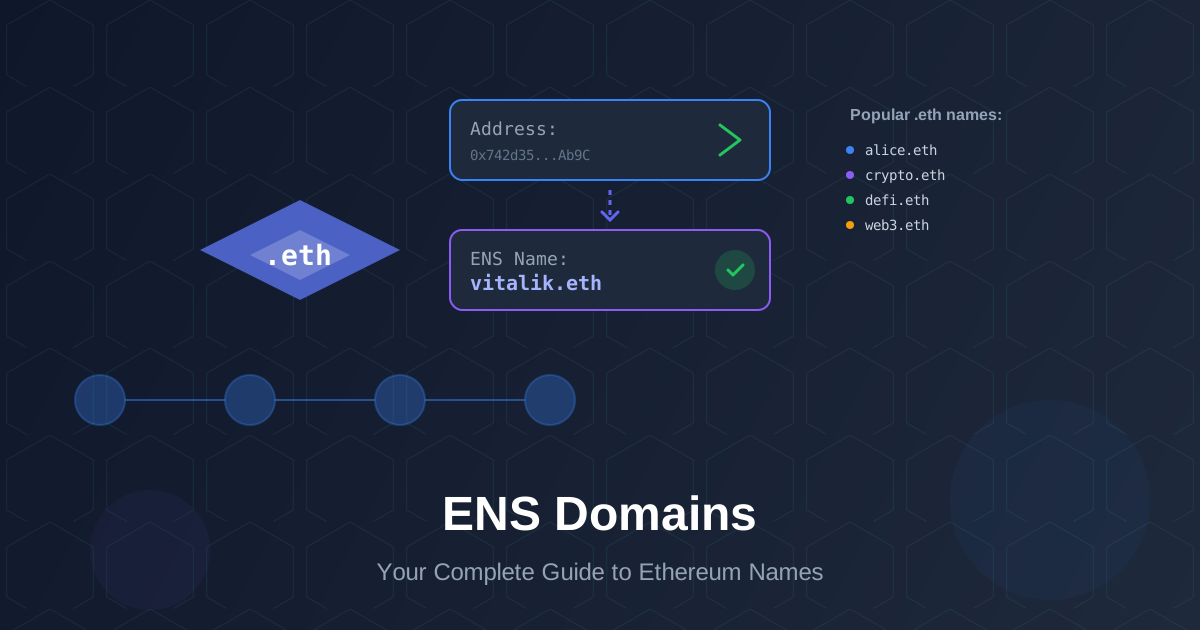
ENS Domains Explained: Your Complete Guide to Ethereum Name Service
Everything you need to know about ENS domains - from registration to usage. Learn how to get your .eth name and why it's essential for Web3.
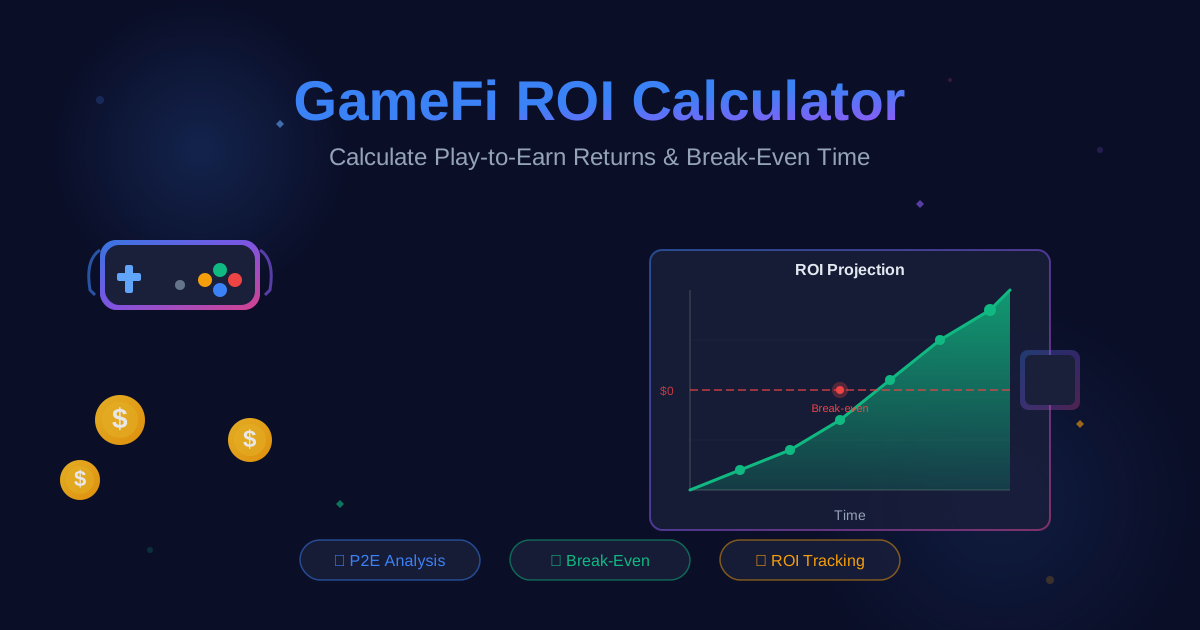
GameFi ROI Calculator: Calculate Play-to-Earn Returns & Break-Even Time
Complete guide to GameFi and Play-to-Earn ROI calculation. Learn how to analyze Axie Infinity, STEPN, Illuvium earnings, NFT breeding costs, scholarship programs, and break-even scenarios with our free P2E calculator.
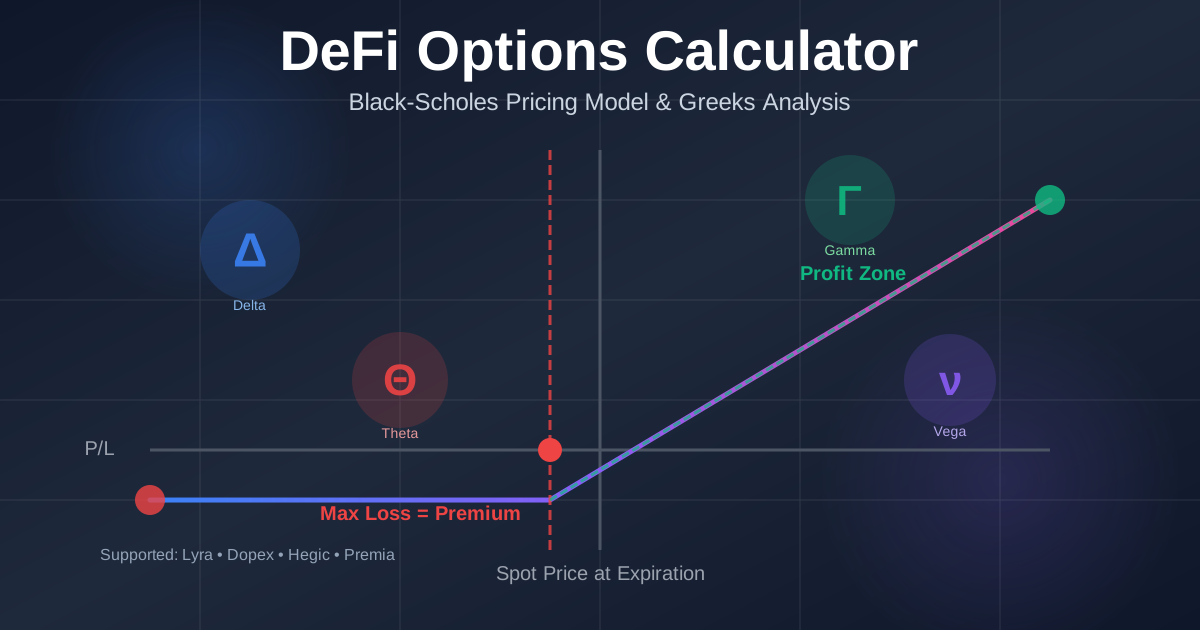
DeFi Options Calculator Guide: Black-Scholes Pricing & Greeks Explained
Complete guide to DeFi options trading with Black-Scholes pricing model, Greeks calculator (Delta, Gamma, Theta, Vega), and strategy analysis for Lyra, Dopex, Hegic, and Premia protocols